The Best Plant App for Beginner Botanists: Comprehensive Edition

With so many plant ID apps available, it can be hard to know where to turn when trying to identify that pesky plant. Here, we set out to discover which plant app truly stands out as the best choice for beginner botanists

Though it may beggar belief, a post I shared here on Common By Nature comparing the best plant ID apps for beginner botanists, has become my most-viewed article to date, racking up over 25,000 views since 2022. Clearly, this is a popular topic, and more and more people are turning to plant identification apps to help identify their botanical finds. With that in mind, I thought it was time to revisit the topic three years on.

As I said back then, plant ID apps are a contentious subject among many botanists. Some dismiss them outright, claiming they’re unreliable and detract from what purists might call “proper” botany. Others take a more open-minded approach and, even among relative experts, treat plant ID apps as just another tool in their botanical toolkit, much like a hand lens or a wildflower guide.

Wherever you stand on the issue, it is clear that plant apps are here to stay. Thanks to advances in image recognition and Artificial Intelligence (AI), these apps are becoming more accurate, more sophisticated, and increasingly useful for enthusiastic amateurs and budding botanists alike. Not only to help identify unfamiliar plants but also as a means by which to deepen their interest and engagement with the natural world.

Of the many plant ID apps available, a few names crop up again and again. Most people will have heard of PlantNet, Seek, or Google Lens. Others, like Flora Incognita, are a little less well known, but all aim to do the same thing. The question is: are any of them truly a cut above the rest when it comes to plant identification?

Inspired by the ongoing interest in my original post, I decided to return to the subject three years later to find out what the best plant app is today.

Once again, some ground rules

Just like last time, and to standardise our little plant app experiment, I’ve introduced a few rules to keep things fair:

  • One image only. While some apps allow for multiple images, we wouldn’t want to give any one of them an unfair advantage, would we?
  • Quality images. We’ll only use clear photos showing enough of the plant to reach an accurate identification.
  • British plants. I’ve chosen species that are commonly found in Britain, making the test more relevant to British botanists. That said, the odd non-native or garden escapee might sneak in too, just to keep things interesting.

A small change

This time, I thought I’d make things a bit more challenging for our candidate plant apps by including several trickier groups of plants. Whereas last time we focused mainly on flowering species, this round will feature grasses, ferns, and even a sedge. That should really test their mettle…

On reflection, I’ve also decided to drop the “leaves only” rule. Realistically, most people are going to be using plant apps to identify flowers, so it makes sense to reflect that in the test. We’ll also be testing three more identification apps not covered in my last post.

Meet the subjects

I’ve selected the ten plants below based on their varying levels of difficulty. Some, like Herb-paris and Caper Spurge, should be relatively straightforward for the apps to identify. Others — Sea Spleenwort, for instance — may prove more of a challenge. The inclusion of Mountain Melic is admittedly a bit mean, given the lack of clear identification features, but hey, this is my blog, and we’re here to really put these plant apps to the test, aren’t we?

Plant app comparison

For comparison’s sake, we’ll stick with a similar scoring system to the one used in the previous post. Any plant app that correctly identifies the plant as their first choice will receive 1 point. If the correct plant appears lower down the list, points will be deducted based on its position. For example, if Oxford Ragwort comes as the fourth suggestion, it would earn 0.6 points. I may also award bonus points in certain cases if an app manages to genuinely impress me.

Garden Privet
Ligustrum ovalifolium
Beech Fern
Phegopteris connectilis
Oxford Ragwort
Senecio squalidus
Mountain Melic
Melica nutans
Sea Spleenwort
Asplenium marinum
Herb-paris
Paris quadrifolia
Remote Sedge
Carex remota
Dog-violet
Viola riviniana
Caper Spurge
Euphorbia lathyris
Chickweed- wintergreen
Lysimachia europaea
Score
(0-10)
PlantNet 1 1 1 1 1 1 1 0.7 1 19.7/10
PlantSnap✖ 0.1 (it did get Melica)N/AN/AN/AN/AN/A0.1/10
(Stopped counting)
Picture This 1 1 1 1 1 1 1 1 19/10
LeafSnap 1 1 1 1 0.9 1 1 1 1 19.9/10
Seek 1 1 1✖0.1 (Spleenwort, at least) 1✖0.1 (It did get sedge) 1 16.2/10
GoogleLens✖ 0.5 (Points for privet) 1 1 1 1✖0.1 (for violet 1 16.7/10
FloraIncognita 0.9 1 1 1 1 1 1 1 18.9/10
Obsidentify 1 1 1 1 1 1 0.9 1 1 19.9/10

And there we have it, gang — a winner! Well, two actually, and only just by the skin of their teeth. In our little test, ObsIdentify and Leafsnap came out on top, closely followed by PlantNet, with PictureThis a smidgen behind. We’ll take a closer look at those top performers shortly, but first, let’s talk about the plant apps you might want to avoid…

The Losers

If you’re looking for an accurate plant app, best give these ones a miss. Particularly the first…

PlantSnap (0.1/10)

So bad I gave up…

PlantSnap struggled at nearly every turn, misidentifying four out of five plants and earning only a fractional bonus point for narrowing down Mountain Melic to the correct genus. Even more frustrating is its restrictive usage model — users are granted only a handful of free identifications before being hit with a 12-hour delay, clearly designed to push non-subscribers toward paying. Based on what I’ve seen, paying for this app would be, frankly, a waste of money.

PlantSnap performed poorly in our first test back in 2022, and despite the time that’s passed, it’s obvious little has improved. My advice? Avoid this one at all costs.

Seek (6.2/10)

iNaturalist is improving, but not enough

The last time we tested Seek, it performed abysmally and earned a rather negative review. I’m pleased to report that the app has shown some improvement. By correctly identifying six species — including both a grass and a fern — it managed to impress me to some degree.

That said, it’s still not quite strong enough for me to recommend it as a go-to plant ID tool. There are certainly better options available. Seek failed outright on Oxford Ragwort and Dog-violet, two fairly common species, and struggled with the sedge and one of the trickier ferns.

Given iNaturalist’s popularity among biological recorders, you’d hope Seek would perform better. For now, it still falls short of the mark.

Google Lens (6.7/10)

Meh, should do better with all that funding…

Google Lens is an immensely popular app, built into many smartphones by default. It has a wide range of uses — and performs well in many of them — but when it comes to plant identification, it falls slightly short of the mark.

Once again, it struggled with sedges and ferns, performed poorly on Dog-violet, and, somewhat surprisingly, failed to correctly identify Privet. Given the vast resources behind it, I expected better. While it’s certainly not the worst option out there, I still wouldn’t recommend it if you’re looking to accurately identify botanical finds.

In short, it’s far from the best plant ID app available.

Better Choices

Flora Incognita (8.9/10)

The worst of the good apps, but only just…

I had never used Flora Incognita before and didn’t include it in the last test, so I was genuinely excited to give it a try this time around. Truth be told, it performed quite well — just fractionally behind the top-performing apps — and deserves credit for correctly identifying both Sea Spleenwort and Remote Sedge, two species that tripped up several of the less accurate contenders. The only plant it really struggled with was, once again, the Dog-violet.

One particularly nice feature of Flora Incognita is that it allows users to make an initial classification (e.g. herb, shrub, grass, or fern) to help narrow down the search. It also supports multiple photo uploads, which I didn’t take advantage of this time but suspect could have improved the results. Another welcome touch is the inclusion of a confidence level with each ID suggestion — a small detail that adds transparency to the process.

All in all, this is a relatively strong choice for plant identification, and one I’d be happy to use again.

PictureThis (9/10)

Getting better all the time, and very nearly perfect…

PictureThis impressed me this time around, I must say. With the exception of Remote Sedge, it correctly identified all the plants down to species level with relative ease. The app is sleek, user-friendly, and offers a generally smooth experience. Its plant health assessment feature might not be of much interest to botanists, but it could be a welcome bonus for gardeners.

For those who enjoy background detail, PictureThis provides a wealth of information covering everything from characteristics and symbolism to pests, diseases, and garden uses. As I noted back in 2022, it remains a comprehensive and reliable option, and overall, a good, safe bet for botanists.

The Winners

If you are looking for an accurate, reliable plant app to help you on your botanical excursions, I’d choose from these…

PlantNet (9.7/10)

An old favourite performs well yet again…

When I last reviewed PlantNet, I admitted to being a fan, both for its plant identification capabilities and for its useful option to search by regional floras. This feature allows users to narrow their search to a specific geographical area, helping rule out, for example, North American species when the record is actually from the UK or Greece. It performed well in the previous test, but did even better this time, correctly identifying all but one plant to species level. The only slight miss was with the Dog-violet, which it listed as the third option, behind a couple of admittedly similar species.

Once again, this app comes highly recommended. Like all plant ID apps, it shouldn’t be relied on with absolute certainty, but it remains a valuable tool in any botanist’s arsenal.

LeafSnap (9.9/10)

One of the best botanical apps out there…

LeafSnap does it again, finishing ahead of the competition in joint first place! This result echoes what we found in 2022, when the app narrowly beat out contenders like PlantNet and Seek with a respectable 5 out of 6. This time, it performed even better by correctly identifying all the plants to species level, with the exception of Sea Spleenwort, which it listed as a very respectable second option.

If I have one minor complaint, it’s that the in-app prompts and ads seem to have become more frequent since my last test. That said, they’re easy enough to navigate and, in the grand scheme of things, a small price to pay for this level of accuracy.

LeafSnap remains a strong recommendation from me. It boasts all the features you’d want in a reliable plant app.

Obsidentify (9.9/10)

I didn’t include ObsIdentify back in 2022, but I really wish I had. This is a downright impressive app that matched LeafSnap on the scorecard, receiving only a minor deduction for Remote Sedge which it listed as a second choice. It might well have nailed it with a better photo — but let’s be honest, shoddy images are part and parcel of real-world use. In truth, I can’t fault this app on design, ease of use, or accuracy.

What sets ObsIdentify apart from the competition is that, while it’s a reliable choice for plant identification, it also covers all taxa. That means it works just as well for moths, hoverflies and other wildlife groups. The only area where it still struggles is fungi, but to be fair, most fungi can’t be confidently identified from a photo alone.

If you’re looking to streamline the number of apps on your phone, this is the one I’d recommend. Not only will it help with those pesky plants, but you might also find yourself getting hooked on identifying other species too. For beginners especially, it could become a trusty companion.

Bravo, ObsIdentify, bravo!

Comparing Insect ID Apps for Budding Entomologists

With several apps out there to choose from, just where do you turn when trying to identify a troublesome insect?

My previous post focusing on the best plant identification apps has quickly turned into one of my highest preforming blogs ever with some 15,500 views to date. It seems that has technology improves, and mobile apps become a permanent part of the naturalist’s arsenal, there is a growing desire to find the best digital assistant for wildlife recording on the go. Cue a new post!

Photo-based apps are growing in popularity across all wildlife groups and despite some turning their noses up at the idea, they are here to stay and have the possibility to engage and encourage an incredibly diverse audience. From teachers and students to citizen scientists and even, dare I say it, established naturalists, many are turning to apps to identify puzzling finds, confirm their identifications and corroborate identifications made using field guides. Moreover, technology is developing all of the time meaning apps previous dismissed as inaccurate are growing ever more reliable.

Apps associated with plants and birds are fairly commonplace and many people use them, but less discussed is the possibility of using apps to identify insects – perhaps the most diverse and tricky group of all. Despite the challenges of insect identification, there are several apps out there designed to demystify the process. In this post, I thought I would run a little experiment comparing some of the most popular…

First, some ground rules

  • One image only – some apps allow for multiple images but we’ll not be doing that here
  • Decent(ish) images – Poor quality images, lacking key features, pose problems for even the best apps (and naturalists!)
  • Verified species – apps will be tested only on species with a confirmed ID courtesy of an expert verifier
  • Native species only – I wanted to test this on insects likely to be encountered in the UK.

Meet the Insect App Test subjects

  • Oak Bush-cricket (Meconema thalassinum)
  • Brown China-mark (Elophila nymphaeata)
  • Patchwork Leafcutter Bee (Megachile centuncularis)
  • Platycheirus rosarum – a hoverfly
  • Riponnensia splendens – a hoverfly
  • Larch Ladybird (Aphidecta obliterata)
  • Capsus ater – a true bug

While some of these are easier than others, I have resisted the urge to include extremely common and familiar species which most apps will surely get right. Instead, the range of insect groups included should hopefully put our candidate apps to the test.

Comparing Insect Apps

Apps that identify the insect as their first choice will receive 1 point. If the correct insect is identified but shown as an outlying choice, we’ll deduct points for each subsequent tier. For example, Larch Ladybird coming in as the 4th most likely option would early 0.6 points. I may give extra points in some places if the apps manage to impress me…

Oak
Bush-cricket
Brown
China-mark
Patchwork
Leafcutter Bee
Platycheirus rosarumRiponnensia splendensLarch LadybirdCapsus aterScore
(0-6)
ObsIdentify 11 0.9 1 1 1
1
6.9/7
Seek1 ✖ 0.2
(It did get the family!)
0.2/7
Picture Insect 1 1 11 1 16/7
Google Lens 1 1 0.2
(again, it got the family)
0.2✖ 0.2
(points for ‘ladybird’)
2.6/7

ObsIdentify vs Picture Insect

And so we have our winner, or at least winners. Both ObsIdentify and Picture Insect performed extremely well during the first test and truth be told, there isn’t much between them. Let’s try them on a few more insects…

For this, we’ll trial the apps on the lovely Green Long-horn (Adela reaumurella), another true bug, Calocoris roseomaculatus, and the tiny Meadow Ladybird (Rhyzobius litura). A reasonably testing bunch!

Green Long-hornCalocoris roseomaculatusMeadow LadybirdScore
(0-6)
ObsIdentify1 0.9 0.92.8/3
Picture Insect1 ✖ 0.2
(it brought up a very similar species)
✖ 0.2
(again, a similar species but failed to mention this one)
1.4/3

ObsIdentify (9.7/10)

Hands down the best app for insect identification

ObsIdentify performed extremely well across all insect groups and must be considered the ‘go to’ app for identifying insects. Based on the positive reviews shared elsewhere, it is perhaps unsurprising that it identified the easier Oak Bush-cricket and Brown China-mark correctly, but it surprised by accurately ID’ing the two hoverflies. Hoverfly identification can often be an arduous affair so extra brownie points here.

Of the points 0.3 points deducted in total, on all occasions this was due to a separate but similar species being put forward as its primary identification. However, in all three cases, the true species was listed in second place which at least allows users to quickly compare species and reach a judgment for themselves.

On a more practical note, ObsIdentify is very user-friendly and provides no end of handy information that some users might find interesting. It also works on more than just insects and overall, is a well-rounded and very helpful app. Top marks!

Picture Insect (7.4/10)

Another good choice for insect enthusiasts but jut falling short

Picture Insect is a perfectly sound app and performs better than most. In the first round of testing, it excelled with the more familiar species and resulted in correct identifications when presented with more challenging species, particularly Capsus ater and Platycheirus rosarum. Both of these proved too much for apps further down the list.

A solid choice for second place, the app only fell short at the last hurdle, failing to identify Calocoris roseomaculatus and Meadow Ladybird very nearly nailed by ObsIdentify. Indeed, neither species were shown in the four available suggestions shown by Picture Insect, but it did at least put us in the right ball park.

While a good choice for use on common and familiar species, I did find the app somewhat annoying on account of the frequent pop-ups prompting paid subscription. The interface is also a little more complex that our winning option.

Google Lens (2.6/7)

This one ought to do better…

Google Lens is perhaps the most widely used app on this list, with a great many people using it for everything from foodstuffs to wildlife. Given the infrastructure behind it, it ought to have outperformed some of the less well-resourced apps but alas, failed at almost every hurdle.

Points were awarded for its success in identifying Oak Bush-cricket and Brown China-mark but beyond these, it succeeded only in correctly identifying several species to family level. If, like me, you like to know specifics, it probably isn’t for you.

Seek (1.1/7)

Not again iNaturalist…

When it comes to purpose-built wildlife identification apps, Seek by iNaturalist is perhaps the most widely known (and used) of all. Indeed, I frequently encounter students using the app at the recommendation of their lecturers and have chanced upon a fair number of naturalists using it the field. They shouldn’t bother.

Oh iNaturalist, what went wrong yet again? If you read my previous post on plant ID apps, you’ll know that Seek came almost last. It performed almost as negatively this time, succeeding only with the Brown China-mark. This is somewhat troubling given its widespread use and ties with what is fast becoming the most widespread biological recording app in the UK. Yikes.

I would avoid Seek save for its use in positive environmental engagement. Like iNaturalist who developed it, it makes wildlife recording fun and would be a great choice for weekend walks with the kids if little else.

Exploring North East Nature in 2022 – A Few Highlights

A summary of a fantastic year spent watching, recording, and enjoying North East nature. often in great company.

Well, I had thought that 2022 had been a quiet year on the wildlife front but apparently not, and as ever when it comes to writing these festive round-ups, I again have far too much to discuss. Do bear with me.

Before we get going, however, a huge thank you to the friends who have helped make 2022 such an awesome year for wildlife. If you have shared a tip, nugget of wisdom, or location, or have spent an afternoon rummaging around in shrubbery with me, this means you! Nature definitely is better when experienced together.

Orchids Galore

Now, I usually make a point of seeking out orchids each year, but in 2022, they have taken on a special focus. With the launch of NHSN’s Discovering Orchids project, there was plenty of recording to be done across the North East. This meant lots of visits to the far-flung corners of our region in search of some truly beautiful plants. Indeed, I think I encountered more orchids this year than ever before, including several new species.

From Bird’s-nest Orchids at Allen Banks to fantastic floral displays on Lindisfarne, there was an awful lot to see in 2022. Better still, some of these sightings and those of dozens of other botanists have now been published in Orchids of North East England, available now from NHSN. It was certainly a pleasure to contribute to such a fantastic publication.

Urban Botanising

For this city botanist, urban plans have been a real theme of 2022. Just as they are in most years really – I think I may have a problem.

What has been slightly different in 2022 has been the focus on more detailed recording. Back in October, I decided to start work on what I am loosely calling an “Urban Flora of Newcastle”. So far, this has seen 70+ hours spent in the field, 20 tetrads visited and some 2500 records collected of 530 species (and a few hybrids too). A mind-boggling total given the time of year and the relatively low number of squares visited.

I plan to continue work on the flora for the next few years, hopefully writing it up in due course. The diversity of plants in the city never fails to surprise and truth be told, I am finding the whole thing thoroughly addictive.

Ladybird Discoveries

I think that by now, just about everyone knows that I love ladybirds. Searching for them is a little like fishing in that you never quite know what you’re going to encounter.

This year has seen too many exciting discoveries and notable observations to count. So much so that ladybirds have been given a round-up all of their own. You can read it here.

Now that I have the pleasure of volunteering with the UK Ladybird Survey, I’ll certainly be sticking with the spotty blighters for years to come.

Noteworthy Plants

As a botanist, the vast majority of my free time is spent looking for plants. This year has been no different and with countless hours spent rummaging a variety of wild and urban areas, there have been a couple of good finds. Two that spring to mind are county firsts in Pale St. John’s-wort (Hypericum montanum) and Sorbus latifolia. The latter came as quite a surprise during a casual wander along the Tyne back in Summer.

Elsewhere in the North East, Forked Catch-fly (Silene dichotoma) was an exciting find at Gosforth Nature Reserve, as was Scots Lovage (Ligusticum scoticum) on Lindisfarne. Trips elsewhere have seen a whole manner of exciting discoveries too at places such as Hareshaw Linn, Alnmouth, and Berwick. Really, it has been a good year for botanising. Hopefully, there’ll be lots more to come in 2023.

Dabbling in Bugs

Do any other naturalists out there find they only have a finite amount of brain space for tackling new taxonomic groups? I certainly do! This year, I wanted to change things up a little and begin recording beyond my usual plants and familiar insects. Bugs seemed like an obvious place to start and I am pleased to say that I have encountered my fair share. Aphids have been fun to tackle this year and getting my eye in, I have seen a fabulous array of shieldbugs too. Not least the lovely blue chap pictured below. Add to these a variety of mirids and this new addition to my local biological recording has been most enjoyable if a tad hard to come to terms with!

Awards and New Opportunities

Anyone who knows me will know that it came as quite a surprise to win the National Biodiversity Network ‘Newcomer Award’ back in November. Not least because I am unsure of what exactly I have done to deserve it! That said, I am so immensely grateful to NBN for the lovely confidence boost and of course, the nifty profile page here. It really does mean a lot to be recognised for something I have loved since childhood.

This year, I also became an iRecord verifier for the UK Ladybird Survey covering Durham and Northumberland and began helping botanical VCRs in South Northumberland with verification too. Who needs free time, eh? It has certainly been nice to live vicariously through the sightings of others.

A New Local Botany Group

Oh look, a bunch of happy, smiling botanists!

Pondering the local botanical scene back in October, I came to the conclusion that a new group was needed. One with a focus on both supporting one another and on recording too. Sending out a few feelers, I was thrilled with the turnout with some twenty-eight people coming forward to be involved from all corners of the local area.

Fast forward a few months and several of us have enjoyed a few nice local walks at Walker and Tynemouth. 2023 will surely bring new opportunities and it will be great to get some serious recording done as our small and informal group grows and visits new places.

If anyone would like to join in, do get in touch. More the merrier!

Magic moments

Not everything needs to be about serious biological recording – even if it may seem that way on this blog from time to time. Sometimes it is nice to simply sit back and soak in the joys of the natural world. Thankfully, 2022 provided limitless opportunities to do just that and whether we’re talking seabirds on the Farne Islands or orchids in the depths of County Durham, wonderful experiences have abounded this year.

Oddly, of all the great things seen and heard, it is a butterfly that sticks with me the most. The exquisite Green Hairstreak (Callophrys rubi) shown below landed beside me during a trip to Rothbury back in Spring. A species I have seen only a handful of times, it was superb to spend a good while in its company and I was certainly left with a smile when it departed.

Looking ahead to 2023

While free time seems to grow ever scarcer with each passing year, there are several things I’d like to try (or at least resume) in 2023. In a time-honored tradition on this blog, I’ll be making a few New Year’s resolutions centered on wildlife, recording, and other aspects of natural history. It will be interesting to see how many I can live up to.

  • A big year of botany: working with fellow BSBI recorders, I hope to start work on a new Rare Plant Register for North Northumberland. Equally, I’ll also be trying to organise as many local outings as possible for botanists, beginners and experts alike to meet and share their knowledge. Watch this space.
  • Beginner’s botany: the response to my new series of beginner’s botanical cribs has been amazing. A big thank you to everyone who has taken a look so far. In 2023, I hope to create many more of these to share with budding botanists and hope possibly to record some as videos too.
  • Recording urban flora: true to form, I’ll be spending an increasing amount of time surveying Newcastle’s plant life with the aim of having visited all tetrads twice by December 2023. Hold me to the coals on this one!
  • Getting back into the swing of things: in 2023, I’ll aim to make more of an effort to share finds, discoveries, and interesting titbits online, something that has slipped in recent years. I’ll also be launching a Facebook page to help with this and dare I say it, a YouTube channel too. Hopefully, by doing so, at least one new person might be inspired to look closer at North East nature.

Weekend Botany at Walker

This weekend provided a nice opportunity for our new local botany group to visit Walker Riverside. Here’s what we encountered.

Botany (and wildlife recording in general) can often be a solitary affair. For many of us, I suspect, myself included, that suits us just fine. At least most of the time. Sometimes, however, it is nice to do things as a group. Not least only for the company but also for the support and increased brainpower that comes with combining noggins!

It is for the reasons listed above that a few friends and I wanted to get the ball rolling on a new informal group for botanists North of the Tyne. Both to make things a little more social and support one another and to ensure that we’re working with local experts to capture important plant records. I am pleased to say that this weekend, this came to fruition with our merry band meeting for the first time at Walker Riverside in Newcastle.

As you’ll see from the photos below, we had a jolly good day and learned a lot. A big thank you to those who came along! Now, what about the plants?

Walker is a very diverse site I have written about several times. What never fails to surprise here is the tendency for it to throw up new and unusual discoveries, several of which were made during our visit. Atlantic Ivy (Hedera hibernica) was a particularly interesting one and nice to compare with some nearby Common Ivy (Hedera helix) and Persian Ivy (Hedera colchica). Megs Rogers, VCR for South Northumberland, also came up trumps with a candidate for Small Gorse (Ulex minor) and last month’s county first Balkan Spurge (Euphorbia oblongata) was also admired. The latter ID may well change now someone more knowledgeable than I has taken a look…

As a group, we also noted several other interesting plants between St. Peter’s Basin and Walker Riverside Park. Clustered Bellflower (Campanula glomerata) was still in bloom, as was Cut-leaved Dead-nettle (Lamium hybridum) and Green Field-speedwell (Veronica agrestis). Alexanders (Smyrnium olusatrum) was a nice find on the cycleway, and rare locally, and it was nice to note Blue Fleabane (Erigeron acer) still clinging on. A few other finds are mentioned alongside some excellent photography in Ho-Yin Wong’s tweet below.

Ladybirds along the Tyne – Elswick, Heaton, Havannah & Prudhoe

From the city car parks and urban cemeteries to chalk mounds at Prudhoe, it has been a fantastic fortnight for ladybird recording.

With little time for trips further afield, walks during the closing days of September have seen me sticking closer to home than usual. That said, it has still been a busy few weeks on the ladybird front. With trips to the glorious Prudhoe Spetchells, local cemeteries and a handful of urban areas, there’s been an awful lot to see.

Starting with 24-Spot Ladybird and once again, this usually scarce ladybird has proven itself exceptionally abundant along the Tyne. Visiting Prudhoe, Matt and I found no fewer than 30 while exploring a small patch of grassland by the sewage works. More interesting still, several were also found high up in a pine tree – an odd location for a primarily terrestrial insect. Elsewhere, 24-Spot Ladybirds have also cropped up of late at Wylam and in the city at Elswick.

Seldom numerous, Pine Ladybird is not a species I encounter frequently here outside of the winter months. With this in mind, it was good to find decent numbers while exploring the Spetchells – the majority being swept from immature Scots Pine (Pinus sylvestris). Away from Prudhoe, last week, a single Pine Ladybird was also found in the car-park of the Mercedes garage at Scotswood – who says ladybird recorders don’t visit some glamourous locations?

Whereas Pine Ladybird is a species I see infrequently, a couple of other ladybirds are far more reliable. I won’t spend much time on 7-Spot Ladybird and 2-Spot Ladybird – both are somewhat omnipresent here – but both were encountered at Prudhoe too, predominately on pine.

Slightly more exciting now and the short walk between Wylam and Prudhoe provided a nice opportunity to explore Moo Pond, a small but productive wetland en route to the Spetchells. With plenty of Bulrush (Typha latifolia) it is usually reliable for Water Ladybird and sure enough, with only a few minutes of searching, the individual below was found tucked away in a leaf-sheath.

Something a little different now and on the same visit to Prudhoe, it was nice to encounter 18-Spot Ladybird while scrutinising the pines growing on Spetchell three. A scarce conifer specialist, this is one of the species I come by least often. This record looks to be the first for the site but seems somewhat overdue given the wealth of conifers present.

A few days later, it was nice to also three of these ladybirds at the ever-reliable Jesmond Old Cemetery, while this weekend, two more were found at Havannah Nature Reserve.

Taking a quick detour into the world of inconspicuous ladybirds now and as ever, Pine Scymnus remains relatively easy to find locally. The one pictured below was beaten from Scots Pine atop the Prudhoe Spetchells though others were found recently at Gosforth Nature Reserve and Havannah.

One of the easier ladybirds to find locally, 22-Spot Ladybirds have been encountered recently at Prudhoe, as well as at Gosforth. Most interesting was a sighting of six ladybirds feeding on a mildew-ridden Norway Maple (Acer platanoides) at Elswick, while a few more were found secreted away in some ornamental Euonymus. I must remember to check planted shrubs too!

22-Spot Ladybird (Psyllobora vigintiduopunctata), Elswick, Newcastle

Having driven past it many times, our visit to the Western side of Newcastle provided the perfect opportunity to explore some of the roadside grasslands that fringes the busy main road at Scotswood. Planted by the council with an interesting chalky mix, it has always looked fairly promising. After ten minutes of searching, I’d all but given up hope when the beautiful Adonis’ Ladybird below appeared in the net. A real treat.

Now for the undisputed highlight of the last fortnight’s ladybird searching. Cream-streaked Ladybird remains a scarce species in the North East, though one which is evidently spreading northward. I’ve recorded this species at a few sites locally of late but each time the encounter comes as a surprise. It has been great to catch up with this species twice recently: firstly at Jesmond Old Cemetery, a known haunt, and secondly, in an isolated pine at Scotswood. Surely this is one of the best-looking British ladybirds?

Last but not least, something a little closer to home. Continuing a good run of Striped Ladybird encounters and having noticed a few as yet unladybirded pine trees behind my local Sainsbury’s in Heaton, I opted for a quick look a fortnight past. After a little searching, it was exciting to find this handsome individual below at rest on a nearby fence post. A full-fat tick for my little urban patch…

Industrial orchids in Newcastle

A quick account of a fruitful few days spend admiring orchids in Newcastle.

As the NHSN’s Discovering Orchids project continues, I’ve been making an effort to check in on my local orchids. Visiting a number of post-industrial sites around Newcastle this week, it is safe to say that the plants did not disappoint. From your ‘everyday’ spotted orchids to a selection of scarcer species, there has been an awful lot to see.

Silverlink

Starting out at Silverlink Park, a site I talk about often, and Bee Orchids are having a good year. Indeed, during a quick visit, Matt and I recorded over sixty in bloom across the site. Big ones, small ones, some growing in grassland, others in flowerbeds, it is great to see this species doing so well here.

Straying from Silverlink for a minute, and Bee Orchids seem to be having a fantastic year locally on the whole. Not only are they performing well at traditional sites but are popping up in a host of new places too. I mentioned those at Scotswood a few weeks back, but I have also encountered them recently at Walker, Wallsend and Cobalt. At the latter, a number could even be seen invading the landscaped gardens of various office blocks!

Bee Orchid (Ophrys apifera)

Back to Silverlink and it was great to see Common Spotted Orchid becoming more numerous too. As expected, these have now taken over from Northern Marsh Orchid as the most numerous species blooming on site. A few marsh orchids could still be seen, of course, though these were invariably those growing in shady locations. The vast majority of those visible only a week back had long since browned and died.

Somewhat more exciting here was the discovery of a single Pyramidal Orchid. Growing within the site’s rich calcareous grassland, this looks to be the first record for the site. Indeed, having visited for many years, I can safely say I have never seen one here until now.

Pyramidal Orchid (Anacamptis pyramidalis)

A surprise

Moving on, a kind tip-off from a local naturalist resulted in a bit of a surprise this week, a few Facebook messages leading to an encounter with an altogether more special orchid. The delicate plant seen below is Heath Fragrant Orchid, an entirely new species for me.

Smaller and with fewer flowers than its larger cousins, this orchid really is a beauty. Better still, it smells amazing! A scent I would describe as sweet and citrusy that others have hailed as ‘spicy’.

Heath Fragrant Orchid is a scarce species in the North East and one usually found in the uplands. To see one in urban Tyneside certainly is a treat.

Newburn

To some abandoned brownfield land at Newburn now and more Common Spotted Orchids. So many in fact that we lost count at 250! An abundant and familiar species across most of the UK, it is not often I see them in such numbers. The sight of so many flowers swaying in the breeze a welcome reminder of what more grasslands in our nation should look like.

Here too, a few Northern Marsh Orchid were hanging on, though looking a little worse for wear, and we identified several Common Spotted Orchid x Northern Marsh Orchid hybrids. Seeking out the biggest visible plant before looking closer seems to be a good technique for this – Dactylorhiza x venusta tends to be a whopper.

Down by the river, we soon discovered the first of the day’s targets: Dune Helleborine. A rare plant nationally, those on the Tyne are said to be the locally endemic Epipactis dunensis subsp. tynensis. Or Tyne Helleborine, to use simple terminology. Either way, for some, the jury remains out as to whether they truly are a subspecies or not. Personally, I quite like them, but perhaps I’m just patriotic?

It was surprising to find over sixty Dune Helleborine in just thirty minutes of casual searching at Newburn. So many, in fact, that they outnumbered their larger and usually more abundant cousin, the Broad-leaved Helleborine. These were present in good numbers, perhaps forty or so, but still seemed scarcer than in previous years. Most of the plants we noticed had yet to flower, but a few had just dared open.

Well, that concludes this orchid-focused ramble. The diversity of these mesmerising plants around Newcastle never fails to amaze me and I’ll be looking for more in the future!

A fleeting visit to Alnwick Moor

Hankering for a trip into the uplands, last Saturday, Matt and I set off for Alnwick Moor in North Northumberland. Walking West from Alnwick first through woodland, and then to the boggy, birch strewn outskirts of the moor itself, the trip made for a welcome change to the norm and there was certainly a great deal to see.

Walking west along the outskirts of Hulne Park, a quick search of a mature oak overhanging the park’s boundary wall resulted in our first exciting encounter of the day: a handsome Common Cockchafer (Melolontha melolontha). Having only spotted this large and impressive insect on one other occasion, quite some time was spent admiring the critter before it was placed back on it’s tree. Matt was certainly quite taken with it…

Passing through a few open areas on route to the moor, an incredible display of English Bluebells (Hyacinthoides non-scripta) stopped us in our tracks – an entire hillside here, awash with blue flowers, looking particularly beautiful in the midday sun.

Here too, we observed Yellow Pimpernel (Lysimachia nemorum), plenty of Bugle (Ajuga reptans), and a rather lovely white form of Thyme-leaved Speedwell (Veronica serpyllifolia). Common plants, each and all, but still nice to see.

Reaching the outskirts of the moor, beneath the canopy of Downy Birch (Betula pubescens), the striking flowers of Chickweed Wintergreen (Lysimachia europaea) immediately became apparent with a good number of plants strewn throughout the area. A real beauty, it is difficult not to smile while admiring this radiant member of the Primrose family.

Scattered about the area, the round leaves of Marsh Pennywort (Hydrocotyle vulgaris) were seen too alongside Marsh Thistle (Cirsium palustre) and a range of other plants characteristic of such boggy places.

Where spacious woodland gave way to heathland at the edge of the moor and conditions became dryer, it was lovely to stumble across a substantial area of Common Cow-wheat (Melampyrum pratense).

Opting to remain on the moor’s edge instead of moving off into the heather-clad hills, it wasn’t long until we stumbled across a rather nice bog rich with bryophytes and an array of interesting plants. Spending most of our time here, it was nice to encounter the lingering flowers of Marsh Violet (Viola palustris) and the alien-looking blooms of Bogbean (Menyanthes trifoliata). The dried vestiges of Bog Asphodel (Narthecium ossifragum) were also spotted and a number of orchid rosettes were likely those of Heath Spotted Orchid (Dactylorhiza maculata).

Spending some time here admiring the greener, less conspicuous plants, sedges seen included Glaucous Sedge (Carex flacca), Bottle Sedge (Carex rostrata) and Black Sedge (Carex nigra). In wetter areas, Water Horsetail (Equisetum fluviatile) and Marsh Valarian (Valeriana dioica) were found, and a closer look at a pondweed suggested an ID of Bog Pondweed (Potamogeton polygonifolius).

While admiring the aforementioned bog plants, the bee below also caught our eye. Slightly thrown by the upland habitat, I struggled with this at first though it was later confirmed as Chocolate Mining Bee (Andrena scotica). Other bees observed throughout our visit included Early Mining Bee (Andrena haemorrhoa) and Gypsy Cuckoo Bee (Bombus bohemicus), alongside the usual mix of bombus species.

While we had hoped to uncover some potentially interesting ladybird species at Alnwick (cough, Heather ladybird), the best we could manage was a rather lovely melanistic form of 10-Spot Ladybird (Adalia decempunctata) found on oak.

Comparing Plant ID Apps for Beginner Botanists

With so many plant apps out there to choose from, just where do you turn when trying to identify a troublesome plant?

Update: since the time of writing this, I have published a second, more comprehensive review available here.

Many botanists turn their noses up at the idea of using a plant app. Indeed, this approach requires minimal skill, no field guide and really, not a single jot of traditional botanical knowledge. It is in essence, as I have heard some put it, cheating. If indeed it is possible to cheat while doing something as harmless as naming a plant…

In our age of wildlife decline and increasing disconnection with the natural world, any engagement with wildlife should be nurtured and encouraged. Especially when, as is the case here, such engagement can help generate all-important wildlife records that help further our knowledge of wildlife. As times change, a fleet of new mobile apps are now giving anyone, not just tried and tested naturalists, the ability to accurately identify wildlife.

Of these new apps, a comparatively large number focus on plants. I suspect because plants are stationary, less likely to run away and thus, easier to photograph. With so many apps out there to choose from, however, just where do you turn when trying to identify a troublesome plant? And more importantly, will your chosen app give you an accurate result or point you in the wrong direction entirely?

To answer the questions above, I thought I’d conduct a little experiment by testing some of the most popular apps for myself.

First, some ground rules

  • One image only – some apps allow for multiple images but we wouldn’t want to give an unfair advantage now, would we.
  • Foliage only – the vast majority of the plants we see each day are not in flower. Let’s put these apps to the test…
  • UK natives, with one exception – I wanted to test this on plants likely to be encountered by British botanists. Odd things do escape, however, so we’ll include one bonus!

Meet the subjects

  • Ivy-leaved Toadflax (Cymbalaria muralis)
  • Water Avens (Geum rivale)
  • Deadly Nightshade (Atropa belladonna)
  • Hoary Mullein (Verbascum pulverulentum)
  • White Horehound (Marrubium vulgare)
  • Majorca Nettle (Urtica bianorii)
I just so happened to have some suitable test subjects growing in the yard…

Comparing Plant Apps

Apps that identify the plant as their first choice will receive 1 point. If the correct plant is identified but shown as an outlying choice, we’ll deduct points for each subsequent tier. For example, White Horehound coming in 4th would early 0.6 points. I may give extra points in some places if the apps manage to impress me…

Ivy-leaved ToadflaxWater AvensDeadly NightshadeHoary MulleinWhite HorehoundBonus
Majorca Nettle
Score
(0-6)
PlantNet 1 0.7 0.9 0.7 1
4.3/6
PlantSnap0.7
(Broke the app!)
0.7/6
Picture This 1 1 1 0.9 14.9/6
LeafSnap 1 0.7 0.9 0.9 1 0.5 (Similar species)5/6
Seek 1✖ 0.1 (Family level)1.1/6

LeafSnap (5/6)

One of the best plant apps out there…

Truthfully, I hadn’t heard of LeafSnap until researching for this fun Friday exercise. That said, it fared well across the board proving accurate on some of the more distinctive plants and narrowing down the more difficult Hoary Mullein and Water Avens based on foliage alone. It didn’t identify these straight away, but both could be found lower down beneath its number one picks of Scarlet Avens (Geum coccineum) and Great Mullein (Verbascum thapsus).

LeafSnap would have come second had it not been for its valiant attempt at identifying Majorca Nettle which, despite not being 100% right, at least brought me to the similar Urtica atrovirens. I suspect it would fair well against those pesky garden escapes so many of us encounter on a daily basis…

On a more practical note, LeafSnap is easy to use and provides some handy information that some users might find interesting. Top marks!

Picture This (4.9/6)

The best at British plant species...

Picture This would have won hands down if I had not included the dodgy nettle. This ended up being ‘accurately’ identified as Ming aralia (Polyscias fruticosa) which it certainly isn’t.

This nifty little app did, however, identify four out of the five native species accurately and for the pesky mullein, was only one species out leaving scope for the user to compare photos and draw the right conclusion.

For those interested in the background information, Picture This gives a wealth of it covering everything from characteristics and symbolism to pests, diseases and garden use. Altogether, it is rather comprehensive!

PlantNet (4.7/6)

I do like this one...

I’ll hold my hands up now and say that I have used PlantNet plenty of times before, both to identify plants purchased for the garden and out in the wilds. It usually holds up fairly well and was only pipped to the post this time owing to a small struggle with the Water Avens and Hoary Mullein. It also didn’t guess the nettle, but perhaps I’m being mean?

One thing I really like about PlantNet is its ability to search based on regional flora. For example, someone holidaying in Spain might select ‘Flora of the Western Mediterranean’ to help them narrow their search. It is also one of the best for comparing multiple botanical characteristics and is usually accurate when flowers, foliage and habit are included.

PlantNet is by far the most scientific of the apps featured in this list and features no end of comparison photos, facts and useful information. In reality, it is more of a digital field guide than some of the others on this list.

Seek (1.1/6)

Really should do better...

Oh iNaturalist, what went wrong? While Seek managed okay with the Ivy-leaved Toadflax it did less well elsewhere, managing to assign White Horehound to the correct family but failing completely with the other species. Okay, so it did flag that the subjects were dicots but I think most of us knew that already?

While I would never personally use Seek, one positive I would mention is its use in positive engagement. Like iNaturalist who developed it, it makes wildlife recording fun giving badges and keeping count of how many species you have encountered. I imagine it would be great to use with children or as part of Bioblitz-type events.

PlantSnap (0.7/6)

Avoid, unless perhaps you’re visiting a garden centre...

I’m not in the habitat of being catty when it comes to things like this but my word, I’m not sure which plants PlantSnap was developed to identify but it certainly wasn’t any you can expect to encounter here. It was wrong on almost every account besides White Horehound which it identified first as a duo of mint species before drawing the right conclusion.

I would also add that the app crashed three times while using it, took a long time to process anything and eventually gave up completely while trying (very hard, I’m sure) to name the nettle. I certainly won’t be recommending it but alas, it might work better on flowers!

Where To Send Your Wildlife Records?

As I mentioned previously, biological recording is a bit of a minefield and there are plenty of organisations, groups, societies and schemes out there vying for your valuable wildlife records.

Generally, biological recording is an interconnected affair and records submitted through a chosen platform usually (but not always) find their way to where they’re needed. Still, trying to unravel the spider’s web that is environmental data-sharing in the UK is rather complex and I will not try to explain it here. I doubt that I could!

Where you send your records is ultimately down to you but some things you may wish to consider are:

  • Where will my records have the greatest impact?
  • Will they be added to national and local datasets?
  • Do they go where I want them to?
  • How easy/time efficient is it to send in sightings?
  • Will I get feedback on my records?

iRecord

iRecord is a fantastic platform for sharing records of species you have already identified. Recorders can add sightings of taxa quickly and easily, set up ‘Activities’ associated with particular species groups or places and readily explore what other naturalists have been spotting in their local area.

The single best thing about iRecord (in my humble opinion) is its interconnectedness. Sightings added to iRecord are shared with recording schemes, county recorders and expert verifiers, enabling sightings to be ‘confirmed’ before finding their way into wider datasets. The platform is also firmly linked with the NBN Atlas, enabling records to be shared wider with anyone who needs them and downloaded by Local Environmental Record Centres. Feedback on iRecord is not always instantaneous, but the wait is worthwhile knowing your sightings are going to the right place.

Truthfully, iRecord takes a little time to get your head around but is well worth it.

Opinion: iRecord is the platform to use if you seek comfort in the knowledge that someone, somewhere will use your wildlife records for something positive.

iNaturalist

A global wildlife recording platform, iNaturalist is incredibly easy to use. Whether you choose to use the website or app, you need only upload an image and hit send. Somewhat different to iRecord, recorders don’t even need to know what they’ve spotted and unidentified records are quickly confirmed by other users.

The community feel of iNaturalist is a great bonus of the platform and the very reason it is often used for bioblitzes such as the City Nature Challenge. You’ll need multiple confirmations from other users for your wildlife records to be marked as ‘Research Grade’ before they can be picked up by recording schemes – something which is likely to remove the majority of errors. A potential drawback here is that while there are many knowledgeable people using iNaturalist, anyone can ‘verify’ a record. You do not receive the same access to experts as provided by iRecord.

Recently, records from iNaturalist began to be automatically imported into iRecord, meaning they can be verified just like any other; though some schemes opt to ignore these and issues such as the use of nicknames and incorrect location names can throw a spanner in the works.

iNaturalist has, however, come a long way in a relatively short space of time!

Opinion: use iNaturalist if you’re seeking help with identification, are just starting out in biological recording or enjoy a more interactive experience.

Additional options for your wildlife records

Local Environmental Records Centres (LERCs)

Local Environmental Records Centres are not-for-profit organisations that collect, collate and distribute environmental data for a set geographic area. A good example is my local Environmental Records Information Centre here in the North East.

As well as collating data from various groups, clubs and schemes, LERCs often have their own portals to allow record sharing by local naturalists, often using the same software as iRecord. Sightings shared with LERCs will eventually make their way down the same channels as those shared to iRecord and may also be shared with NBN if centre staff and volunteers can spare the time.

It is worth mentioning that LERCs also have the ability to collect records shared to iRecord and iNaturalist. This may take a little time and ultimately, depends on the resources of the centre in question.

Opinion: submitting to your local LERC is a good way to ensure your records are used where they’re needed locally. However, under ideal circumstances, active LERCs should receive records shared with other platforms anyway.

Targeted Recording Apps

If you are only interested in recording a select few species groups, you might consider some of the targeted surveys out there. Two good examples that spring to mind are iRecord Butterflies and iRecord Ladybirds, both of which do a great job capturing important data on these groups through a series of handy apps. There are others out there too!

Vice-County Recorders (VCRs)

Vice-County Recorders are local naturalists appointed to gather, verify and curate wildlife sightings, and coordinate surveys. From plants to moths and mammals, for most of the well-studied species groups, the chances are there is a vice-county recorder in your area. Most welcome sightings via email, and others may request records to be collated in spreadsheets.

Many VCRs are plugged into some of the same platforms mentioned previously and actively verify and collect records from iRecord, in particular. That said, there remain some out there who are ‘selective’ about the platforms they choose to support, both reasonably and unreasonably in some cases. If you plan on doing serious recording locally, it is probably best to check the preference of your VCR to avoid your sightings floating about in permanent limbo.

Opinion: sending sightings direct to a VCR is a viable alternative for anyone wishing to avoid online recording portals but please do check their preference before filling their inbox.

Recording Schemes

From shieldbugs and snails to bees, beetles and fungi, thanks to a long history of wildlife recording in the UK, there are recording schemes out there for just about everything. NBN have a great search function to help you find the scheme that’s right for you.

Like the aforementioned VCRs, many of these schemes are wired into iRecord and even iNaturalist, while others choose to run their own recording portals or capture data in other ways. The UK Hoverfly Scheme‘s Facebook group is a good example of this.

For the purposes of this blog, I’m also lumping bird clubs and natural history societies that collect records in this category too. Many of these may share your sightings more widely but it helps to be cautious here as some may not distribute them any further than their own archive.

And there we have it! Ultimately, where you send your wildlife records boils down to what you hope to achieve. If you’re keen to support conservation, research and the production of resources, choose a route that leads to NBN. Here, your data can be downloaded and accessed at will by those who need it. More specifically, if you want expert feedback, opt for iRecord, or if you prefer the social site of wildlife recording, consider iNaturalist. The list goes on…

While the entire process of wildlife recording can be confusing, the most important thing is that you’re making the effort to document your finds in the first place. You can tackle the rest later.

Creating a Wildlife Record

Wildlife recording is quickly becoming a main passion of mine. The process of searching out interesting species, making notes, creating records and contributing in some small way to our understanding of nature proving to be a fulfilling way of making use of time outside.

Before digging into the subject in a little more detail on this blog, I wanted to cover the basics first and take a closer look and just what makes up a wildlife record…

The importance of wildlife recording

The importance of wildlife recording, or biological recording, to use the proper lingo, cannot be understated. Citizen science and the records generated by naturalists across the UK help inform conservation action by monitoring the abundance and distribution of wildlife, revealing expansions and of course, bringing to light declines too. They help paint a picture of how wildlife is faring on a national level but, closer to home, highlight local trends too, helping conservationists, organisations and researchers to target effort where it is needed most.

What is a wildlife record?

Whether we’re talking plants, insects, birds or a different group entirely, all wildlife records have a few main components:

What

The name of the plant or animal you’ve spotted and identified. If you’re unsure what you’ve seen, an identification to family level may suffice – the great thing these days is that there are plenty of people out there ready to help identify your finds.

Photograph

A picture speaks a thousand words and photographs help verifiers and county recorders confirm the species you’ve seen. Images are not always needed but for tricky species, they’re a big help.

Where

The place at which you spotted your plant or animal. An accurate grid reference is the most important factor here and generally, it is best to be as specific as possible. For many species, a six-figure grid reference is a good starting point.

Grid Reference Finder is an excellent tool to help with this.

When

The date on which you made your wildlife observation.

Who

Your name, in full. Or least written in a way that you would like to be displayed when your record is used elsewhere. Usernames and nicknames can sometimes be an issue for those looking to use your records so it is best to stick to writing your name in full.

What else could you record?

Depending on how thorough you wish to be, there are many other things you could note when creating your wildlife record. Additional informal is a great way to maximise the value of your sighting. Some things you might wish to include are:

How many

How many of your plant or animal did you see? Was it a single individual, or twenty? Information such as this is very important when it comes to assessing local and national populations.

Stage

Only applicable with some taxa but useful to note. If you spotted an insect, was it an adult or was it in its larval stage? If a plant, was it flowering, in seed or vegetative?

Habitat

Knowing more about the site at which you spotted your plant or animal is really useful. You may which to stay broad, for example by stating ‘woodland’ or may specify further, coniferous or wet woodland for example.

Additional observations

Anything else you observed while recording your plant or animal. If, for example, you’re recording a pollinator, what kind of plant was it feeding on? If a fungus, was it growing on a particular kind of tree?

What to do with your wildlife records?

Knowing what to do with your wildlife records is a different kettle of fish entirely. Biological recording in general is a bit of a minefield and plenty of websites, apps and organisations welcome the submission of your valuable records. Generally, there are a handful of really good options for wildlife recorders in the UK, but we’ll cover those further in another blog

Recording North East nature in 2021 – ten highlights

2021 has been a funny old year but despite the big c and the various restrictions it brought, it has also been a memorable one. While time outdoors has been limited this year, thankfully, I have still been lucky enough to observe, enjoy and record some fantastic wildlife. As the New Year dawns, I thought I’d share some highlights here.

Brilliant bees

Truthfully, I have seen more bees in 2021 than in any other year of my life to date, but perhaps that is because I have actually been looking?

Regardless, spurred on by NHSN’s North East Bee Hunt and supported to no end by helpful local experts, I have encountered some rather lovely species this year: my first Moss Carders on Lindisfarne, my first Hairy-footed Flower Bees (a county scarcity) and some delightful Bilberry Bumblebees to name but a few. All of which goes without mention of a dazzling assortment of other leafcutters, yellow-faced bees and bumbles.

Perhaps the highlight of the year on this front was finding this little Northern Mining Bee on spring wander through Ingram Valley in North Northumberland. This marked the first vice-county record for this attractive little insect and certainly made the hike worthwhole.

Lots of ladybirds

2021 marked my first year of purposefully seeking out ladybirds and I have been lucky to find and record a great many this year. Some of these, the 22-spot, 7-spot and Orange Ladybirds were familiar while others including the Eyed and 11-Spot Ladybirds shown below were entirely new for me.

A real highlight was discovering the inconspicuous but beautiful Water Ladybird at several new sites around Newcastle; while I also caught up with my first Adonis’ and Kidney-spot Ladybirds locally,

A little account of ladybird recording in Newcastle can be found here.

Notable plants

Befitting two exciting (but equally terrifying) new roles as joint BSBI vice-county recorder for North Northumberland, and joint Botany Specialist Group lead for NHSN, much of this year has been spent admiring plants.

Highlights here are too numerous to list with many interesting sites visited and many species observed. Instead, a few local finds spring to mind including the first county record of Curry Plant growing on the pavement here in Heaton, and a county-first Marshmallow spotted beside a local pond. Vosges Whitebeam was a notable find at a couple of local sites, if only because it took some time to ID it, while it has been interesting to observe several Thorn-apple plants growing close to home. A sure sign of their spread into the North of the UK.

Of course, our native species have enchanted too with a particular highlight coming from an encounter with my first-ever Maiden Pinks on the North Northumberland coast. I will make a point of revisiting these next year.

Surprises in the wildlife garden

Spending so much time at home, it was inevitable that more time would be dedicated to recording wildlife in our little garden. With over 200 species encountered, there are too many to list but standout moments include the arrival of Currant Clearwing and Mint Moth, plenty of Davies’ Colletes and some nice moth trap finds, including the superb Figure-of-Eighty shown below.

A short talk on the subject, delivered for the Natural History Society of Northumbria, can be found below.

Tackling trees

In the latter half of 2021, I set about attempting to learn urban trees with a focus on the more unusual, non-native species so commonly planted in our parks, towns and cities. Spending countless hours roaming various sites in Newcastle, I was delighted to encounter dozens of new species, from North American Pin and Red Oaks to Himalayan Birch and a range of unusual maples. While conifers still baffle me, getting to grips with the various globe-trotters with whom I share the city has certainly been eye-opening – there are so many out there!

You can share a closer look at Newcastle’s trees (and shrubs) with me here.

Investigating shieldbugs

A slightly unusual one now and while searching for ladybirds, I have been amazed by the quantity and diversity of shieldbugs uncovered at a range of local haunts. Some of these, like the Green, Hairy and Hawthorn Shieldbugs were familiar to me already; though a range of new species were encountered too including the striking Spiked Shieldbug and aptly named Parent Bug. I will certainly spend more time exploring this group in 2022.

Bumper Bee Orchids

A small, artificial reserve on the fringes of the city, Silverlink Biodiversity Park in North Tyneside has long been a favourite of mine when it comes to plants and invertebrates. Each year, I make a point of visiting the site in Summer with the aim of counting and enjoying its beautiful Bee Orchids and this year, the plants did not disappoint.

2021 was a record-breaking year for these colourful little wildflowers and here, hundreds were observed blooming across the site’s small but diverse grassland areas. It was also great to share this little-known with local naturalists as part of a guided walk back in July.

A trip to Teesdale

At the tail end of Spring, I was lucky enough to pay my first visit to the botanist’s paradise that is Upper Teesdale. While our walk may have been a little longer than planned – I severely misjudged the route – it was sensational to observe many of the plants that help make this area so special. Iconic and beautiful Spring Gentians, Alpine Meadow-rue, Bird’s-eye Primrose, Mountain Pansy and Green Spleenwort, there was certainly much to see.

I look forward to visiting again in 2022 and hopefully catching up with a few of the species that eluded me this time around. I’m looking at you Shrubby Cinquefoil and Holly Fern…

Dabbling in other taxa

While pottering about in search of plants, bees and ladybirds, it would have been rude not to pay closer attention to the other taxa seen on my travels. From butterflies and hoverflies to fascinating fungi, highlights have been too many to count but a few stand out moments include more Dingy Skippers than I can shake a stick at, thirty species of hoverfly, some impressive longhorn beetles and the first record of Diprion similis, a scarce Sawfly, for North East England.

While I have a long way to go before I can confidently identify species in these groups, I look forward to broadening my horizons further next year.

A whole bunch of wonderful people

Nature is better when enjoyed together and it would be rude of me not to mention the many passionate naturalists I have had the pleasure to meet and work with this year. By offering help with species identification and sharing experiences in the field, it is the people that have made 2021 so rewarding for this amateur naturalist.

Special thanks go to Louise Hislop and Charlotte Rankin for their help identifying bees and to Chris and Hazel Metherell for some memorable botanical moments, but really, it has been wonderful to share experiences with so many committed wildlife-watchers. I hope to meet many more next year.

The flora of Walker Riverside

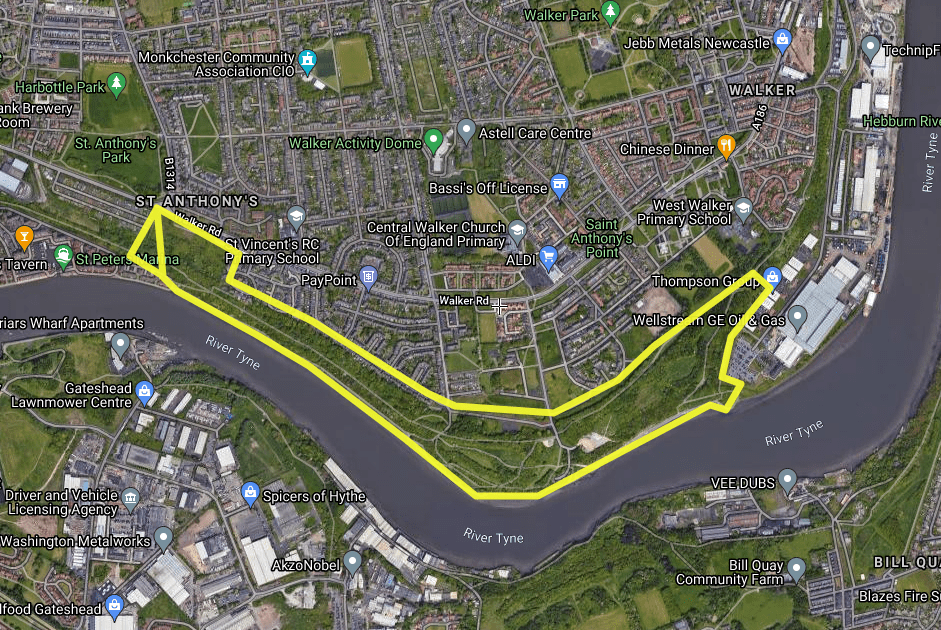
Walker Riverside Park is a funny old place. Created in the 1980s, it sits atop former industrial land and boasts an intriguing mix of habitats, from grassland and woodland areas to salt-strewn riverbanks and disused industrial plots. Overgrown, tangled and messy in places, the species mix here suggests the site was once tended, though now, ornamentals have merged with native flora to create a really interesting site. Truthfully, it doesn’t resemble a park at all.

This year, I have been making a concerted effort to record as many plants as possible here, focusing on plants growing in a wild or naturalised state. Plants that have been planted have been ignored, though long-established street trees and hedgerow plants have been recorded per guidance from the BSBI.

Slightly more challenging in scope than Iris Brickfield covered previously, the list below is almost certainly missing several species. I have not yet brought myself to look at grasses and yellow composites, and there are certainly other shrubs and saline-loving species to be discovered. Still, I hope this post gives a flavour of what you might encounter when visiting this rough and ready but highly interesting city reserve.

All records will (or have already been) submitted to BSBI recorders through iRecord.

Species list

In total, I have recorded 190 plant species in the park. A good count but almost certainly an understatement. Given the mix of habitats here, I wouldn’t be surprised if the actual number was closer to 250.

For the sake of simplicity, I have not broken this down into grid squares or habitats on this occasion but have aimed to indicate as to whether a particular species is historically planted or not. I have also aimed to highlight species brought to the site via seed mixes designed to boost butterfly numbers on site.

The full species list can be viewed below.

Trees at Walker Riverside

The trees of Walker Riverside are reasonably diverse. Native species including Ash (Fraxinus excelsior), English Oak (Quercus robur) and Field Maple (Acer campestre) are common and Aspen (Populus tremuloides) and White Poplar (Populus alba) exist in smaller patches across the site. Both Swedish Whitebeam (Sorbus intermedia) and Common Whitebeam (Sorbus aria) exist as relics of historic planting and in places, a good number of willow species can be seen. Among these, White Willow (Salix alba), Grey Willow (Salix cinerea) and Goat Willow (Salix caprea).

Slightly more unusual trees include False Acacia (Robinia pseudoacacia), Turkey Oak (Quercus cerris) and what I think might be Hybrid Black Poplar (Populus × canadensis), while the site provides a nice opportunity to compare alder species with Grey Alder (Alnus incana), Common Alder (Alnus glutinosa) and Italian Alder (Alnus cordata) all present. The latter clearly spreading along the riverbanks.

Perhaps most unusual of all is the presence of an American species, the Red Oak (Quercus rubra); though Sweet Chestnut (Castanea sativa) is another species seldom encountered in the local area.

Red Oak , Quercus rubra
Grey Alder, Alnus incana

Shrubs and climbers

The shrubs occupying the understory of the park are an interesting bunch and many formerly planted species seem to be spreading. Among these, the two most prominent are Wilson’s Honeysuckle (Lonicera nitida), Snowberry (Symphoricarpos albus) and Coralberry (Symphoricarpos orbiculatus). The same likely applies to various species of cotoneaster present on site but alas, the only one I can identify with any confidence is Willow-leaved Cotoneaster (Cotoneaster salicifolius).

By the river, Shrub Ragwort (Brachyglottis x jubar) appears to have escaped what was likely a former flowerbed and is slowly spreading and Japanese Rose (Rosa rugosa) has a habit of popping up in odd places.

Elsewhere, more familiar species include Guelder Rose (Viburnum opulus), Privet (Ligustrum vulgare), Dogwood (Cornus sanguinea), Sea Buckthorn (Hippophae rhamnoides) and plenty of Broom (Cytisus scoparius). The riverbanks here are also a great place to see Wayfaring Tree (Viburnum lantana) and odd shrubs dotted around the site include both Darwin’s Barberry (Berberis darwinii) and Chinese Barberry (Berberis julianae).

As for climbers, Russian Vine (Fallopia baldschuanica) can be found in a single spot and, by the river, a garden variety of clematis (Clematis sp.) appears to be running amock. While the brambles on-site were impossible to identify, the great, thick stems of Armenian Blackberry (Rubus armeniacus) are conspicuous in places.

Darwin’s Barberry, Berberis darwinii
Wayfaring Tree, Viburnum lantana

Grasslands

The grassland areas of Walker can be split roughly into two types: seeded and seemingly natural. The seeded areas contain several interesting species including Musk Mallow (Malva moschata), Lucerne (Medicago sativa), Greater Knapweed (Centaurea scabiosa), Wild Basil (Clinopodium vulgare) and both Small Scabious (Scabiosa columbaria) and Field Scabious (Knautia arvensis). Common Restharrow (Ononis repens) is plentiful here too and Spiny Restharrow (Ononis spinosa) has a toehold.

Where the boundaries between sown and natural become a little fuzzy, Wild Carrot (Daucus carota) and Salad Burnet (Sanguisorba minor) are especially numerous and plenty of Wild Teasel (Dipsacus fullonum) and Perennial Wall-rocket (Diplotaxis tenuifolia) can be seen.

More natural-looking grassland areas at Walker hold Meadow Crane’s-bill (Geranium pratense), Wild Mignonette (Reseda lutea) and Wild Parsnip (Pastinaca sativa), among others.

Non-natives and adventives

Besides the shrubs and climbers mentioned previously, I am yet to stumble across any of the really obvious non-natives. Michaelmas Daisy (Aster agg.) can be found from time to time along the river and a small patch of what I think is Common Evening Primrose (Oenothera biennis) can be seen. Hybrid Bluebells (Hyacinthoides x massartiana) can be found in a few spots and a single patch of Horseradish (Armoracia rusticana) exists close to the boundary with Walker itself.

These aside, the usual array of globetrotters can be seen, including Oxford Ragwort (Senecio squalidus), Red Valarian (Centranthus ruber), Canadian Fleabane (Erigeron canadensis) and of course, Butterfly Bush (Buddleja davidii).

Abandoned industrial plot

At the centre of the site, an interesting former industrial plot can be seen. With lots of exposed concrete, rubble mounds and some seriously shallow soil, this plays host to a number of species absent from the wider site. To date, this is the only place in Newcastle where I have observed Sainfoin (Onobrychis viciifolia) and Clustered Bellflower (Campanula glomerata).

Here too, large expanses of Kidney Vetch (Anthyllis vulneraria) can be seen and lurking atop the crumbling concrete, Wild Thyme (Thymus drucei) was a surprising addition.

Riverbanks and rocky places

The rocky walls that line the river at Walker are largely dominated by a mix of common and widespread species, with a few exceptions. Peached-leaved Bellflower (Campanula persicifolia) was an odd addition here earlier in the year and Black Horehound (Ballota nigra) can be seen in a few patches.

A major exception to this rule comes where what I assume was once some sort of boating ramp allows usually coastal species to grow in close proximity to the salty waters of the Tyne. Here, Buck’s-horn Plantain (Plantago coronopus) and Sea Plantain (Plantago maritime) can be seen, as can Annual Sea-blite (Suaeda maritima). Sea Aster (Tripolium pannonicum) is another nice addition while in places, at least one Glasswort (Salicornia sp.) species can be seen.

Pavement cracks in the car parks and along the main footpath are worthy of investigation too and include species such as Henbit Dead-nettle (Lamium amplexicaule) and plenty of Common Mallow (Malva sylvestris). These areas can occasionally throw up something interesting too with Great Lettuce (Lactuca virosa) and Beaked Hawk’s-beard (Crepis vesicaria) being two recent additions.

Notable and unusual

While plants such as Sainfoin and Clustered Bellflower are scarce in the North East, their suspect origins mean I have not included them here. Instead, two other species have made the cut, both found growing in pavement cracks along the main riverside walkway.

The first, Cut-leaved Dead-nettle (Lamium hybridum)has very few records in VC67 and made for a nice surprise earlier in the year. This species is almost certainly under-recorded, however.

The second, Musk Thistle (Carduus nutans), is another scarce species in the region and with its distinctive, nodding flowerheads is a real delight to see come summer.

The flora of Iris Brickfield Park

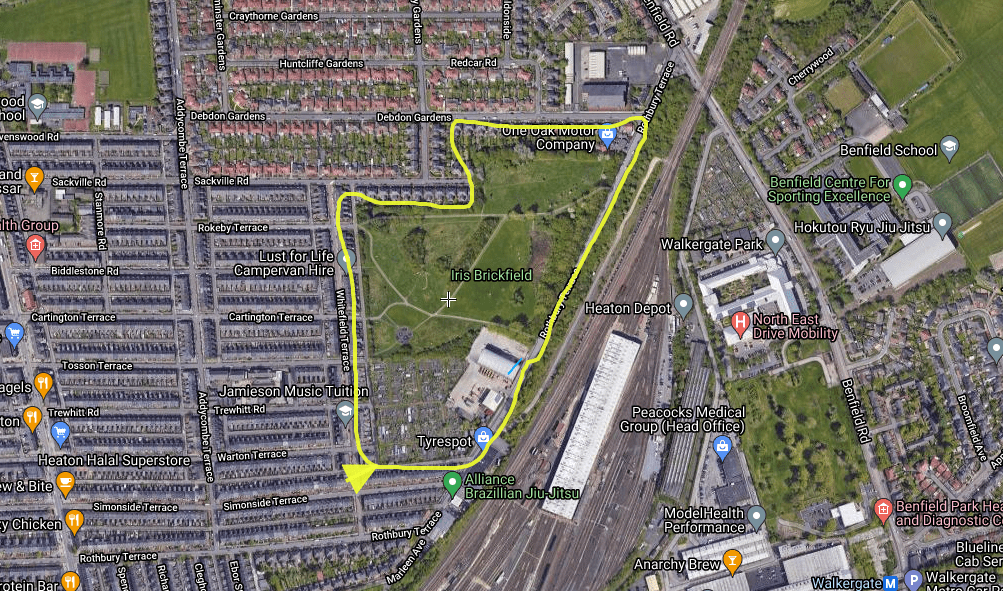
Iris Brickfield Park sits fairly close to our home in Heaton, Newcastle, and as such, has been a mainstay of our local walks during the pandemic. Fairly small, at least when compared to Newcastle’s other parks, and managed by Urban Green, it provides a lifeline to many people living in the local area: dog walkers, joggers, families and of course, naturalists stuck in the city.

This year, I have been making a concerted effort to record as many plants as possible growing in this small park, focusing on those growing in a wild or naturalised state. Plants that have clearly been planted have been ignored, though long-established street trees and hedgerow plants have been recorded per guidance from the BSBI. The aim of this is to create a somewhat comprehensive checklist for future visits, and for anyone else keen to know more about the flora of the park.

As very much a beginner botanist, the site list will not capture everything found within the park. I know for a fact that I have missed some grasses, while I am not yet able to confidently identify the various willowherbs found here. If anything looks out of place, please do let me know.

All records will (or have already been) submitted to BSBI recorders through iRecord.

Species list

In total, I have recorded 159 plant species in the park this year. Not bad for such a small area! For the sake of simplicity, I have not broken this down into grid squares but instead, have broken it down based on the three key areas present: the park, its pond and the nearby Iris Brickfield Allotments. The wider park contained the greatest diversity owing to a mix of both woodland and meadow habitats, though the pond too was surprisingly diverse. The exterior of the allotments held a few interesting species, including several escapes ‘tossed over the fence’.

The full species list can be viewed below.

Trees and shrubs

The trees and shrubs of Iris Brickfield are fairly diverse. Common species such as Ash (Fraxinus excelsior), Sycamore (Acer pseudoplatanus), Wild Cherry (Prunus avium) and English Oak (Quercus robur) are abundant, interspersed with a small number of Field Maple (Acer campestre), Bird Cherry (Prunus padus) and Scot’s Pine (Pinus sylvestris).

Small areas of White Poplar (Populus alba) and Norway Maple (Acer platanoides) are present and Aspen (Populus tremula) appears to be spreading quickly in certain areas. Single trees and anomalies include False Acacia (Robina pseudoacacia) and Hornbeam (Carpinus betulus).

Shrubs are not particularly diverse, though the Western boundary of the site includes Cherry Laurel (Prunus laurpcerasus), Guelder Rose (Viburnum opulus) and plenty of Dogwood (Cornus sanguinea). To the North, Cherry Plum (Prunus cerasifera) is plentiful and elsewhere Blackthorn (Prunus spinosa) grows in abundance.

Wildflowers

Wooded areas of the park hold several species commonly associated with mature woodland and whether these were once planted remains to be seen. Wood Anemone (Anemonoides nemorosa), Ramsons (Allium ursinum) and English Bluebell (Hyacinthoides non-scripta) can be found, and while scarce, one small patch of Lesser Celandine (Ficaria verna) can be found. The non-native Spanish Bluebell (Hyacinthoides hispanica) can be seen too, albeit in small numbers.

Grassy areas away from the playing fields and other mown areas hold a nice mix of typical ‘meadow’ species. Here, Common Bird’s-foot Trefoil (Lotus corniculatus), Red Clover (Trifolium pratense) and Hairy Tare (Vicia hirsuta) are conspicuous and Creeping Cinquefoil (Potentilla reptans) plentiful. Also present are Field Scabious (Knautia arvensis), Common Knapweed (Centaurea nigra) and Goat’s-beard (Tragopogon pratensis). Both Common Ragwort (Senecio jacobaea) and Oxford Ragwort (Senecio squalidus) also pop up sporadically.

Common Mallow (Malva sylvestris), Sweet Violet (Viola odorata), Sneezewort (Achillea ptarmica) and Wild Teasel (Dipsacus fullonum) are less common here but exist in small patches scattered across the site.

Other highlights include scattered patches of Stinking Iris (Iris foetidissima), one of only two native iris species in Britain, and Common Poppy (Papaver rhoeas) which occasionally appears in unusual places.

Non-natives and adventives

Sweet Alison (Lobularia maritima) can sometimes be seen growing by path sides and befitting the park’s urban surroundings, Butterfly Bush (Buddleja Davidii) has a habit of springing up in odd places. Likely an escape from the nearby allotments, Borage (Borago officinalis) occurs but seldom persists long and occasionally, Purple Toadflax (Linaria purpurea) will take hold in a crevice or crack.

Slightly more troubling, Japanese Knotweed (Fallopia japonica) has begun colonising and the small pond is blanketed with New Zealand Pigmyweed (Crassula helmsii).

Wetland area

The small pond in Iris Brickfield makes for an interesting pitstop throughout the year. Despite facing problems from the aforementioned pygmyweed, and the rampant spread of Common Reed (Phragmites australis), Sweet Reed Grass (Glyceria maxima) and Bulrush (Typha latifolia), a few interesting species can be found tucked away in nooks and crannies. The most colourful of these being Flag Iris (Iris pseudacorus), Purple Loosestrife (Lythrum salicaria), Yellow Loosestrife (Lysimachia vulgaris) and Marsh Marigold (Caltha palustris).

Gypsywort (Lycopus europaeus) was observed for the first time in 2021, and the margins hold a healthy population of Water Mint (Mentha aquatica) and Meadowsweet (Filipendula ulmaria). Bogbean (Menyanthes trifoliata) and Water Horsetail (Equisetum fluviatile) persist here too.

A little less showy than the aforementioned flowers, a good variety of rushes and sedges can be found here too including Jointed Rush (Juncus articulatus), Lesser Pond Sedge (Carex acutiformis), Soft Rush (Juncus effusus) and Common Spike-rush (Eleocharis palustris). The alien-looking seedheads of Branched Bur-Reed (Sparganium erectum) are also interesting.

Whilst not numerous, Northern Marsh Orchid (Dactylorhiza purpurella) can also be found in the surrounding damp grassland.

Allotments

Whilst the allotments at Iris Brickfield are private and access is not permitted (or possible), a poke about the margins of the area can reveal some interesting plants. Black Nightshade (Solanum nigrum) is notable here in Summer and in spring, Three-cornered Garlic (Allium triquetrum) can be seen. 

The hedges that screen the site are comprised mainly of ornamentals such as Firethorn (Pyracantha coccinea), Common Lilac (Syringa vulgaris) and Flowering Currant (Ribes sanguineum), though native species such as Wych Elm (Ulmus glabra) have found their way in too. Perhaps the oddest occurrence here is that of a sprawling Grapevine (Vitis vinifera) which appears to have escaped cultivation to colonise the hedge. 

Notable and unusual

Two plants in Iris Brickfield stand out as notable. The first, Milk Thistle (Silybum marianum), is a peculiar one. With two small plants found in the grassland this year, I was optimistic about seeing these flower. Alas, they now appear to have been trodden to death…

The occurrence of Marsh Mallow (Althaea officinalis) close to the pond was most unexpected and represented a notable vice-county record. An escape from cultivation at some point in time, its large, pink flowers stand out like a sore thumb at the height of summer.

And there we have it. I’ve certainly found it interesting getting to grips with the flora of my local patch this year and will endeavour to keep similar lists for other sites I frequent in the future. I hope someone may find this type of post interesting and it goes without saying, if you notice any errors or ‘unusual’ records, please let me know.

Wildlife at Walker Riverside

Of all of the places I regularly visit in Newcastle, Walker riverside has to be my favourite. Owing to a mix of abdanonment and neglect, it just about the most diverse local site I know of for plants and insects, and is well worth a visit if you’re able to look past the disgarded beer bottles and other unsavory items.

Heading to Walker last Thursday morning, a four-hour rummage on the South-facing banks of the Tyne yielded a number of interesting sightings – the riverside (seeded) meadows and forgotton corners alive with wildflowers.

Starting out to the West, and I was immediately struck by the abundance of Common Mallow in bloom along the riverbanks, pink flowers mixing nicely with the similarly abundant blooms of Oxford Ragwort and Purple Toadflax – both attractive non-natives. It was nice to find a new stand of Black Horehound in flower here too, and attention turned breifly to the trees here with Italian Alder and Wayfaring Tree both notable on the river banks.

Further along, towards the carpark, Hedgerow Crane’s-bill and Common Toadflax were observed too. The highlight here, however, was surely a rather striking bellflower found growing in the stone walls that line the riverbank. This was later revealed to be Peach-leaved Bellflower, a new species for me.

Walking East along the Tyne, you soon come to a striking stretch of riverside grassland adorning the former site of the St. Anthony’s Tar Works. Seeded at some point in the past to aid in it’s restoration, this particular stretch is incredibly diverse and never fails to reveal something new.

The plant community here is dominated by a number of particularly abundant species including Wild Carrot, Common Restharrow, Common Knapweed, Birds’-foot Trefoil and Wild Mignonette but look closer, and a host of other species reveal themselves. Today, interesting discoveries included Musk Mallow, Small Scabious, Field Bindweed and Lucerne. The small expanse of Greater Knapweed discovered last year was also in ful bloom, though I failed to find the Wild Basil noted previously.

With so many wildflowers in full bloom, insects were incredibly numerous. Ringlet and Meadow Brown represented the most numerous butterflies, closely followed by Small Skipper and Common Blue, while freshly emerged Six-spot Burnets were plentiful and myriad unidentified grasshoppers lept from the vegatation. Slightly more surprising, a beautiful Broad-bordered Yellow Underwing was observed roosting on the underside of an Aspen leaf.

Bumblebees were too numerous to count here, the bulk of these comprising Common Carder, White-tailed, Buff-tailed and Red-tailed, with a few Early Bumblebees thrown in for good measure. A fleeting glimpse of what was likely a male Red-tailed Cuckoo Bee was exciting; though I was unable to get any closer. Whereas the mining bees abundant here in May have now vanished, they have been replaced with leafcutters. Patchwork Leafcutter Bee was spotted first, followed by six female Willughby’s Leafcutter Bee feeding on restharrow. A male Fork-tailed Flower Bee whizzed past breifly and a small bee potted on Wild Carrot was likely a male Orange-legged Furrow Bee.

Set back slightly from the river and connected by a steep muddy path, a small area of wasteground marks the site of what was likely a former building. Despite being used (frequently, it would seem) as a site at which to dump unwanted waste, it does make for an interesting pitstop.

Here, Kidney-vetch was incredibly numerous and was popular with the local bees. More interesting discoveries included farely large areas of Sainfoin and mutilple plants of Clustered Bellflower. Both plants I’d never seen before. A slightly surprise came from a rather large patch of garden Nasturtiums – clearly having thrived after being turfed out in someone’s garden waste.

Here too, small patches of Wild Thyme clung to rubble heaps and Slender St. John’s-wort was also observed. Small Tortoiseshell and Speckled Wood were noted too, whereas just across the road, another area of grassland turned up Field Scabious and Meadow Crane’s-bill. The former of which appeared popular with the Narrow-bordered Five-spot Burnets which, like their six-spotted cousins, were out in force during the visit.