
What do bored botanists do during the autumn months? Well, turn to fungi, it seems, if the last few weeks are anything to go by.
I’ve always been a fan of waxcaps and grassland fungi, but anything beyond that has generally been a step too far. My knowledge of other groups is virtually non-existent, so even starting to look at the species on my own doorstep has been a bit of a learning curve.
Still, never one to let ignorance get in the way, I’ve spent the last few weeks rummaging about in Newcastle’s Heaton Park, keen to see what I could find. It’s been a tad eye-opening, to say the least.
In what has otherwise been a rather poor year for fungi, dead wood has been a real saviour. It’s here that I’ve been discovering a wonderful assortment of slimy, gelatinous and altogether squishy species. Some, as you’ll see below, are actually rather pretty.
Silverleaf Fungus has proved particularly common, especially on fallen Beech trunks. This beautiful purple crust fungus is a real eye-catcher, although I suspect its appearance might be rather less welcome if you happened to own a fruit orchard.
It often grows alongside Purple Jellydisc, the brain-like fella pictured below. Equally squidgy, Yellow Brain has been another treat to find, while Small Stagshorn, with its little pointed spikes or cylinders, has been popping up all over the place. At barely a couple of centimetres tall, it’s easy to overlook, but rather satisfying once spotted.

Chondrostereum purpureum

Ascocoryne sarcoides

Tremella mesenterica

Calocera cornea
A little more sedate, a small patch of deadwood in Heaton Park offered a chance to compare two rather similar-looking, charcoal-esque fungi: Dead Moll’s Fingers and Dead Man’s Fingers. The giveaway, apparently, is the stalk on Dead Moll’s Fingers, which gives it a rather more elegant appearance than its unfortunate name might suggest.

Xylaria longipes

Xylaria polymorpha
Jelly-ear was a much more familiar. I’m used to finding it on Elder, but here it was growing on Beech, not far from another curious, squidgy thing that initially looked rather similar.
This one, I think, is Leafy Brain. A little further reading has since revealed that it actually belongs to a tricky group of three similar species. I’ll leave that particular rabbit hole for another day, thank you very much.

Auricularia auricula-judae

Tremella foliacea (or not)
Rather less troubling, the next three finds were fairly distinctive, which was a welcome change.
First up, Common Jellyspot, a small but equally glutinous species that often appears in crowded or merging groups on dead broadleaf wood. King Alfred’s Cakes, or Coal Fungus, was a rather more rigid affair, typically found on Ash. You can certainly see where the name comes from, particularly when you look at its dark, cracked surface.
And then there’s Orange-peel Fungus, which is about as aptly named as they come. I found this one nestled among the leaf litter, looking remarkably like a discarded piece of orange peel. Nature’s imitation citrus.

Dacrymyces stillatus

Daldinia concentrica

Aleuria aurantia
The previous finds were nothing compared with the next: Common Eyelash Fungus. A tiny, bright orange to scarlet cup fungus, fringed with dark, eyelash-like hairs around the rim. It’s a little creepy, if I’m honest, but all the more interesting for it. Certainly not something I’d want staring back at me from the bedside table.

Scutellinia scutellata
But what about the more typical mushrooms, I hear you ask? Well, it seems to have been a poor year for them, although there have been a few exciting finds. Exciting, at least, to someone with next to no prior experience of fungi.
Common Inkcaps have been just about the commonest of the lot, but I’ve also stumbled across some lovely patches of Rosy Bonnet, pretty in pink, and the aptly named Yellow Stainer. You can certainly see where that name comes from.
A particularly nice patch of Spectacular Rustgill was another prized find earlier in the month. I’m not sure my standards for excitement are especially high at the moment, but I’m thoroughly enjoying myself.

Coprinopsis atramentaria

Mycena rosea

Agaricus xanthodermus

Gymnopilus junonius
Of course, like any would-be fungi enthusiast, I’m inevitably drawn to the obvious stuff: the big, colourful and immediately recognisable species. The two below fit the bill rather nicely.
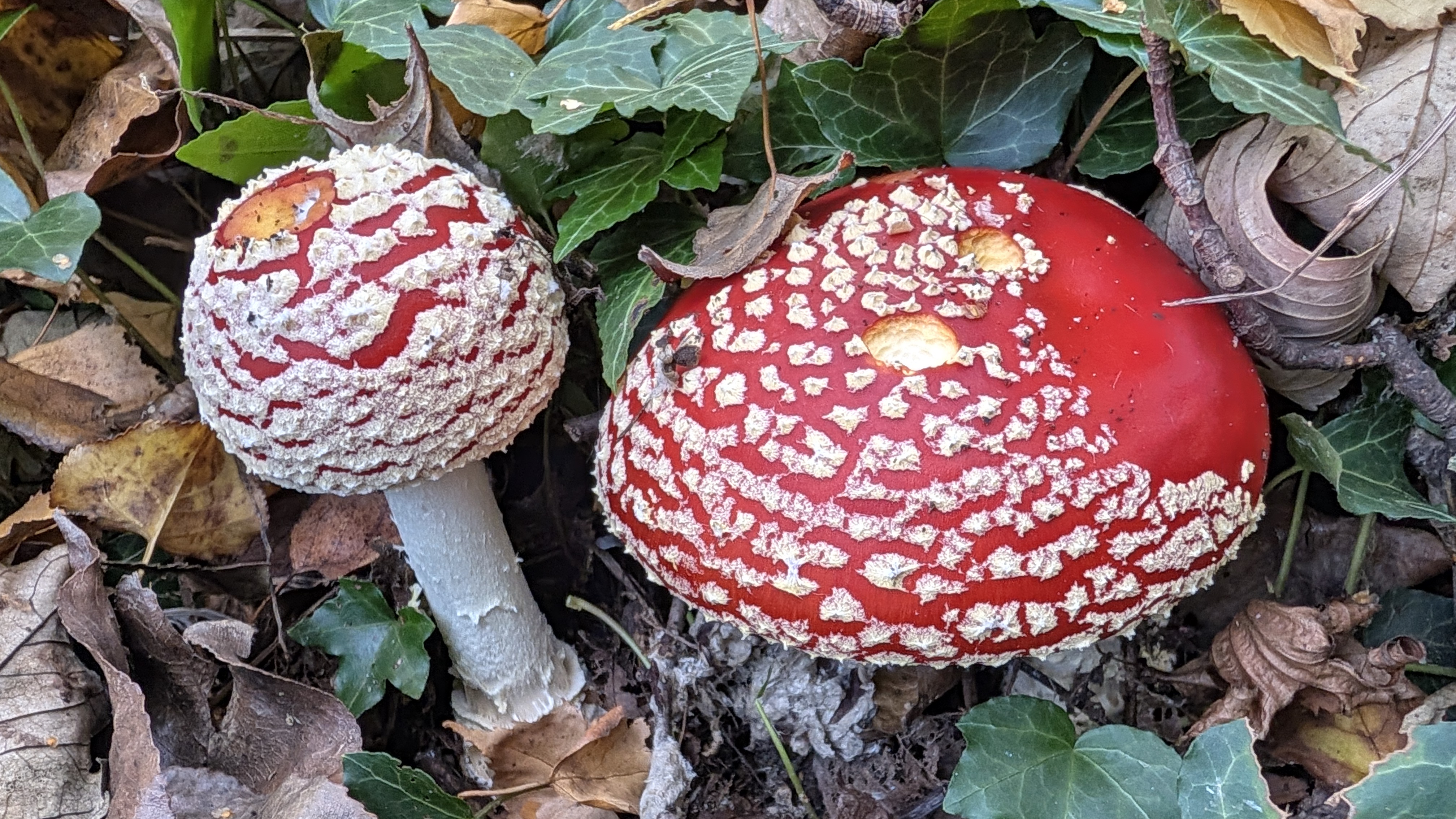
First, Fly Agaric, looking particularly fresh beneath its favoured Silver Birch. And, even better, Collared Earthstar. This is a fungus that never fails to bring a smile to my face, and one I’ve come to associate with heavily urbanised public parks. Heaton Park certainly hasn’t disappointed.

Amanita muscaria

Geastrum triplex
And that’s all, folks. I’m trying to get back into the habit of more casual nature blogging, covering interesting finds, trips out and the occasional random discovery. Fungi have certainly given me an excuse to do just that this autumn.
It’s been rather refreshing to tackle a new group without feeling the need to know absolutely everything about it. I’m learning as I go, making the odd identification, and having a thoroughly good time in the process. Hopefully, you’ll come across a few of these assorted oddballs yourself.



Leave a Reply