Wildlife on the River Coquet: Rothbury to Thropton

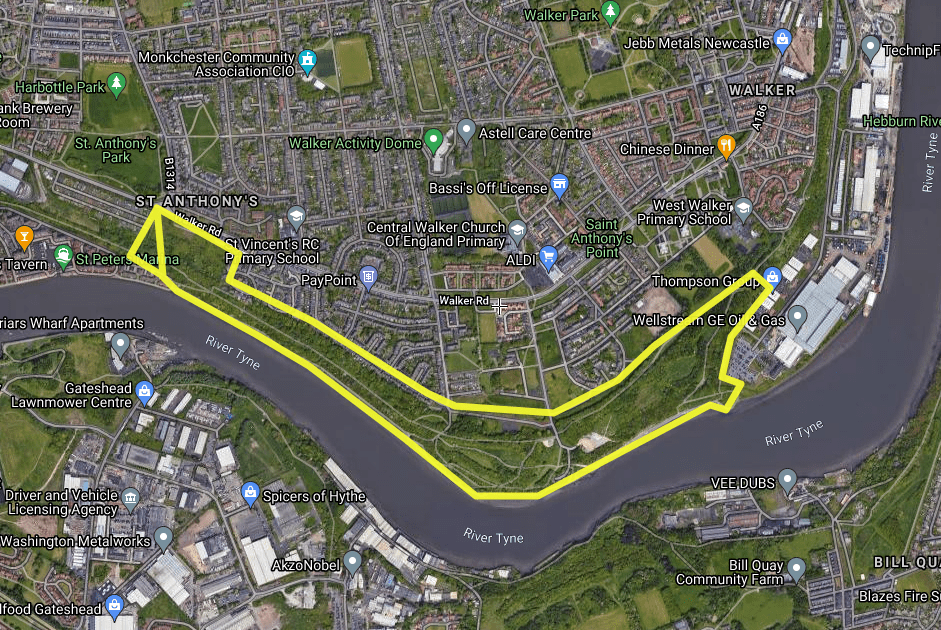
With the sun shining and temperatures topping twenty degrees, last weekend we opted for a visit to somewhere a little different. Arriving at Rothbury just shy of 10.00 am, and setting off on would turn out to be a delightful six-mile walk West along the River Coquet, it was the botanical diversity of the riverside here that struck us first.

The old stone walls that fringe the North bank river by the town’s main bridge were our first stop and held expansive clumps of Yellow Corydalis alongside Trailing Bellflower, Maidenhair Spleenwort, and Wall-rue, while at their base, Common Mallow, Crosswort and Meadow Crane’s-bill were found.

A little upstream and a slightly more exciting find was Greater Celandine – a species I had not encountered before in the North East. Here too, the nettle-like leaves of Black Horehound were seen and a rather delicate, highly toothed nettle made us pause for thought. Could it be Small Nettle? It would seem so thanks to a quick confirmation from the county recorder. Slightly further West, where the river exits the town, we also encountered Red Currant.

Continuing west along the river, the path side vegetation became lusher. A highlight here was the sight of two Green Dock Beetles locked in an embrace atop a stand of Broad-leaved Dock. A small but exquisite metallic green beetle, they certainly brought a smile to our faces.

Telling of a more open, damp setting, the riverbanks here held Dame’s-violet and Honesty, as well as some lovely Water Avens. Ground Elder was plentiful, possibly even invasive, and both Ground Ivy and Greater Stitchwort were admired.

Soon we reached a large area of open pasture where the river turns briefly South, and while the pasture itself held little other than Meadow Buttercup and an assortment of grasses, the riverbanks themselves were more diverse. Here, Hemlock Waterdropwort was found and the white variant of Common Stork’s-bill grew on the sandier areas alongside a good number of Forget-me-nots. The species of which I was unable to determine.

Owing to a profusion of Gorse, insects here were far more numerous. Focusing briefly on bees, Garden Bumblebee and Gypsy Cuckoo Bee were seen and a small bee spotted feeding on the aforementioned Gorse was likely Yellow-legged Furrow Bee. 7-spot Ladybirds were also seen, as were a few Orange-tip; though the highlight had to be an impressive Two-banded Longhorn Beetle rescued as it floated upside down in a small pool.

Keen to stay on the Northern side of the river, we soon took a detour back to the road, intent on walking the remaining distance to the smaller town of Thropton. The roadside vegetation here was rather lovely with Red Campion and White Campion blooming in abundance, interspersed with the odd plant of Bladder Campion. Common Poppy was also seen, as was a mullein species, while the grassy verges also yielded Common Vetch, Bush Vetch and more Crosswort. Further towards our destination, an old stone wall held a large quantity of White Stonecrop.

While walking the roadside, what I suspect was Buffish Mining Bee was also potted briefly while nectaring on Cow Parsley, and Common Carder, White-tailed Bumblebee and Early Bumblebee were noted, predominately on blooming Hawthorn.

Reaching Thropton, we soon set about poking about the more urban areas, admiring various pavement plants and rummaging about the riverside here. Wood Spurge was a nice find by the roadside and it was interesting to note Purple Rock Cress growing freely in the pavement – clearly having absconded from a nearby garden wall. Red Valarian appeared to be taking hold here too, and Welsh Poppy was numerous. More interesting was a smaller member of the Valarian family: Cornsalad. Likely Common Cornsalad but having read that it is impossible to accurately ID these in bloom, I’ll give up now.

A quick look on the nearby riverbanks yielding a bonny Columbine, doubtless with some garden genes thrown in, as well as both Water Avens and Wood Avens growing side by side. After a little searching, we also found what could be a candidate for Hybrid Avens growing where the two species overlapped.

Close to Thropton, a small burn can be followed North through an area of fairly unexciting pasture. We did just this and while the fields themselves were uneventful, a small wet flush, well-poached by passing bovines, came up trumps. Here Marsh Marigold and Water Mint were conspicuous, and Cuckooflower abundant. An eye-catching white brassica was revealed to be Large Bitter-cress – a new one for me – and it was nice too to encounter a good size swath of Brooklime. The dominant sedge here was tentatively identified by Greater Pond Sedge but really, it could be anything.

Heading back through the town, more Greater Celandine was found, this time invading some delightfully messy flowerbeds. By the local bus stop, Red Mason Bees could be seen visiting a nest site in the dilapidated masonry and a colony of Chocolate Mining Bee was found in the exterior wall of a particularly impressive house. It was exciting to also note the cuckoo of the latter species, Marsham’s Nomad Bee, lurking outside a nest hole.

Having had our fill of Thropton, we soon set off back towards the Coquet, unexpectantly stumbling across an expansive (and beautiful) area of riverside grassland. Here, Bottle Sedge was found in a path side ditch and sandier areas by the river hosted a lovely community of Birds-foot Trefoil, Lesser Trefoil, Cut-leaved Crane’s-bill, Common Vetch and an assortment of clovers. With both White Clover and Red Clover easily picked out, a rather ‘odd’ looking plant soon caught my attention. The pinkish tone of the flowers and lack of white markings on the foliage left me to wonder if it could be Alsike Clover?

With so many flowers in bloom, the insect community here was fantastic. Both Large Red Damselfly and Azure Damselfly were soon found, and a number of exquisite Small Copper flew speedily across the grassland. Present in good numbers but less numerous than the Orange-tips that adorned Cuckooflower blooms across the plentiful damp places. Upwards of eight 7-spot Ladybirds were also found alongside the tiny yet remarkably similar individual pictured below. Having initially written this off as a stunted 7-spot, I now believe it to be 11-Spot Ladybird, an elusive species commonly associated with dune ecosystems. No dunes here, for sure, but the sandy nature of the riverbanks gives some hope.

Finally, on to the undisputed highlight of the trip and the same area of wildflowers also came up with trumps with not one but four Bilberry Bumblebees. Whilst it came as a surprise to note this species low down by the river, we were not all that far from the bilberry-clad hills one would associate with this species.

A striking bumblebee with a delightful, flame-red abdomen, this has to be one of my favourite UK species. A fitting way to end a fantastic summer walk in an area entirely new to us.

Bilberry Bumblebee, Bombus monticola

Exploring the North East’s solitary bees (part 2)

Prior to the current warm spell, the weather recently had been nothing short of diabolical and as a result, insects were been few and far between. A few urban walks and the odd jaunt further afield were the best I could manage throughout April and early May. That said, since my last update, I have managed to stumble (often accidentally) onto a few interesting bees

A new species for me a few weeks back, the aptly named Orange-legged Furrow Bee pictured above confused me at first. Mainly due to its large size – considerably larger than the small and bewildering furrow bees I have seen before. With well-defined silver ‘bands’ on the abdomen and lovely orange legs, its identity really should have come to me sooner. Having encountered my first (nectaring on a dandelion) at the Prudhoe Spetchells, I have since stumbled across this species at a further three sites, including my adopted urban patch at Heaton. In each case, by looking closely at Dandelion blooms.

Nomad bees are a confusing bunch. Having learnt through countless mistakes to simply ignore any with a hint of red, some are thankfully easier to identify. Gooden’s Nomad Bee, one our largest and most abundant nomad species, is one such bee. A known cuckoo of Buffish Mining Bees, the one pictured above was found lurking amid a colony of the latter at Weetslade Country Park. A slightly chilly morning and thus, a rather lethargic bee, providing a good chance to enjoy it up close. The second yellow band on the abdomen, entire in this case, helps separate it from the similar Marsham’s Nomad Bee which I have not yet encountered.

Something a little more familiar now and, for the last few weeks, one of the most numerous solitary bees observed around Newcastle has been the Orange-tailed Mining Bee. Females, like the one pictured above, really are a joy to behold with their fox-coloured, hairy thorax and conspicuous orange rear. I was lucky enough to stumble across what appeared to be a nesting aggregation of these charming insects at Weetslade.

Something a tad more exciting now and, on a rare trip into the wilds of North Northumberland a few weeks back, I was lucky enough to encounter the pretty bee shown above. Noting its incredibly hairy, orange hind legs, photos were quickly sent to ever-helpful local experts and lo and behold, it turned out to be a Northern Mining Bee. As its name suggests, this species is a Northern specialist and is often encountered in areas rich in willow. Plenty of which was seen on our trip to Linhope Spout.

On a somewhat surprising note, the above encounter has since been confirmed as the first record of this species for North Northumberland (VC68). It really does pay to look at the smaller things in life now and again…

Back in our urban yard now and, right on cue, the first Bronze Furrow Bee of the year paid us a visit last week. First encountered in the garden in 2019, these metallic little bees have occurred in force each summer since – showing some preference for the scabious planted to appeal to local pollinators. This is another species that appears to be under-recorded across the North East. Little surprise, really – they’re rather small.

Right on cue, the first Blue Mason Bees have also appeared in the garden, with both male and female bees showing a clear interest in the weedy Ivy-leaved Toadflax that has colonised our wall. Not a species I see very often locally so always a treat whenever they stop by.

Elsewhere on the home patch, numbers of Red Mason Bees have increased tenfold over recent weeks. With both sexes visiting the garden on a daily basis, and one intrepid female even perching atop our bee hotel, we had hoped this might be the year they finally choose to breed here. No such luck, but at least the outgoing blooms of Pulmonaria are holding their attention.

By the local allotments, the omnipresent Chocolate Mining Bees are still out in force. An interesting observation this year was an apparent shift in the plant species used for basking during the early morning. In 2020, they were invariably found on the large, glossy leaves of Cherry Laurel. This year, they are showing a strong preference for ornamental lilac. I don’t suppose it matters too much…

Exploring the North East’s solitary bees (part 1)

The last few weeks have seen countless bee species emerging across the North East. The annual appearance of these colourful invertebrates providing the ideal opportunity to reacquaint myself with the common and abundant species found close to home but also, as restrictions ease, to set out in search of a few new and exciting species. Spurred on by the Natural History Society of Northumbria’s North East Bee Hunt, I am pleased to have caught up with my fair share of these winged treasures of late. A sample of which can be seen below.

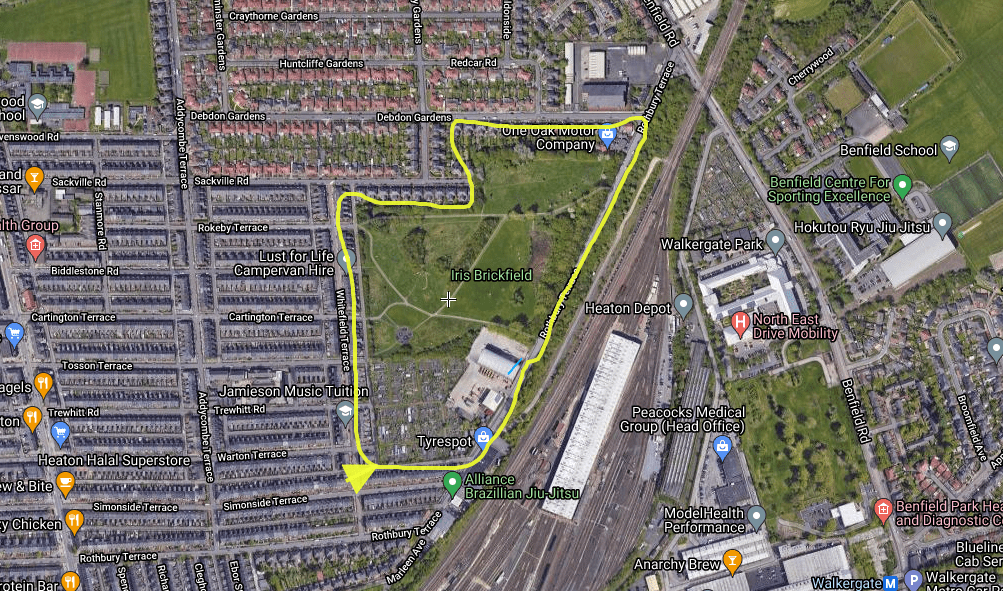
One of the most numerous solitary bees spotted over recent weeks, Tawny Mining Bees are everywhere at the minute. The lovely females shown above were spotted in Iris Brickfield, my local park, where a small colony can be found amid the close-cropped grass on the margins of the playing field. Always a delight, it is far easier to photograph them on dull days – they are just too quick when the sun is shining.

Another abundant bee, Buffish Mining Bees have emerged en masse over the last week or two. A visit to the famed colony at the Prudhoe Spetchells rewarded Matt and I with the sight of what must have been a few thousand bees engaged in what appeared to be a breeding frenzy. The sheer volume of bees made for quite the sight even if I found it difficult not to feel for the females engulfed by frenzied swarms of males.

While it is possible to visit the Spetchells safe in the knowledge that you will see Buffish Mining Bees, I had not expected to encounter a fresh female in our yard a few weeks back. The latest in what is turning out to be a long line of bee species to visit our patch since we started planting intentionally for them last year.

Superficially similar looking to the above species but sporting a white/blonde pollen brush as opposed to a buffish one, I seldom find Chocolate Mining Bees to be numerous. Indeed, over the last few weeks, I have noticed ones and twos at various sites locally, but alas, no great aggregations. Last year, I was lucky enough to discover a small colony of these chunky bees in my local park and sure enough, this year they emerged on cue. Once again favouring a particular stand of Cherry Laurel – the shrubs broad, glossy leaves apparently provide the ideal spot to bask and warm up.

A nice resource highlighting the difference between Chocolate and Buffish Mining Bees can be found here, courtesy of Charlotte Rankin.

A slightly more unexpected find, this time on the sandy banks of the Tyne near Close House Riverside, was a colony of Sandpit Mining Bees. Small and looking somewhat ‘silver’ in the field, a good number of these delicate little bees were observed around burrows positioned where a landslip has removed a good chunk of the bankside vegetation. Further bees still were observed foraging on Dandelion nearby.

Each year we eagerly await the emergence of Red Mason Bees in our little corner of urban Newcastle. Sure enough, right on cue, the first mason bees began emerging here roughly a fortnight back. A few pioneering males followed, in turn, by the larger females. Despite a wealth of potential nest sites in our yard, these bees appear to show no interest. The male pictured above (right) was however quite taken by the scabious we’ve planted to attract our local pollinators.

Now, this is an exciting one. Previously only known from the Alnwick area, the Hairy-footed Flower Bee now appears to be rapidly colonising much of Northumberland. Or perhaps they were there all along and are only now being noticed? No matter.

A few weeks passed, I was delighted with the opportunity to visit a known site for this species at Warkworth and sure enough, within minutes, was enjoying the sight of three of these energetic bees feeding on Flowering Currant. Fast forward a short while I have now also encountered these species in multiple squares around Felton and possibly also at Ulgham. They really are a joy to behold and I look forward to a day when they can be encountered closer to home in Newcastle.

While visiting Felton in search of the aforementioned flower bees, we also bumped in striking Early Nomad Bee shown above. A new species for me! A nest parasite of Clarke’s Mining Bee (Andrena clarkella) it was intriguing to watch the fearsome-looking cuckoo bee marauding about what I suspect was a colony of the former.


Bees really are a tricky group and, over the last month, I’ve made many mistakes while trying to identify the various species encountered on my ventures across the North East. Still, they are a fascinating group and I am very much enjoying the opportunity to get to grips with some of the more abundant species to be encountered in my area. As I (hopefully) encounter more over the weeks ahead, I’ll update this blog with any findings.

Wildlife recording on the street – looking back at 2020

When lockdown dawned in 2020 and naturalists across the country were forced to redirect their wildlife-watching close to home, I set myself a challenge: to find and record as many species as possible on and around my Newcastle street. Birds, bees and butterflies; mammals and molluscs, everything and anything counted. An easy task, or so I thought – there couldn’t possibly be much to be found within a small area of parkland, rail verge, and urban conurbation.

Fast forward to the start of 2021, and with a few final pleas for help identifying the last few remaining invertebrates, it seems I concluded the year with 272 species recorded on the streets of Heaton. Not a bad total for someone almost entirely new to biological recording and with little experience with anything lacking feathers.

A few highlights and musings follow…

Botany

Throughout 2020, 137 plant species were recorded during walks in Heaton. Unsurprisingly, the highest total of any group. Many of these were to be expected – Groundsel, Danish Scurvygrass, and Sun Spurge – ‘weeds’ often associated with urban areas. That said, there were several surprises and highlights. The presence of Northern Marsh Orchid and Sneezewort in the local park, deep-red Scarlet Pimpernel and sprawling Bittersweet tucked into the hidden corners of the street, and the odd bloom of Cuckooflower and Goat’s-beard.

Befitting my location, many of the plants recorded here in 2020 were somewhat tropical in origin. Heaton, it seems, is home to a wealth of globe-trotting flora. There was, of course, plenty of Buddleia, Trailing Bellflower, Yellow Corydalis and Opium Poppy to be seen; though there were a few surprises. Stands of Greater Quaking-grass and Black Nightshade were notable, Procumbent Yellow-sorrel was an interesting find and Causican Crosswort was most unexpected. I suspect there will be a few more escapees and garden renegades to uncover in 2021.

Prior to 2020 and the onset of the Natural History Society of Northumbria‘s North East Bee Hunt, I confess, I hadn’t spared much of a thought for bees and certainly couldn’t identify them. With this in mind, I was delighted to record 17 species of bee close to home. Some of these were to be expected – Tree Bumblebee, Common Carder and the omnipresent Buff-tails – but others were slightly more interesting. In the local park, colonies of Chocolate, Tawny and Buffish Mining Bees were unearthed (not literally). In the garden, Bronze Furrow Bee and Blue Mason Bee became regular visitors and a bit of sympathetic planting lured in Patchwork Leafcutter and Fork-tailed Flower Bees.

When it comes to wasps, I still haven’t a clue, though some friendly advice from the good folk of Twitter identified a moribund wasp as Median Wasp – a new species for me altogether.

Flies (mostly hoverflies)

Like bees, flies were new to me in 2020 (and even more confusing). With the help of the superb Wild Guides hoverfly publication, I was, however, able to make a start identifying the various species present on and around my street. In total, 21 species were observed. Among these, Pied Hoverfly and Narcissus Bulb Fly were particularly abundant. The garden also came up trumps again in this regard luring in Scaeva selenitica, Sphaerophoria scripta and Melangyna labiatarum.

Other flies were few and far between or rather, overly taxing, but Dark-edge Bee-Fly, Holly Leafminer and the tiny Trypeta zoe were all interesting spots.

Doubtless, there will be many more to uncover in 2021, should I develop the patience…

Lepidoptera

It was a poor year for moths here owing to street lights that overhang our yard, though the moth trap did yield one notable highlight: Obscure Wainscot, a regionally scarce species and a specialist of marshland and fens. Neither of which are present in the immediate vicinity. A brace of more familiar species including Peppered Moth, Grey Pug, Barred Yellow and Bee Moth at least ensured an entirely unrespectable list of 23 species recorded on the street. Another stand-out highlight was a Mother Shipton netted as it crossed the garden in Spring.

Whilst it was a bad year for moths, it was certainly a good year for butterflies with 9 species seen. Orange-tip in Spring was a welcome addition as was a new colony of Holly Blue that appears to have sprung up on the outskirts of the nearby allotments. Small Skipper and Ringlet adorned the local park throughout summer and our ever-trusty garden Buddleia succeeded in luring in Red Admiral, Peacock and Speckled Wood.

Let us hope for a Painted Lady in 2021, a species conspicuous in its absence last year.

Other smaller life

Records of other insects were few and far between and there is clearly still much to do in this regard. Among the beetles, Rosemary Beetle and Cream-spot Ladybird were highlights, and we did manage four species of Shieldbug. One of which, the Blue Shieldbug, was quite exciting.

We got off to a good start with molluscs too with Great Ramshorn and Great Pond Snail scooped from a local pond and the garden attracting Green Cellar Slug, Iberian Three-band Slug and some impressive Leopard Slugs.

The surprising lockdown hobby of counting woodlice also yield five species, one of which – Porcellio spinicornis – was entirely new to me.

As for spiders? Two notable records were had. The first, Hypositticus pubescens, constituting the first record for North East England for around 90 years. The second, Pseudeuophrys lanigera, is a similarly rare (or under-recorded) jumping spider.

Birdlife

Birds were never going to be the most numerous group so close to the city, but I did manage a respectable 42 species on walks close to home. Setting aside the tits and finches, it was nice to catch up with Siskin and Meadow Pipit as they migrated south over the house and the daily commutes of the local Ring-necked Parakeets added a splash of colour on dull days. A lone male Reed Bunting perched atop the tiny stand of Phragmites in Iris Brickfield Park was most welcome, as were a party of Redwing in late winter. Other highlights included Jay, Blackcap, Stock Dove and Oystercatcher.

What next?

Whereas like many I suspect, I thought lockdown and the resulting banishment from my favourite haunts would lead to endless boredom, I was pleasantly surprised to find the process of observing and recording wildlife close to home both cathartic and educational. I’ve learnt a great deal and, dare I say it, seem to be developing a wider appreciation for natural history in all its forms – as opposed to the birds, colourful orchids and iconic mammals that interested me previously.

I think I’ll continue with the process (or at least the attempt) of documenting my local, urban wildlife in 2021, albeit with a few changes. In the interest of diversity, I’ll be spreading out from the street to cover a circular 1-mile of Newcastle. What I’ll gain from this remains to be seen, but the extra shred of parkland, a small portion of the nearby Ouseburn, a cemetery and a few more streets to comb will undoubtedly help. I’ll also make a much more concerted effort to add everything I find (or at least the species I can competently identify) to iRecord.

Already, at the start of 2021, some twenty new species have been found in the local area. Fungi, bryophytes and molluscs mainly, which coupled with a renewed focus on invertebrates in Spring and Summer should provide challenge enough for this year.

Let’s set a target of 500 species by 2022 within the urban mile…

Where to watch wildlife in the North East: Silverlink Biodiversity Park

In a new series of articles, we’ll be taking a look at the best places to watch wildlife in  North East England.

By no means comprehensive but hopefully informative, these posts are intended to provide inspiration on where to visit in the North East to observe and enjoy nature, as well as detailing some of the wildlife you can expect to enjoy at these sites.

Based on the reports and sightings of North East naturalists and personal experience, I hope these posts might provide inspiration when choosing the destination of your next wild walk in the region.


Silverlink Biodiversity Park

A hidden gem in the heart of urban Tyneside, Silverlink Biodiversity Park is a fantastic spot at which to enjoy nature in the North East. Created in 1996 on the site of a former rubbish tip, the site was declared a local nature reserve in 2006.

Boasting a diverse array of habitats condensed into a small area of only 18 hectares, Silverlink supports woodland, hedgerow, wetland and grassland habitats. The latter of which being particularly worthy of a visit during the summer months due to an excess of invertebrates and vibrant plant life.

Invertebrates

One of the defining features of this urban oasis is its invertebrate community. The grassland areas here are particularly diverse and, in summer, hold a notable population of Dingy Skipper butterflies. Other butterflies to be seen here include good numbers of Common Blue, Ringlet, Meadow Brown and Large Skipper; while Comma, Small Tortoiseshell, Red Admiral and the three more abundant ‘whites’ are all represented.

On warmer days in June and July, day-flying moths can be very abundant including a thriving colony of Six-spot and Narrow-bordered Five Spot Burnets – the larval casings of which can often be spotted perched atop grass stems throughout the meadow area. Other species seen include Latticed Heath, Mother Shipton and Silver Y.

Silverlink Biodiversity Park is notable locally for Odonata and dragonflies and damselflies on-site include Common Darter, Southern Hawker, Broad-bodied Chaser, Large Red, Common Blue and Azure Damselfly. A Lesser Emperor, marking only the second-ever county record, was found at the site in 2019.

The lesser recorded insect groups at Silverlink Biodiversity are equally worthy of attention. Of these, hoverflies are conspicuous and recent trips have revealed species such as Cheilosia illustrata, Scaeva pyrastri and plenty of the eye-catching and abundant Heliophilus pendulus.

Plant life

Botany at Silverlink Biodiversity Park is a real pleasure. For many, it is the sites Bee Orchids that hold the greatest appeal and in good years, many of these beautiful flowers can be seen throughout the sites grassland areas. In damp spots, Northern Marsh Orchid can also be found; while Common Spotted Orchid may appear anywhere across the site.

The grasslands of Silverlink are particularly interesting during high summer when species such as Viper’s Bugloss, Common Bird’s-foot Trefoil, Kidney Vetch and Common Knapweed are in full bloom. There is also a nice area of Quaking Grass, Zigzag Clover and pockets of the quirky-looking Bladder Campion.

Damper, more verdant areas of the site hold small areas of Ragged Robin, Bittersweet, Marsh Thistle and Water Mint, with species such as Water Figwort popping up occasionally and an expansive area of prehistoric-looking Butterbur also present.

Given its urban location, it is also not unusual to find adventive, non-native species at Silverlink and this year alone, I have encountered Oriental Poppy, Globe Thistle and two unusual forms of ornamental Crane’s-bill.

Birdlife

Silverlink is not particularly notable for birdlife but the site still does hold a good range of species. Typical woodland species such as Great Spotted Woodpecker, Bullfinch, Nuthatch, Treecreeper and Jay can be seen; while Sparrowhawk, Buzzard and Kestrel can be observed on site. Lucky visitors may also spot Long-eared Owl.

The small pools present on-site hold breeding Coot, Moorhen and Mallard and occasionally host Tufted Duck, Grey Heron and Gadwall. Only once have I heard Water Rail on-site; though with some relatively large sections of riparian vegetation, it is likely they can be seen year-round.

These small ponds demonstrated their potential to pull in interesting birdlife in 2017 when a stunning drake Ferruginous Duck was found on site. More on that here.

Ferruginous Duck (Aythya nyroca) at Silverlink Biodiversity Park

Mammals

A nice array of mammals can be seen at Silverlink, including Roe Deer, Hedgehog and Red Fox. The small pockets of woodland hold Grey Squirrel; while small mammals seen here include Common Shrew, Wood Mouse and Bank Vole. Rabbits are less plentiful than they once were but remain, and visitors may encounter Weasel and Stoat across the site.

Exploring the Fascinating Flora of Lindisfarne

I have visited the Holy Island of Lindisfarne many times to admire the sites birdlife, chase rarities and even seek out insects, but never to appreciate its diverse and interesting flora.

Lindisfarne is well known as an excellent site for those interested in botany, it’s unspoilt beaches, sprawling dune slacks, fields and expansive areas of salt marsh reminiscent of a time before man altered Britain’s coastal habitats beyond recognition. Home to many intriguing and, in some cases, scarce species, the botanical community here is diverse enough to keep visitors enthralled for hours. As it did us on overdue visit this week.

Brace yourselves, this could be a long one…


Arriving on Lindisfarne and heading first for the quiet reaches of The Snook, we set off in search of the islands most sought after plant species: the Lindisfarne Helleborine. First discovered on Holy Island in 1958, this understated but beautiful orchid is endemic here and in July, blooms in small numbers across the Western tip of the island.

During a half-hour search of the Snook, we were able to locate just a single orchid. Stumbling across the delicate, green and white flower atop a small mound where it grew conspicuously amongst the Marram. Perhaps a little muted, at least compared to the island’s larger, showier orchids, but a pleasure to behold nevertheless.

Moving on to investigate the nearby dune slacks, it seemed we had timed our visit perfectly to coincide with the emergence of another, arguably more appealing orchid: the Marsh Helleborine. Blooming in their hundreds right across the Western tip of the island, these orchids made for quite the sight – purplish flowers contrasting with the suppressed tones of many other Helleborines, and boasting an exceedingly frilly ‘lip’. These locally abundant flowers are by all accounts a real beauty.

Now well and truly hostage to the ‘orchid fever’, a search for the islands other orchid species revealed good numbers of vibrant Pyramidal Orchid, now reaching their peak; while other species observed included Common Spotted Orchid, Northern Marsh Orchid and Common Twayblade – the latter three now appearing somewhat haggard and spent. No matter.

Orchids are special but by no means are the be-all and end-all of the trip to Lindisfarne, and during our stay, many other interesting species were to be found. None more so than a single specimen of Scots Lovage found nestled in a sheltered area of the dunes. An Arctic plant, Northumberland marks the most Southerly limit of its UK range and records from Lindisfarne have been few and far between since 1985.

Here too, the succulent stalks of Sea Sandwort protruded from the bare sand, reminiscent of something you would find in the houseplant section of your local garden centre.

Back in the dune slacks and we were delighted to encounter the deep-pink flowers of Seaside Centaury; whilst a low-growing purple flower turned out to be Purple Milk-vetch, another first for this amateur botanist. I confess, I almost mistook it for one of the countless Self-heal flowers showing en masse here…

Common Valarian and Tansy were observed here too and the wetter areas were flush with the delicate yellow flowers of Lesser Spearwort and the curious, circular leaves of Marsh Pennywort.

At ground-level, Creeping Willow was conspicuous and a few large areas of blooming Hop Trefoil provided interest.


Departing the Western reaches of Lindisfarne, we headed East to the village. Passing through, it was difficult not to appreciate the plant diversity present in the high garden walls – old stone painted a wonderful mix of greens by the fronds of countless ferns. Here, we found a good range of common species, including Wall-rue, Maidenhair Spleenwort and Polypody; while it was nice to see both Biting and White Stonecrop in bloom. The island’s abundant Wallflowers had gone over, now displaying a glut of pea-like seed pods.

Departing the thronging village streets, a long walk around the Eastern side of the island ensued, taking in the iconic castle en route. In the vicinity of the castle, we stumbled across a nice clump of blooming Harebell alongside Thrift and a pretty example of what I think could be Dwarf Mallow – far daintier than its hulking cousin found growing here too. The castle walls were draped in an impressive display of Red Valarian and both Sea and Buck’s-horn Plantain were noted.

Attempting to curtail this particular botanical tale, towards the North Shore of the island highlights included large expanses of Wild Thyme and Common Cottongrass, as well as what I think could have been Slender Thistle (I really must practice my thistles). Grassier areas proved productive too with an impressive display of Meadow Vetchling interspersed with the pink blooms of Red Bartsia and, in select places, the familiar flowers of Field Scabious. Finally, the buried remnants of an old wall held Carline Thistle – a species I have seen further afield but never before in my native Northumberland.

Of course, no trip to Lindisfarne would be complete absent an encounter with the omnipresent Pirri-Pirri-bur which blights the island. Originating from Australia, this tenacious invader was observed right across the site; though only twice did I fall foul of its hooked burs. Controlling this species presents many problems and it seems unlikely that it will be going anywhere anytime soon, despite the best efforts of those who manage the reserve.

Of course, where there are wildflowers, there will also be pollinators and it would be rude not to cast the spotlight on a few of the insects observed throughout the day. In particular, this superb Dark-green Fritillary delighted as it nectared from the blooms of Creeping Thistle. Other butterflies observed include many Small Heath, Ringlet, Meadow Brown and Common Blue, alongside smaller numbers of Small Tortoiseshell, Red Admiral and Large White.

Dark Green Fritillary (Speyeria aglaja)

Wonderful Wildflowers at Bishop Middleham Quarry

A Special Site of Scientific Interest (SSSI) and Durham Wildlife Trust nature reserve encompassing a disused magnesian limestone quarry, I have read about Bishop Middleham Quarry for years. People, it seems, visit the site from far and wide to experience the fantastic flora on offer here. As well as for an abundance of colourful insects.

It is the bedrock here that gives the site such appeal. The quarry itself ceased work in 1934 and was left to restore naturally, providing a rare opportunity for magnesian limestone plant species to colonise and stay put. The quarry holds a number of quite rare species, restricted by the scarcity of limestone habitats in the wider countryside, but rarity aside provides an opportunity to marvel at a vibrant community of plants, insects and other wildlife. It really is a fantastic site.

Arriving at the site with orchids on the brain, it wasn’t long before we encountered our first. Scattered across the upper-tier of the quarry grassland, Common Spotted Orchids bloomed in their dozens – tall spikes of alternating shades of pink, purple and white looking lovely amid swaying stems of Quaking Grass and the blooms of Restharrow, Common Rock Rose and Bird’s-foot Trefoil.

Here, we stumbled across a beautiful, pure white specimen – the alba variant of this common species?

Scattered among the paler blooms of the spotted orchids, the deep-purple flowers of Northern Marsh Orchid were easy to make out. Less numerous, by far, but nice to see. Perhaps more exciting, however, was a single flower of Pyramidal Orchid found only metres into the reserve. A new species for me, a joy to behold and the first of many seen throughout our visit.

Still only metres from the reserve entrance, we soon encountered the day’s target species: Dark-red Helleborine. Bishop Middleham Quarry is known as the best place in the UK to observe this limestone-loving orchid and, sure enough, we encountered hundreds during our stay. Perhaps we were a little early as many had yet to open; though some pioneering plants were in full bloom. Thankfully!

Prying ourselves away from the helleborines, it was not long before we stumbled across two new orchids. On the quarry floor, the egg-shaped leaves and fading flower spikes of Common Twayblade were immediately apparent – not exactly striking by orchid standards but nice to see. Here too, a few Fragrant Orchids were found, another first for me and definitely deserving of a sniff to test their validity. The verdict? They did smell rather nice!

The least abundant orchids on-site were Bee Orchids but, having been pointed in the direction of a particular slope by a kind passer-by, we soon found three spikes in full flower. A plant that warrants little exposition and never fails to earn a smile. Here too, more Pyramidal Orchids were found.

As someone with very much limited knowledge of plants, Bishop Middleham Quarry also provided an opportunity to get to grips with a number of less-specialist species I seldom encounter around my usual haunts. It was nice to be able to compare Small and Field Scabious found growing side-by-side in a more verdant area of the site; while a tall yellow flower could well have been Agrimony.  Perforate St. John’s-wort was numerous but we failed to find (or at least, identify) the scarcer Pale St. John’s-wort which is said to grow here. A fine reason for another visit, I think.

Whilst trying (and failing) to locate Moonwort, I was pleased to stumble across a single flowering Harebell; while the strange, pea-like stalks of what I think was Yellow-wort were found on an old spoil heap. Other species observed included Wild Thyme, Greater Knapweed, Mouse-ear Hawkweed, Red Valarian and Wild Strawberry.

Whilst many of our walks focus on plant life these days (I’m not sure what has happened to me, in truth) we did find the time to admire some of the insect life present on site. Butterflies were incredibly numerous with plenty of Ringlet and Meadow Brown seen, alongside smaller numbers of Small Skipper, Common Blue, Speckled Wood, Small Heath and Small Tortoiseshell. Moths on the wing included Six-spot Burnet, Latticed Heath and Shaded Broad-bar.

A brief scan of the plentiful Hogweed tops on site revealed a few common hoverflies including Heliphilus pendulus, Volucella pellucens and Marmalade Hoverfly. Here too a grasshopper was apprehended (with great difficulty) and tentatively identified as Common Green Grasshopper owing to the in incurved, cream-coloured line on its shoulder.

Common Green Grasshopper

None of the sites famous Northern Brown Argus were seen on this occasion but, with countless other items of interest observed, a fantastic day was had.

Bishop Middleham Quarry is an exceptional, altogether beautiful site. A fine testament to what can happen when sites exploited by humans are returned to nature. I will definitely be visiting the site again in the future, even if it does involve more frequent trips (dare I say it) south of the Tyne!

The Pound Wood ‘Fritillary Site’ – a place for butterflies and a great deal more, by Ross Gardner

The Essex Wildlife Trust’s Pound Wood, like so many ancient woods, is a special place and for different reasons.  It is special for being somewhere for the people of this busy and built-up part of Essex to establish, or indeed re-establish those close and valuable connections with the natural world, something so important, not only for the well-being of ourselves but crucially for raising the awareness of the need to look after the wild places that we are fortunate enough to still have near us, as well as those further afield.  It is special for being an important link in a Living Landscape, alongside the other woods and green spaces in the neighbourhood; for reminding us that nature conservation today has to extend beyond the boundaries of established nature reserves to meet the fresh challenges that our wildlife face.  And it is special because it is an ancient wood, which over the centuries of continuous existence has accumulated a diverse assemblage of wild plants and animals; no other habitat in our country has a greater diversity of species.

Special places will invariably have special things living within them.  Here, it will often be the heath fritillary (Melitaea athalia) that first comes to mind, one of Britain’s rarest butterflies which has been present in Pound Wood since its reintroduction in 1998.  They were released into the part of the reserve where power-lines cross its north-western corner.  Since this stretch of the wood has always needed regular cutting to prevent the fouling of the cables, it presented itself as the ideal reintroduction site for these butterflies of open woodland.  The more frequent cutting benefits not only the electricity company, but also provides the open conditions necessary for the butterflies and their foodplant (common cow-wheat – Melampyrum pratense) to thrive.  It is a part of the wood now colloquially referred to as the ‘Fritillary Site’ and while most of it lies off the beaten track, some of the reserve’s paths either cross or run close by it offering visitors every chance of seeing these so very scarce butterflies.

What has been created though, is far more than a prime habitat for a single species.  What can, in fact, be found, running the length of the pylon corridor, is the most species-rich part of the whole reserve.  A vibrant and hugely important component of the wider wildlife value of the wood, even before we consider its rare butterflies.  The list of species associated with it is long and varied, many of which have not been recorded elsewhere in the reserve.  It is a list that includes a number of uncommon insects.  Some of those tiny micro-moths that fizz sprite-like about the low plants and leafy path-sides are in reality as colourfully and beautifully marked as the butterflies that more readily draw our attention.  One such is Dasycera olivella, a creamy yellow and iridescent purple marked little beauty found only rather sparingly among the broadleaved woods of southern England.  They are known to be fond of recently coppiced areas and, once you have your eye in, are a common early summer sight beneath the power-lines, where almost all of the Pound Wood observations have been made.

Dasycera oliviella © Ross Gardner

It is within this part of the reserve, and unlike those areas incorporated into the usual 21-year coppicing cycle that will inevitably and necessarily shade over as the stools regenerate, that grassier plant communities are able to persist.  Such habitat suits two nationally scarce bush-crickets, long-winged conehead (Conocephalus discolor) and Roesel’s bush-cricket (Metrioptera roeselii).  The sole records in the reserve for such species as green hairstreak (Callophrys rubi), horned treehopper (Centrotus cornutus) and tortoise shieldbug (Eurygaster testudinaria) have all come from the Fritillary Site.  Perhaps the broom that thrives here will come to support a future population of the aforementioned, locally scarce butterfly

But it is not just the rare things that can make an area special, it is the community of plants and animals as a whole.  Spring and summer sees more than the creamy, tubular flowers of the cow-wheat adding colour among the heady-scented sweet vernal grass, but other coppicing plants, like slender St John’s-wort (Hypericum pulchrum) and wood spurge (Euphorbia amygdaloides).  Where ditches run across the clearings marsh bedstraw (Galium palustre) proliferates and lesser spearwort (Ranunculus flammula) thrives, while a marshy area grows thick with willowherb and rush.  Stands of spear thistle (Cirsium vulgare) tower over most, but far from being a nuisance they provide abundant nectar for a host of hoverflies and bumblebees.   Milkwort (Polygala serpyllifolia), hemp-nettle (Galeopsis tetrahit), field woodrush (Luzula campestris) and pale sedge (Carex pallescens) all find their only Pound Wood locations here.

This is somewhere that the creatures of the woods and its edge habitats can live cheek by jowl with those of the grasslands.  The flourishing colony of small skipper (Thymelicus sylvestris) might well brush wings with the occasional white admiral (Limenitis camilla) the latter is a magnificent black and white butterfly, declining nationally, but apparently spreading in Essex – they reappeared in the wood in 2018), while brown argus (Aricia agestis) were noted in the reserve for the first time in 2019, around the same time that a silver-washed fritillary (Argynnis phaphia) was very possibly the first one seen here for many decades.

The list really could go on.  The likes of the groundhoppers and grasshoppers, mirid bugs and beetles, spiders and solitary wasps haven’t even been given a mention.  There is the impressive and lengthily titled golden-bloomed grey longhorn beetle (Agapanthia villosoviridescens), for instance, an uncommon species whose larvae, unlike many of its timber feeding relatives, develop in the hollow stems of umbellifers and thistles.    And of course, where there is prey there are predators.  The reserve’s small bird and dragonfly populations can and do find rich pickings here.

Golden-bloomed Grey Longhorn Beetle © Ross Gardner

Eye-catching Invertebrates at Gosforth Nature Reserve

Owing to a diverse mosaic of habitats, including plentiful dead wood, Gosforth Nature Reserve is a fantastic place at which to indulge a fascination for the North East’s smaller wildlife.

This Rhinocerous Beetle (Sinodendron cylindricum) was, without doubt, the star of the show last week. A first for me, this glossy, cylindrical beetle (a male) definitely lived up to its name – sporting a distinct, rhinoceros-like projection on its head. A species known to rely on the presence of dead and decaying wood, it was not usual to encounter this beetle here, but nevertheless, it was a pleasure to finally see one up close.

Recent visits have yielded no less than three eye-catching Longhorn Beetles – each known only by an obscure, hard to pronounce scientific name. The vivid, orange and black individual I believe to be the Four-banded Longhorn Beetle (Leptura quadrifasciata); while the second species observed feeding on Hogweed blooms may be the Speckled Longhorn (Pachytodes cerambyciformis). The tiny longhorn, also observed on hogweed tops, may be Grammoptera ruficornis.

This year, I have been making a concerted effort to learn more about Britain’s hoverflies, with limited success – they are a tricky bunch! Anyways, five minutes by the entrance to Gosforth Nature Reserve provided an opportunity to scrutinise a dozen are so species. It was nice to be able to compare and contrast two of the eye-catching Helophilus species, the common and abundant Footballer (Helophilus pendulous) and Helophilus hybridus. Pellucid Fly (Volucella pellucens) and Batman Hoverfly (Myathropa florea) were both conspicuous, as were the eerily red-eyed Dark-winged Chrysogaster (Chrysogaster solstitialis).

Almost as exciting as the encounter with the aforementioned beetle was a chance meeting with two ‘busy’ moths in the interior of the reserve. Immediately recognisable from moth guides and excitable tweets alike, these turned out to be Red-necked Footman (Atolmis rubricollis). This would appear to be a scarce species in the North East, with records this far North often attributed to migration from the continent. To see the pair mating gives hope that a colony of these pretty moths might just appear here in the near future…

Red-necked Footman

On the ponds at the nature reserve, it was lovely to watch both Four-spotted and Broad-bodied Chaser dragonflies on the wing; while the warm weather had brought out a fantastic variety of butterflies including Large Skipper, Common Blue, Red Admiral, Small Tortoiseshell and my first Ringlet of the year.

In terms of bees, the usual array of bumblebees were all present – including a handsome male Vestal Cuckoo Bee (Bombus vestalis). More interesting was a fresh-looking Early Mining Bee (Andrena haemorrhoa) by the reserve entrance. It was also fantastic to catch up with not one but two Orange Ladybird (Halyzia sedecimguttata) – these little woodland specialists really are quite splendid!

Chasing Urban Orchids

Few wildflowers capture the imagination quite like our orchids. They’re beautiful, of course, but also sufficiently scarce to provide a little jolt of excitement whenever you happen across one. They are also the only group of plants – to the best of my knowledge – that manages to unite all natural history enthusiasts, whether they be birders, lepidopterists, mammal-watchers or anyone else, under a single banner of botanical appreciation.

I stumbled across my first urban orchid of the year a fortnight past in my local park – a towering and luscious Northern Marsh Orchid rising skywards from the rough grass that adorns the peripheries of my local pond. Inspired, for the past fortnight, I have set about checking the various local sites to which I make annual pilgrimages in search of these vibrant little flowers.

First up, a trip in search of what is usually the most abundant species around me during mid-June: the Common Spotted Orchid. Well, this year, they appear far from common, with only a handful observed at a regular site and none at all at another. Perhaps they have been delayed somewhat by the unseasonably dry spring we have endured? Regardless of the reasons behind their reduced numbers, those we did see looked wonderful, their pointy, lilac flowerheads adding a welcome splash of colour among the alternating greens of the Juncus.

Common Spotted Orchid (Dactylorhiza fuchsii)

If Common Spotted Orchids appear scarce this year, Northern Marsh Orchid appears to be doing rather well. Following the initial sighting in the local park, I have encountered these much sturdier-looking orchids at three sites this week, and in good numbers. Many appear stunted and small compared with the towering spikes familiar from previous years but all maintain their lurid, purple appeal.

Northern Marsh Orchids may seem uniformly ‘purple’ from a distance but, looking closer, the repeated pattern of deep purple ribbons sat atop a violet backdrop makes for quite the beautiful sight.

Northern Marsh Orchid (Dactylorhiza purpurella)

I have written before about my fondest for Bee Orchids, perhaps one of our most iconic and sought after native wildflowers. Keen to seek out this year’s fix, this week I set off to a favourite local haunt where, in 2019, upwards of sixty stalks of this much-celebrated bloom were observed. A familiar trip which, unusually, ended in disappointment.

Three visits to Silverlink Biodiversity Park over recent days failed to yield a single orchid across what is usually a fairly productive area of flower-rich grassland. Despite the recent rains, the ground here remained baked dry and I couldn’t find a single leaf, never mind a flower.  Here, even the abundant Birds’-foot Trefoil seem suppressed and stunted due to the reason drought and, in the closing minutes of our third trip, we eventually gave up hope.

It was only when my partner decided to look once again at the margins of one of the nearby ponds did our luck change. Here, among the marsh orchids more characteristic of such damp places, two bee orchids stood proud, determined to buck the wider trend on site.

Bee Orchids need little exposition: they’re sublime, intricate and a little intoxicating, the very reason so many seek them out each year. Savouring the sight of the two pioneering blooms, I was simply happy to have enjoyed them for another season.

Hopefully, next year, Bee Orchids will once again rise en masse across this one small meadow. We’ll see…

Bee Orchid (Ophrys apifera)

A Walk on the North Downs Way, by Frances Jones

A couple of weeks ago, I walked part of the North Downs Way with a friend. Not a particularly unusual event, normally, but many of us have had rapidly to adjust our expectations of normal over the past months. I had wandered through the fields around my home almost every day since lockdown, charting Spring through the greening hedgerows, the emergence of butterflies, and the increasing birdsong. The hills were calling, though, and I was looking forward to sharing a walk.

We had chosen the meeting point and decided on a direction, but other than that had no plans other than to walk, talk and enjoy the glorious weather. We set off through Denbies Vineyard where the young vines were starting to climb and coil around the wireframes. Following the North Downs Way westwards, we climbed up through beech woods, past a small flock of sheep in a fenced off-field, and past Ranmore Common church, a sacred slice of Gothic Revival architecture appearing rather incongruous amongst the trees. The ground was parched from lack of rain, and there were deep ruts from where a vehicle had made a manoeuvre. We looked out across the valley and the tree-lined horizon with Leith Hill Tower ahead. Crowds were beginning to trickle in from the hill-top car-park, and I felt the need to press on, to discover, to step away from the every day and become an intrepid explorer. We welcomed the shade as the North Downs Way led us through a gate and into an arboreal tunnel where the temperature, though still pleasant, dropped slightly and the sound of people’s voices was replaced with birdsong. A speckled wood fluttered towards us and hurried past, seeking the sunlight, perhaps, in a woodland glade.

The path followed the contour of the hillside and was fairly level, with just the odd tree root to cause us to be mindful of our step. We passed an old WW2 bunker, a concrete cube with a small narrow entrance leading into its dark depths. We didn’t venture in, looking out instead at the views, which could be glimpsed only intermittently through the trees. Now and then, the track opened out onto grassy areas where, amongst prickly stems of field-rose,  common spotted orchids grew in delicate splendour. When my stomach began to make rumbling noises, we trod carefully over the bank in search of a lunch stop, trying to avoid plonking ourselves on a bramble or, worse still, an orchid. I munched a sandwich and mentally paused; looking into the green woodland of young oaks was deeply calming.

It was around this point that we made an error of navigation, for sometime after lunch we noticed the terrain becoming unfamiliar. At the start, I’d intended to walk some distance along the North Downs Way, then turn right and amble back through the woodland alongside Ranmore Common Road, and back down the hill to the vineyard. Neither of us recognised the scenery now and when we climbed through a meadow to read the sign at the top, it confirmed we weren’t exactly where we’d thought: Blatchford Down. On the North Downs Way, but rather further along than I’d anticipated. There was quite a walk back, but the weather was glorious, the views equally so, and we had water. We tramped through the woods once more until we reached the gate where the trees ended and the grassy down began. Passing through the gate I felt rather as I imagined Lucy to feel on stepping back into real life after her trip to Narnia: the sun was still high in the sky, picnickers were still out on the hill-side, and children with ice-creams were trailing parents up the slope. We walked down into the vineyard and back to the cars. It had been a glorious walk and freedom was slowing opening up. I resolved one day to trek the whole route from Farnham to the sea. But I would need to use the map, this time.


Excitement in the wildlife garden

Wildlife gardening has become somewhat of an obsession of late as we attempt to make our urban ‘yarden’ as appealing as possible to all forms of life, from flies to visiting birds. Hand in hand with this, we have increased the time spent monitoring our little plot, with positive results. Already this year, we have recorded 68 species in our yard!

Now, 68 species may not seem overly impressive, at least when compared to the sky-high numbers achieved by other naturalists in the news recently. For us, however, its a wonderful starting point and provides ample inspiration to soldier on and keep counting! The diversity of life sharing our space now, following a few positive tweaks, contrasting sharply with what came before. The odd bluebottle, magpie and garden snail were replaced by a veritable hotchpotch of wild delights.

Here are a few new visitors observed and enjoyed over the past few weeks…

Fork-tailed Flower Bee

Spurred on by some pollinator-friendly planting, bees have continued to flock to our little assemblage of pots and plants. So far, we have recorded twelve species here with two interesting additions coming in the last fortnight. The first of these an entirely new species for me.

Fluffy, dumpy-looking yet wonderfully agile, the Fork-tailed Flower Bee looks (at least to the eyes of this inexperienced hymenopterist) somewhat like a cross between a bumblebee and one of the smaller, solitary bees. Seemingly scarcely recorded in my area, it came as somewhat of a surprise to catch sight of a male bee zipping about the flower bed one morning.

Boasting a distinct yellow face, these energetic bees are a delight to behold and, fast forward a few days, are becoming increasingly frequent in our yard. The aforementioned visitor quickly flowered by 4-5 more seemingly fixated on plants of the Lamiaceae (nettle) family. I must plant more mint…

An in-depth fact sheet for this species can be found on the BWARS website and is well worth a look.

Fork-tailed Flower Bee (Anthophora furcata)

Patchwork Leafcutter Bee

Just like the former bee, this garden visitor provided a welcome surprise. Roughly the size of a honey bee and boasting a striking clementine underside to it’s abdomen (the females at least), numbers of this delightful bee have built steadily over recent weeks.

Known to favour roses for their leaf-cutting antics, I live in hope that we may soon notice distinct, circular holes in our two garden plants. A few tatty looking leaves a small price to pay for hosting these intriguing little bees.

Perhaps they may even stick around to use our bee box? Fingers crossed.

Patchwork Leaf-cutter Bee (Megachile centuncularis)

Pied Hoverfly

Having recently acquired the incredibly detailed and accessible Wild Guide’s guide to Britain’s hoverflies, I’m slowly getting to grips with this tricky group, and greatly enjoying the hours of frustration as I find myself forced to scrutinise near-invisible wing-loops and ever so slight differences in patterning.

Thankfully, not all hoverflies are a pain to identify and a few days past we were lucky to catch sight of a large, monochrome individual in the yard. A quick skim through the aforementioned publication and the critter was revealed as a Pied Hoverfly, a distinctive migrant from mainland Europe.

Pied Hoverfly (Scaeva pyrastri)

Leafminers

For weeks now we have been noticing the distinct tunnels of leafminers on a range of garden plants, from ligularia to Silver Ragwort. While these remain a mystery, for now, a brief stint in the greenhouse revealed two potential culprits temporarily trapped inside.

Now, if I am a novice when it comes to hoverflies, I know absolutely nothing about flies that do not hover. Browsing a few online resources, however, I have made a tentative attempt to identify the minute beasties in question. The result? Tephritis formosa, a species known to feed on sow thistles, and Trypeta Zoe, a colourful little fly known to favour plants in the Asteraceae family. I am by no means confident in these identifications but it is good fun to step outside your comfort zone now and again.

Trypeta Zoe and Tephritis formosa, possibly!

Chaffinch

Now, I suspect few will share in my excitement over the humble Chaffinch but, having fed birds in our garden for almost three years, this is the first time this species has paid a visit. Recurring visits by a male bird each morning for the last few days providing a welcome touch of the ‘exotic’ among the more regular House Sparrows and Goldfinches.

As I write this, the bird in question is singing from the TV antennae atop my neighbour’s house following a brief stint pecking at his reflection in the bay window this morning. His continued presence makes me very happy indeed.

One of the great things about wildlife recording at home is definitely that the commonplace can equally as exciting as the rare.

A handsome garden visitor…

Investigating the Prudhoe Spetchells

For a long time, I have read with envy the blog posts of others who have visited the Prudhoe Spetchells yet, shamefully, have never found the time to visit myself; though this all changed a fortnight past.

The Spetchells are an interesting site in a great many regards. Created as a by-product of factory work during World War two, they represent the only example of a chalk dominated habitat in Northumberland. The deposited chalk and the imposing mound created decades ago forging a locally unique habitat home to a very interesting community of plants and invertebrates.

Starting out and taking the short track uphill towards to top of the mound, we quickly found ourselves stopped dead in our tracks – bees! And a great many of them. Honestly, I don’t think I can recall a time when I have witnessed so many bees in one spot at the same time. The sight of countless insects on the ground, in the air, and adorning low-growing vegetation was truly impressive.

Looking closer, the vast majority of the bees on the show turned out to be Buffish Mining Bee – the Spetchells is, after all, renowned as a location at which to observe and enjoy this species. We estimate that we saw maybe four to five hundred of these bees during our visit; though I have been informed that earlier in the season, visitors can expect to see many thousands.

Buffish Mining Bees (Andrena nigroaenea)

Less numerous than the Buffish Mining Bees and easy to pick out from the swarm were a number of Ashy Mining Bee – a new species for me and perhaps one of Britain’s most eye-catching solitary bee species. The monochrome appearance of this species is rather endearing, and definitely eye-catching.

After a few fleeting glances, we were lucky enough to catch sight of a female excavating a fresh burrow while nearby, another watched us intently from the entrance to a nest hole. A few smaller, less striking males were also observed.

Ashy Mining Bee (Andrena cineraria) are somewhat harder to find on the Prudhoe Spetchells

Of course, where there are solitary bees, there will inevitably be nest parasites, and throughout the afternoon, we enjoyed the sight of many Nomada cuckoo bees inspecting burrows with sinister intent. These are a confusing bunch and of the handful of species present, only one was identifiable to our amateur eyes: Gooden’s Nomad Bee. Still, these colourful bees made for enjoyable viewing as they carefully inspected the many visible burrows, occasionally being forced to beat a hasty retreat having encountered the burrow owner mid-way down.

Elsewhere, whilst photographing bees of the buffish variety, Matt emerged with some grainy images of a new bee – one I definitely hadn’t seen before. Thankfully, local naturalist Louise Hislop was quick to identify this as Hawthorn Mining Bee.

Hawthorn Mining Bee (Andrena chrysosceles) and Gooden’s Nomad Bee (Nomada goodeniana)


The Spetchells is a notable site for more than just bees and the floral community here is also rather unique. I confess, we did not spend half as much time as we should have to look at wildflowers but what we did see was most interesting.

At ground level, the fragrant leaves of Oregano were very obvious and definitely worthy of a ‘scrunch and sniff’. Slightly more eye-catching were the dropping, pink blooms of Columbine and dainty purple flowers of Wild Pansy. The many buttercups just starting to bloom here turned out to be Bulbous Buttercup; while Wild Mignonette and Bird’s-foot Trefoil were just starting to flower. One of the site’s most damaging invasive species, Creeping Cotoneaster, was extremely obvious; though it appeared that the dedicated volunteers who tend the site had managed to beat the invader back to a few albeit sizeable patches.

Columbine (Aquilegia vulgaris), Bulbous Buttercup (Ranunculus bulbosus), Oregano (Origanum vulgare) and Wild Pansy (Viola tricolor)

The presence of the aforementioned Bird’s-foot Trefoil at the site led to a most welcome encounter with a Dingy Skipper butterfly, as ever too quick for a decent photograph. A handful more of these dull yet charming sprites were observed on the return journey too. Ever welcome – they remain a relatively uncommon sight in my area.

Dingy Skipper (Erynnis tages), a common sight on the Prudhoe Spetchells

Ultimately, the Spetchells is a site that warrants much further investigation. Unique and beautiful, this is a truly wonderful location and one of South Northumberland’s hidden gems. I thoroughly enjoyed my first visit and can’t thank enough the members of the local community who keep this fabulous site safe, secure, and in tip-top shape for wildlife.

Into the Wild Woods at Allen Banks

Spurred on by the gradual easing of lockdown restrictions in England, this weekend past saw us venture forty-five minutes inland to the wild reaches of Allen Banks. An ancient woodland site situated on the banks of the River Allen and maintained by the National Trust.

Now, I visit Allen Banks at least once every year to make the most of the aged woodland setting and enjoy the species that come hand-in-hand with such places. This visit, however, felt extra special following months couped up at home with only short, urban walks from which to derive enjoyment. After a few minutes of gazing upwards at the canopy of old oak, ash and towering beech trees, it was clear I had made the right decision.

Allen Banks is a fantastic location at which to enjoy a suite of scarce Northumbrian birds and, sure enough, upon entering the wood, the song of a Pied Flycatcher drifted down from the canopy of a, particularly tall beech. One of four heard during the course of the day. Elsewhere, a Sparrowhawk rode the thermals above the river and riparian species – Dipper and Grey Wagtail – held our attention for some time.

Rather unusually, birds were not the purpose of the day’s visit, however, and we soon set off uphill intent on some botanising around Morralee Tarn. On route, we were pleased to note a single Early Purple Orchid blooming amid a rather desolate patch of brash. A new species for me and one which stood out like a sore thumb, the purple flower spike contrasting sharply with the browns and greys of the fallen timber.

Early Purple Orchid (Orchis mascula)

At the tarn, we noted another new species for this [very] amateur botanist: Opposite-leaved Golden Saxifrage, a rather lovely, moisture-loving plant characteristic of stream-sides and damp places in upland Northumberland. Other plant species observed here included Wood Ruff, Mare ‘s-tail, Marsh Marigold, Marsh Cinquefoil and introduced White Water Lily. I confess I was unable to identify the small Stitchwort species growing around the pool margins; though a patch of Wild Strawberry in bloom was less tricky.

On the tarn-side vegetation, Large Red Damselflies rested, freshly emerged and looking rather radiant; while the shallows held the tadpoles of Common Toad and what was likely a Palmate Newt.

Opposite-leaved Golden Saxifrage (Chrysosplenium oppositifolium), Wild Strawberry (Fragaria vesca) and Large Red Damselfly (Pyrrhosoma nymphula)

Heading downhill this time and west along the river, the diversity of ferns on show in the lower reaches of the wood was impressive. Hart’s-tongue and Polypody were identifiable though the rest, not so much. As such, we made do with appreciating the somewhat primordial sight before dashing off in search of something a little more colourful.

Upstream, we spent a good hour combing the tussocky grassland of a riverside meadow having been stopped dead in our tracks by a sprawling patch of delicate Mountain Pansy – more on these later. Here, the queer-looking flowers of Crosswort were obvious, as were plenty of English Bluebells; though more interesting were the sunny, yellow flowers of Yellow Pimpernel. A low-growing plant with a Northumberland distribution limited [in the most part] to inland sites such as this.

Yellow Pimpernel (Lysimachia nemorum), Mountain Pansy (Viola lutea), Bluebell (Hyacinthoides non-scripta) and Crosswort (Cruciata laevipes)

With plenty of wildflowers in bloom, there were a great many invertebrates to admire here too. The best of which, a rather large and colourful sawfly apprehended for closer inspection. Advice from the knowledgable folk on Twitter would suggest this is Tenthredo maculata, a rather impressive, if intimidating looking beastie and a species with few records in the North East.

Other insects observed were Gipsy Cuckoo Bee, Orange-tip, Green Long-horn and the unusual, outlandishly hairy fly shown below. After some excited Googling, I suspect this is Tachina ursina.

A Sawfly (Tenthredo maculata) and a fly (Tachina ursina)

Crossing the river further upstream and doubling back towards the car park, we were surprised to stumble upon a glade chock-full of purple blooms. Mountain Pansies, yet again, blooming en masse right across the clearing. Closer inspection of these beautiful little flowers revealed an impressive mix of colour forms: deep purple, violet and yellow.

Further reading on this eye-catching viola seems to suggest that they grow and proliferate so well here due to the presence of heavy metals in the soil – a relic of the [thankfully] long-gone days of lead mining in the county.

Mountain Pansies (Viola lutea)

Setting off towards the car, it was wonderful to see another, a far larger swath of Early Purple Orchid blooming on a south-facing bankside. These, alongside the countless flowers of Ramsons, Wood Speedwell, Dog Violet, Wood Ruff and Red Campion painting the woodland a vibrant mix of colours. A stark reminder of what could and should be in woodlands across Northumberland.

Another new species on walk home came in the form of a dense clump of Wood Crane’s-bill; while Barren Strawberry was also noted and it proved impossible not to pause briefly to admire the deep-blue spikers of Bugle protruding from the riverside grasses.