Northumberland, my home county, is a haven for botanists, offering a rich tapestry of landscapes that range from windswept hills and expansive moors to coastal dunes, wetlands, and impressive woodlands. As a lifelong resident, I may be a tad biased, but the flora here truly spoils enthusiasts for choice.
To help inspire your next stroll in nature, I thought I’d share a curated list of ten great places to enjoy wildflowers in Northumberland. While some may be familiar, a couple might just surprise you, hopefully adding an extra layer of discovery to your next botanical adventure.
As a quick disclaimer, I should add now that list is not exhaustive. There are many other great places out there to be explored…
1: The Snook, Holy Island
Lindisfarne, a part-time island off the North Northumberland coast, needs little introduction. Revered for its religious significance, rich history, and breathtaking scenery, the island is undoubtedly Northumberland’s premier botanical hotspot, offering an abundance that exceeds the scope of a single visit.
Among Lindisfarne’s diverse habitats, ‘The Snook’ stands out with its slacks, grey dunes, and saltmarsh. This peninsula, distinguished by a solitary house famous for its role in the ITV series Vera, is home to botanical treasures too numerous to detail here.
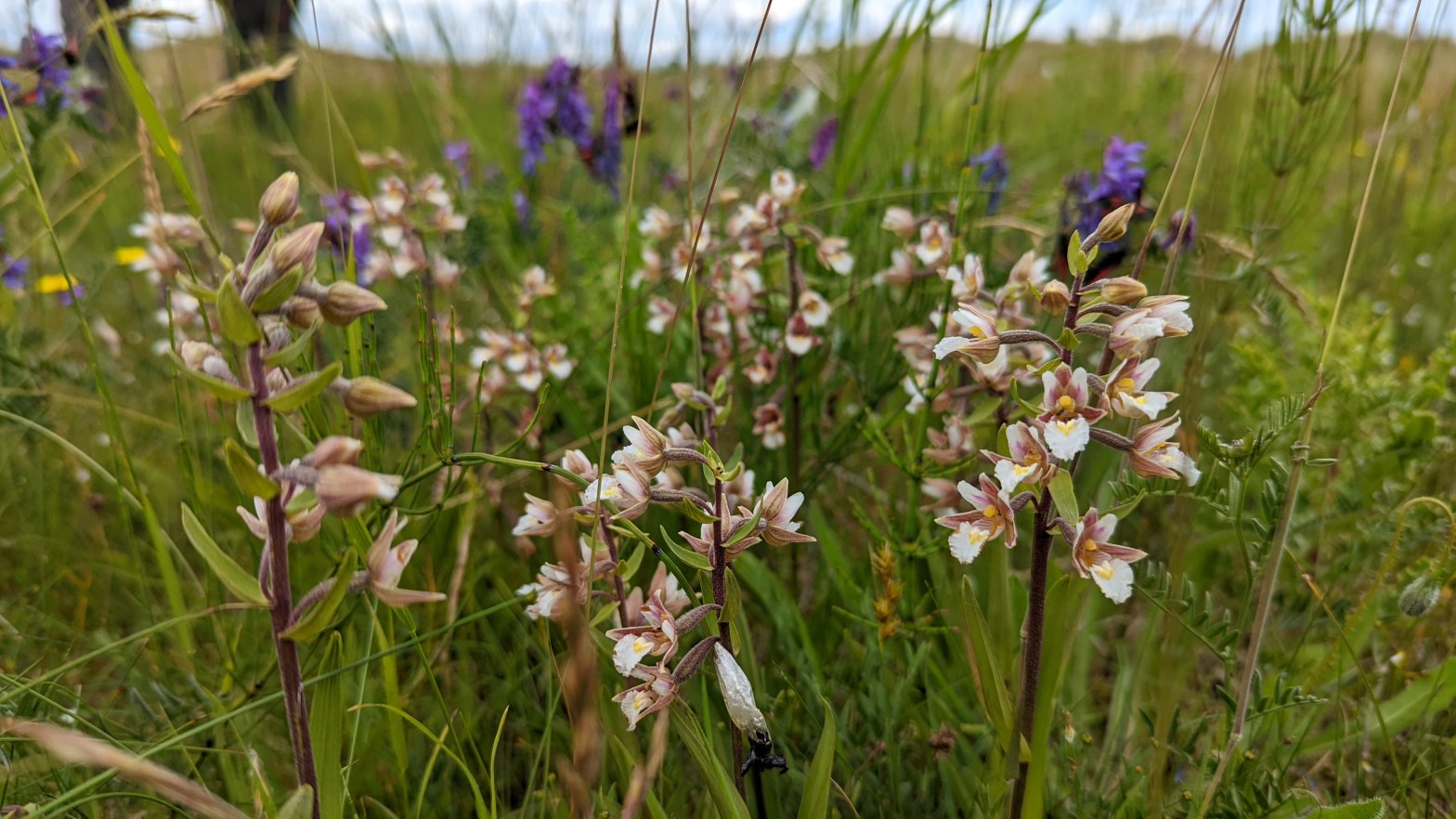
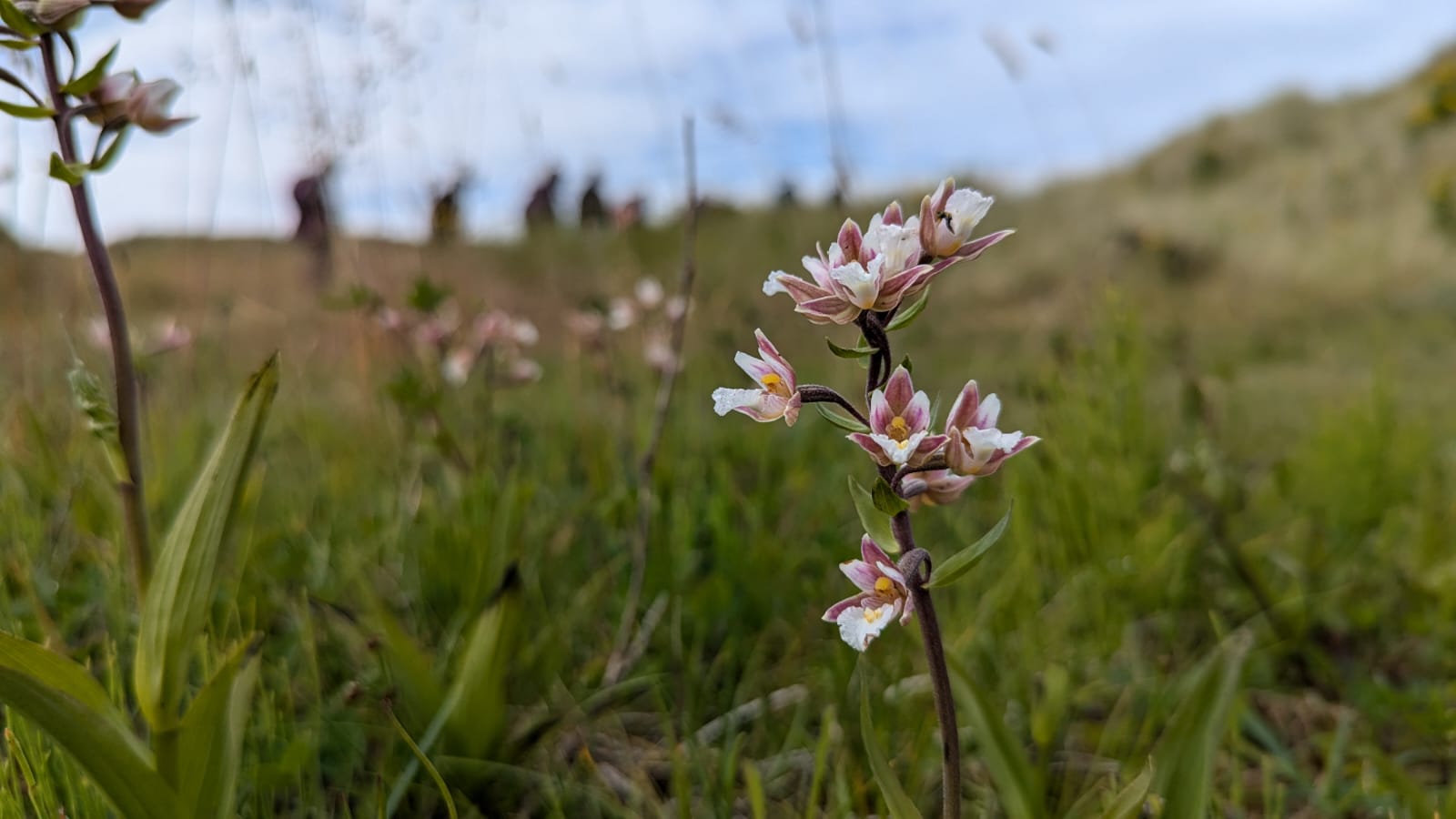
For orchid enthusiasts, early summer unveils a spectacular display of Common Spotted Orchid, Early and Northern Marsh Orchids, alongside various hybrids, Common Twayblade, and a profusion of Marsh Helleborine. Recently demoted to a sub-species but still rather species, drier spots also hold populations of Lindisfarne Helleborine – once thought of as a Northumbrian endemic.
Beyond orchids, The Snook boasts exceptional diversity. Highlights include the rare Seaside Centaury, the delicate Bog Pimpernel, and Scots Lovage, teetering on the southern edge of its range in Northumberland. Brookweed, an unassuming yet notable plant, thrives here, alongside Autumn Gentian and smaller wonders like Lesser Clubmoss, Variegated Horsetail, and Black Bog-rush (okay, these aren’t wildflowers but they are interesting!).
While visiting the Snook, you may also like to pop into the nearby dunes where species like Pyramidal Orchid, Bee Orchid, Blue Fleabane and Viper’s-bugloss also await.


2: East Chevington Nature Reserve
East Chevington, a Northumberland Wildlife Trust reserve perched atop a former mine overlooking scenic Druridge Bay, is well worth a visit. Featuring expansive wetlands, reedbeds, dunes, and grassland, the site is a haven not only for more obvious wildlife but also for a diverse array of plants which we’ll explore here.
As one of the rare pockets of high-quality coastal grassland in South Northumberland, the reserve has an intriguing flora. Standouts include Lesser Butterfly-orchid, Dyer’s Greenweed, Pyramidal Orchid, not to mention Marsh Helleborine and Sea Bindweed, rediscovered at the site in 2023. And, of course, one can’t easily overlook expanses of Bloody Crane’s-bill, Northumberland’s county flower, adorning pathsides and grassy areas.
Beyond the more prominent blooms, attentive visitors will be rewarded with sightings of Zigzag Clover, Fairy Flax, Celery-leaved Buttercup, Long-headed Poppy, and a myriad other plants. For an extra treat, a brief detour to the nearby beach unveils the hardy coastal flora of the county, featuring Prickly Saltwort and other specialists like Sea-rocket and Sea Sandwort.
Accessible to all, like many Wildlife Trust reserves, East Chevington invites exploration.


3: Warkworth, dunes and saltmarsh
The town of Warkworth, nestled close to Amble on the Northumberland coast, is picturesque in its own right. However, the nearby dunes, saltmarsh and coastal grasslands, somewhat overlooked compared to more famous sites like Holy Island, possess much more to be admired.
In late spring, the dune slacks come alive with the countless flowering spikes of the Early Purple-orchid and as summer unfolds, visitors can delight in another local specialty, Maiden Pink, as its diminutive flowers peek out amidst a tapestry of interesting, albeit less vibrant, grasses and sedges.
A close inspection of the sward at Warkworth reveals a miniature world with species like Little Mouse-ear, Mouse-ear Hawkweed, Common Stork’s-bill, and an assortment of delicate eyebrights. Yet, larger blooms are equally abundant. Keep an eye out for Viper’s-bugloss, the frothy flowers of Hoary Cress, and treats like Wild Basil and Burnet Rose.
The strandline and saltmarsh at Warkworth add another layer of interest with a rich community of salt-loving plants. Among these, Sea Sandwort, Sea Purslane, Spear-leaved Orache, and the ever-charming Thrift. Undoubtedly, Warkworth is a special place and there undoubtedly new species to be found.

4: Embleton Quarry Nature Reserve
Embleton Quarry Nature Reserve, a hidden gem often overshadowed by more well-known sites on this list, boasts a quiet charm. Managed with dedication by local volunteers, this small but tranquil reserve has much to offer visiting botanists.
Orchids take center stage at Embleton (don’t they always?) and are represented by Common Spotted, Northern Marsh, and, notably, Bee Orchid. Beyond these fan favorites, the site stands out for harboring populations of Purple Ramping-fumitory and White Ramping-fumitory, alongside a cheery array of familiar species such as Wild Teasel, Red Bartsia, Salad Burnet, and Weld.
Much of Embleton’s interest lies its close proximity to residential areas, responsible for introducing a mix of garden escapes. While none have become invasive, the reserve hosts several botanical oddities like Lamb’s-ear, Garden Peony, Poet’s Daffodil, and Hidcote Comfrey, among a plethora of other aliens.
For those with a penchant for exploration, a visit to the nearby Embleton Churchyard unveils another fascinating plant — Deadly Nightshade, thriving as one of its only Northumberland strongholds.


5: Newbiggin-by-the-Sea
Newbiggin and its surrounds stand out as an ecologically rich area that might just surprise visitors. A northward walk from Church Point reveals a varied landscape encompassing sandy shoreline, relic dunes, and the rough grassland of the golf course. Here, several notable wildflower species can be found including the diminutive Bird’s-foot, a member of the pea family, the coastal specialist Purple Milk-vetch, and just occasionally, Bee Orchids. The Church Point car park itself is noteworthy, teeming with Hoary-cress, Thrift, Dwarf Mallow, and other interesting plants.
Exploring the sandy shoreline may yield four species of Orache, among them Frosted Orache and Babbington’s Orache. Additionally, common coastal plants such as Buck’s-horn Plantain and Sea Milkwort are abundant. Heading higher up, the cliffs offer Sea Campion, while the golf course holds rarer species such as Good-King-Henry, Northern Marsh-orchid, Burnet Rose, and Pencilled Crane’s-bill — a notable escapee at the site.


6: Allen Banks and Staward Gorge
Managed by the National Trust, Allen Banks boasts a distinctive blend of ancient woodland and ornamental planting, reflecting the influence of the past custodians on the estate. Renowned as one of the premier locations in Northumberland to investigate our ancient woodland flora, the site offers much of interest with highlights of Bird’s-nest Orchid, Early-purple Orchid, and the peculiar-looking Toothwort.
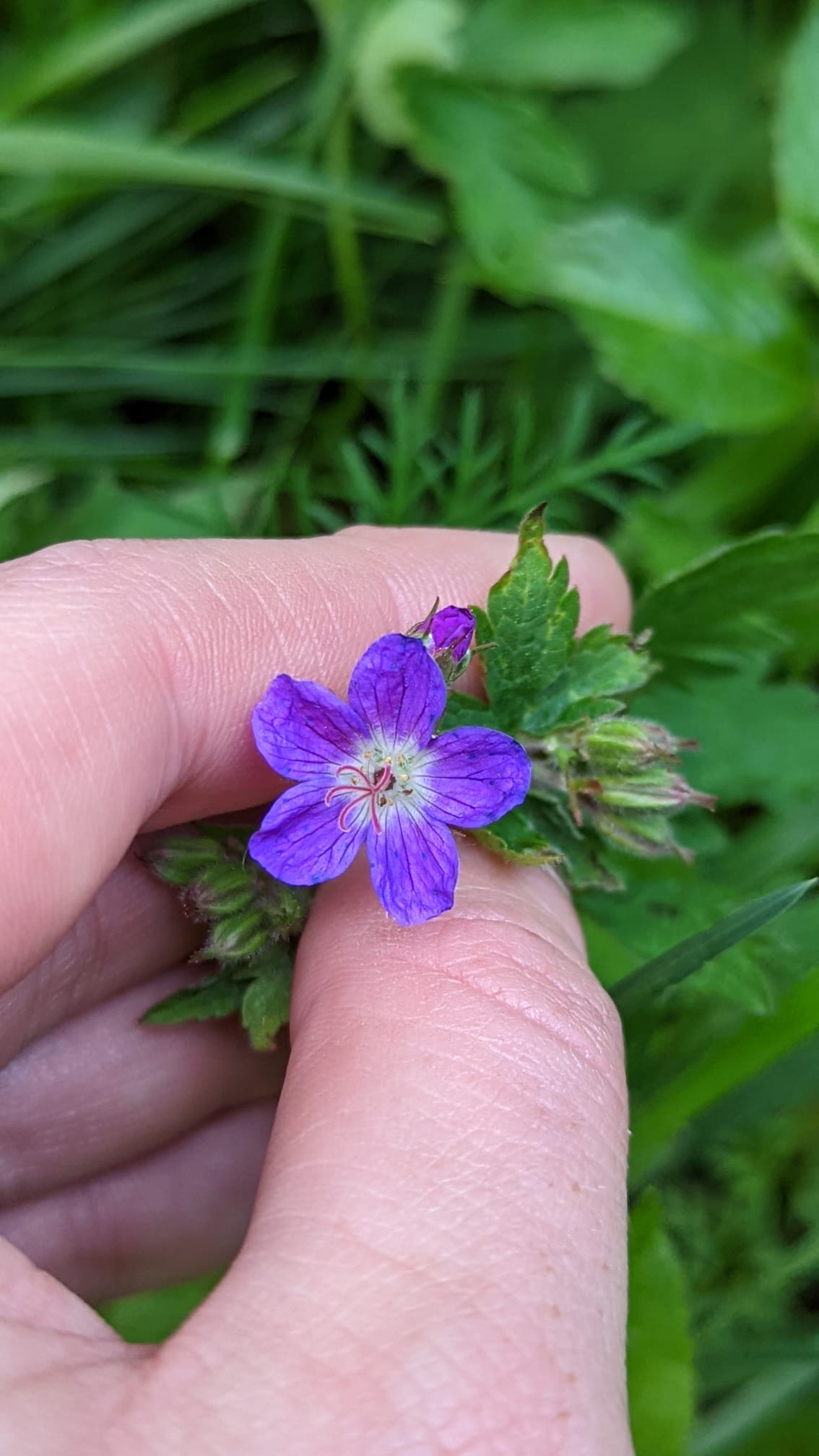
A stroll along the wooded banks of the Allen introduces visitors to other indicators of ancient woodland, including Goldilock’s Buttercup, Bitter Vetch, Wood Crane’s-bill, and Great Horsetail. The presence of Calaminarian Grassland, characterised by its soil polluted with industrial metals, adds another layer of interest. In this area, delicate Mountain Pansies flourish.
For those seeking a longer walk, a well-signposted trail to Morralee Tarn is recommended. Once a Victorian boating lake, it has transformed into a rich wetland habitat. Timing your visit right may reward you with sightings of White Water-lily, Mare’s-tail, and the intriguing Marsh Cinquefoil.


7: Letah Wood, Hexham
Letah Wood, believed to be Northumberland’s last surviving ‘Daffodil wood,’ offers a spectacular display with its abundant Wild Daffodils blanketing the woodland floor each spring.
Beyond the captivating display of Daffodils, the wood boasts a rich diversity of woodland wildflowers. Visitors can expect to encounter Giant Bellflower, Wood Anemone, Pignut, Lords-and-Ladies and the iconic English Bluebell. A special highlight for those exploring the woodland is the much rarer Herb-paris.
Additionally, Letah Wood is a haven for those interesting in trees, ferns and bryophytes. While these aspects are beyond the scope of this post, they contribute to the overall richness of the wood.

8: Hen Hole, College Valley
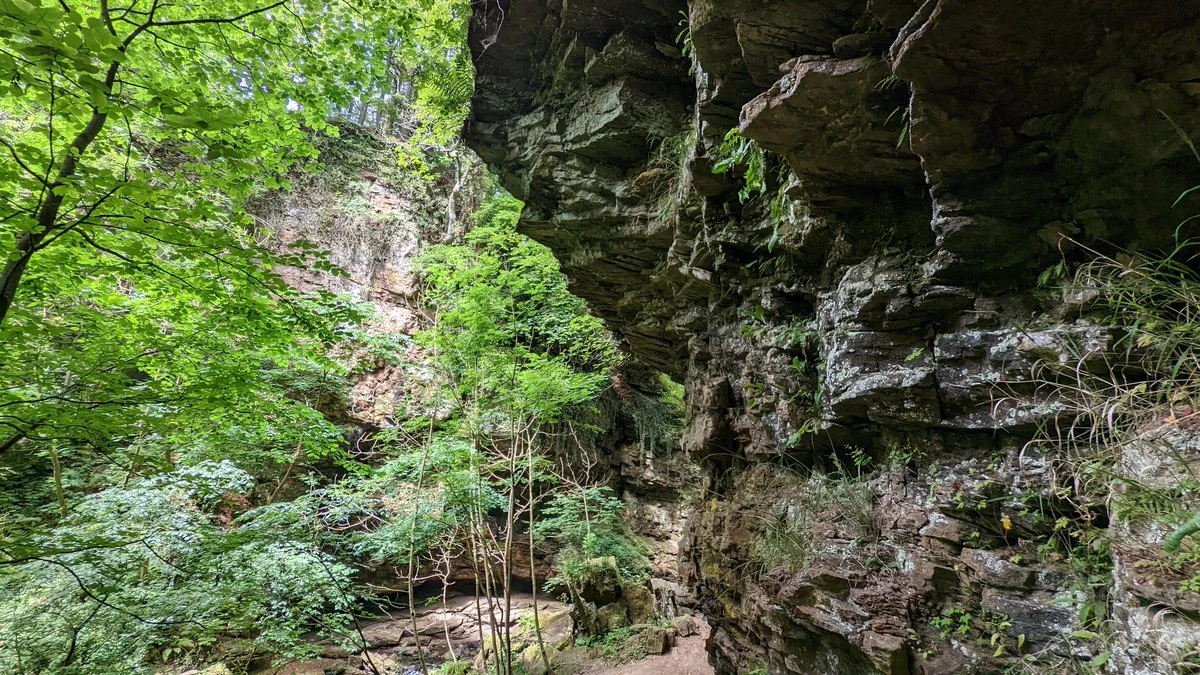
The Hen Hole stands out as arguably the most spectacular gorge in Northumberland, and earns its place as one of the county’s top botanical sites. While its remoteness may pose a challenge, the awe-inspiring scenery and diverse flora make it well worth the effort. Before embarking on the journey, be sure to pack sturdy walking boots and ample snacks for the hike that awaits!
Hen Hole has been visited by many notable botanists over the years, from Baker & Tate to George Swan, and is celebrated for its rare arctic-alpine plants, including Alpine Saw-wort and Roseroot. While these flowers are elusive, the journey toward the gorge from Mounthooley offers more obvious specialities such as Alpine Willowherb, Pale Forget-me-not, Starry Saxifrage, and Butterwort. Be sure to stick close to the College Burn – most of the more interesting plants seldom grow far from water.
The more abundant flora of Hen Hole includes familiar species like Heath Bedstraw, Goldenrod, Heath Spotted-orchid, Wild Thyme, and Wood Crane’s-bill. Beyond those, however, the gorge treats visitors to superb views, scenic waterfalls, and a plethora of other wildlife, ensuring that the journey is rewarding in any season.


9: Cullernose Point, Howick
Cullernose Point, located between Craster and Howick, is a relatively small but ecologically significant coastal site. As part of the Northumberland Coast Path, it provides easy access for visitors interested in exploring its clifftop grasslands, which boast noteworthy populations of Purple Milk-vetch and Spring Squill – a charming little bulb with bright blue, starry flowers.
Beyond these botanical highlights, the clifftop grasslands support additional plants including Sea Mouse-ear, Thrift, Wild Thyme, Heath Milkwort, Heath Groundsel, and other flora characteristic of coastal environments.
The small size of this site mean it is often better suited as a pitstop, perhaps on route to more floriferous sites further North?

10: Scotch Gill Wood, Morpeth
Scotch Gill Wood, situated just outside the market town of Morpeth, stands out as a prime example of semi-natural ancient woodland. Notably, this woodland offers a much more accessible destination for those interested in exploring our woodland flora.
The wood is home to a variety of plant species characteristic of older woodlands. Careful exploration might reveal Toothwort, Goldilocks Buttercup, Spurge-laurel, Yellow Star-of-Bethlehem, and the intriguing Mochstatel, among others.
In addition to the vibrant species listed above, Scotch Gill Wood hosts several less colorful but equally interesting plants, notably the Rough Horsetail. Damp areas within the wood add another layer of botanical interest with the occurrence of Hemlock Water-dropwort, Brooklime, and Large Bittercress.
The accessibility of Scotch Gill Wood makes it an ideal destination for those seeking a woodland walk without venturing too far from civilisation.


Planning a trip in search of wildflowers? Remember to record them. Doing so helps conservationists monitor populations and protect rich and important sites like those mentioned in this post.
For a little more information on logging your finds, please see below.


Leave a Reply