10 Great Places to Enjoy Wildflowers in Northumberland

Northumberland, my home county, is a haven for botanists, offering a rich tapestry of landscapes that range from windswept hills and expansive moors to coastal dunes, wetlands, and impressive woodlands. As a lifelong resident, I may be a tad biased, but the flora here truly spoils enthusiasts for choice.

To help inspire your next stroll in nature, I thought I’d share a curated list of ten great places to enjoy wildflowers in Northumberland. While some may be familiar, a couple might just surprise you, hopefully adding an extra layer of discovery to your next botanical adventure.

As a quick disclaimer, I should add now that list is not exhaustive. There are many other great places out there to be explored…

1: The Snook, Holy Island

Lindisfarne, a part-time island off the North Northumberland coast, needs little introduction. Revered for its religious significance, rich history, and breathtaking scenery, the island is undoubtedly Northumberland’s premier botanical hotspot, offering an abundance that exceeds the scope of a single visit.

Among Lindisfarne’s diverse habitats, ‘The Snook’ stands out with its slacks, grey dunes, and saltmarsh. This peninsula, distinguished by a solitary house famous for its role in the ITV series Vera, is home to botanical treasures too numerous to detail here.

For orchid enthusiasts, early summer unveils a spectacular display of Common Spotted Orchid, Early and Northern Marsh Orchids, alongside various hybrids, Common Twayblade, and a profusion of Marsh Helleborine. Recently demoted to a sub-species but still rather species, drier spots also hold populations of Lindisfarne Helleborine – once thought of as a Northumbrian endemic.

Beyond orchids, The Snook boasts exceptional diversity. Highlights include the rare Seaside Centaury, the delicate Bog Pimpernel, and Scots Lovage, teetering on the southern edge of its range in Northumberland. Brookweed, an unassuming yet notable plant, thrives here, alongside Autumn Gentian and smaller wonders like Lesser Clubmoss, Variegated Horsetail, and Black Bog-rush (okay, these aren’t wildflowers but they are interesting!).

While visiting the Snook, you may also like to pop into the nearby dunes where species like Pyramidal Orchid, Bee Orchid, Blue Fleabane and Viper’s-bugloss also await.

2: East Chevington Nature Reserve


East Chevington, a Northumberland Wildlife Trust reserve perched atop a former mine overlooking scenic Druridge Bay, is well worth a visit. Featuring expansive wetlands, reedbeds, dunes, and grassland, the site is a haven not only for more obvious wildlife but also for a diverse array of plants which we’ll explore here.

As one of the rare pockets of high-quality coastal grassland in South Northumberland, the reserve has an intriguing flora. Standouts include Lesser Butterfly-orchid, Dyer’s Greenweed, Pyramidal Orchid, not to mention Marsh Helleborine and Sea Bindweed, rediscovered at the site in 2023. And, of course, one can’t easily overlook expanses of Bloody Crane’s-bill, Northumberland’s county flower, adorning pathsides and grassy areas.

Beyond the more prominent blooms, attentive visitors will be rewarded with sightings of Zigzag Clover, Fairy Flax, Celery-leaved Buttercup, Long-headed Poppy, and a myriad other plants. For an extra treat, a brief detour to the nearby beach unveils the hardy coastal flora of the county, featuring Prickly Saltwort and other specialists like Sea-rocket and Sea Sandwort.

Accessible to all, like many Wildlife Trust reserves, East Chevington invites exploration.

3: Warkworth, dunes and saltmarsh

The town of Warkworth, nestled close to Amble on the Northumberland coast, is picturesque in its own right. However, the nearby dunes, saltmarsh and coastal grasslands, somewhat overlooked compared to more famous sites like Holy Island, possess much more to be admired.

In late spring, the dune slacks come alive with the countless flowering spikes of the Early Purple-orchid and as summer unfolds, visitors can delight in another local specialty, Maiden Pink, as its diminutive flowers peek out amidst a tapestry of interesting, albeit less vibrant, grasses and sedges.

A close inspection of the sward at Warkworth reveals a miniature world with species like Little Mouse-ear, Mouse-ear Hawkweed, Common Stork’s-bill, and an assortment of delicate eyebrights. Yet, larger blooms are equally abundant. Keep an eye out for Viper’s-bugloss, the frothy flowers of Hoary Cress, and treats like Wild Basil and Burnet Rose.

The strandline and saltmarsh at Warkworth add another layer of interest with a rich community of salt-loving plants. Among these, Sea Sandwort, Sea Purslane, Spear-leaved Orache, and the ever-charming Thrift. Undoubtedly, Warkworth is a special place and there undoubtedly new species to be found.

4: Embleton Quarry Nature Reserve

Embleton Quarry Nature Reserve, a hidden gem often overshadowed by more well-known sites on this list, boasts a quiet charm. Managed with dedication by local volunteers, this small but tranquil reserve has much to offer visiting botanists.

Orchids take center stage at Embleton (don’t they always?) and are represented by Common Spotted, Northern Marsh, and, notably, Bee Orchid. Beyond these fan favorites, the site stands out for harboring populations of Purple Ramping-fumitory and White Ramping-fumitory, alongside a cheery array of familiar species such as Wild Teasel, Red Bartsia, Salad Burnet, and Weld.

Much of Embleton’s interest lies its close proximity to residential areas, responsible for introducing a mix of garden escapes. While none have become invasive, the reserve hosts several botanical oddities like Lamb’s-ear, Garden Peony, Poet’s Daffodil, and Hidcote Comfrey, among a plethora of other aliens.

For those with a penchant for exploration, a visit to the nearby Embleton Churchyard unveils another fascinating plant — Deadly Nightshade, thriving as one of its only Northumberland strongholds.

5: Newbiggin-by-the-Sea

Newbiggin and its surrounds stand out as an ecologically rich area that might just surprise visitors. A northward walk from Church Point reveals a varied landscape encompassing sandy shoreline, relic dunes, and the rough grassland of the golf course. Here, several notable wildflower species can be found including the diminutive Bird’s-foot, a member of the pea family, the coastal specialist Purple Milk-vetch, and just occasionally, Bee Orchids. The Church Point car park itself is noteworthy, teeming with Hoary-cress, Thrift, Dwarf Mallow, and other interesting plants.

Exploring the sandy shoreline may yield four species of Orache, among them Frosted Orache and Babbington’s Orache. Additionally, common coastal plants such as Buck’s-horn Plantain and Sea Milkwort are abundant. Heading higher up, the cliffs offer Sea Campion, while the golf course holds rarer species such as Good-King-Henry, Northern Marsh-orchid, Burnet Rose, and Pencilled Crane’s-bill — a notable escapee at the site.

6: Allen Banks and Staward Gorge

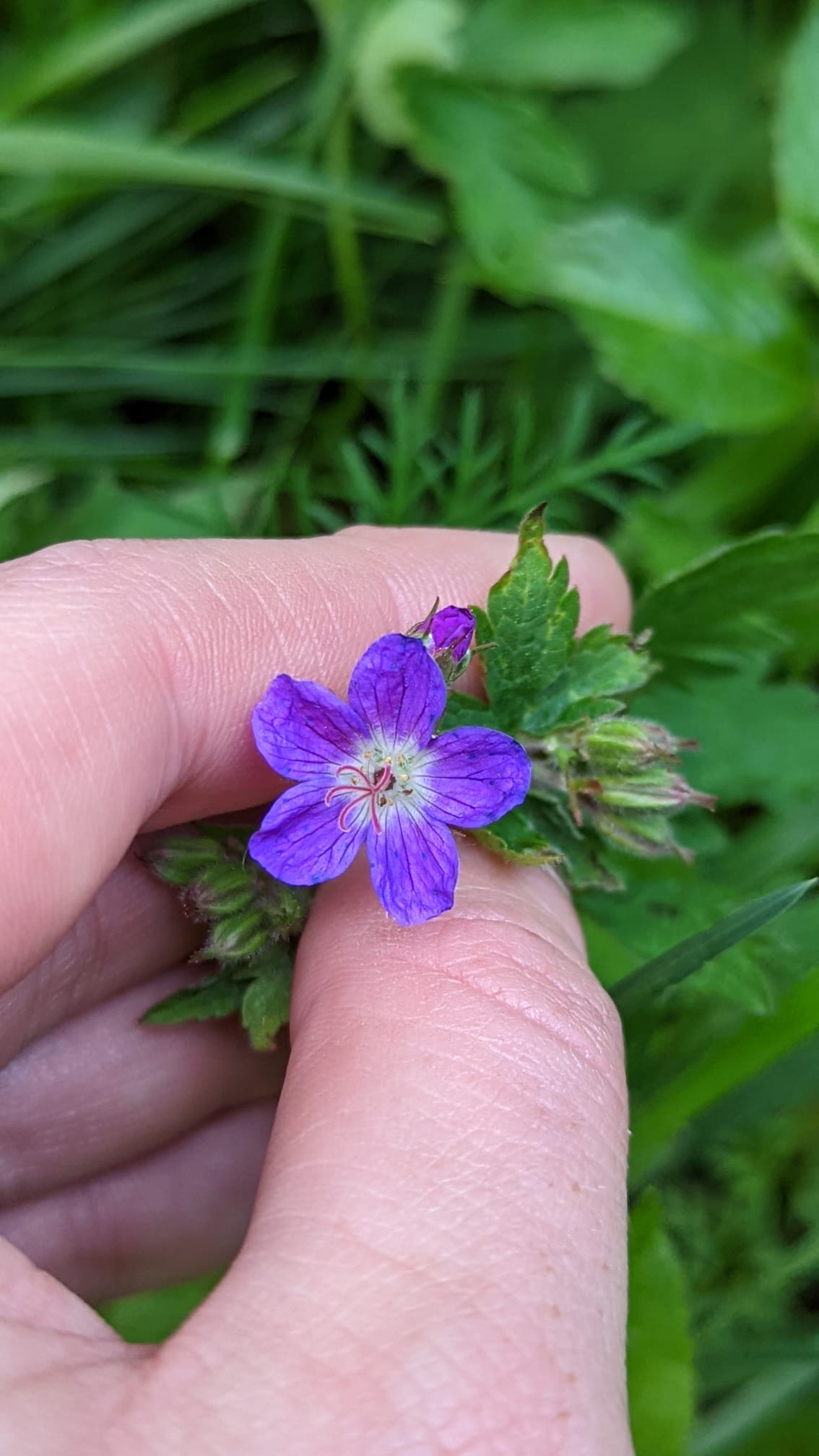
Managed by the National Trust, Allen Banks boasts a distinctive blend of ancient woodland and ornamental planting, reflecting the influence of the past custodians on the estate. Renowned as one of the premier locations in Northumberland to investigate our ancient woodland flora, the site offers much of interest with highlights of Bird’s-nest Orchid, Early-purple Orchid, and the peculiar-looking Toothwort.

A stroll along the wooded banks of the Allen introduces visitors to other indicators of ancient woodland, including Goldilock’s Buttercup, Bitter Vetch, Wood Crane’s-bill, and Great Horsetail. The presence of Calaminarian Grassland, characterised by its soil polluted with industrial metals, adds another layer of interest. In this area, delicate Mountain Pansies flourish.

For those seeking a longer walk, a well-signposted trail to Morralee Tarn is recommended. Once a Victorian boating lake, it has transformed into a rich wetland habitat. Timing your visit right may reward you with sightings of White Water-lily, Mare’s-tail, and the intriguing Marsh Cinquefoil.

7: Letah Wood, Hexham


Letah Wood, believed to be Northumberland’s last surviving ‘Daffodil wood,’ offers a spectacular display with its abundant Wild Daffodils blanketing the woodland floor each spring.

Beyond the captivating display of Daffodils, the wood boasts a rich diversity of woodland wildflowers. Visitors can expect to encounter Giant Bellflower, Wood Anemone, Pignut, Lords-and-Ladies and the iconic English Bluebell. A special highlight for those exploring the woodland is the much rarer Herb-paris.

Additionally, Letah Wood is a haven for those interesting in trees, ferns and bryophytes. While these aspects are beyond the scope of this post, they contribute to the overall richness of the wood.

8: Hen Hole, College Valley


The Hen Hole stands out as arguably the most spectacular gorge in Northumberland, and earns its place as one of the county’s top botanical sites. While its remoteness may pose a challenge, the awe-inspiring scenery and diverse flora make it well worth the effort. Before embarking on the journey, be sure to pack sturdy walking boots and ample snacks for the hike that awaits!

Hen Hole has been visited by many notable botanists over the years, from Baker & Tate to George Swan, and is celebrated for its rare arctic-alpine plants, including Alpine Saw-wort and Roseroot. While these flowers are elusive, the journey toward the gorge from Mounthooley offers more obvious specialities such as Alpine Willowherb, Pale Forget-me-not, Starry Saxifrage, and Butterwort. Be sure to stick close to the College Burn – most of the more interesting plants seldom grow far from water.

The more abundant flora of Hen Hole includes familiar species like Heath Bedstraw, Goldenrod, Heath Spotted-orchid, Wild Thyme, and Wood Crane’s-bill. Beyond those, however, the gorge treats visitors to superb views, scenic waterfalls, and a plethora of other wildlife, ensuring that the journey is rewarding in any season.

9: Cullernose Point, Howick


Cullernose Point, located between Craster and Howick, is a relatively small but ecologically significant coastal site. As part of the Northumberland Coast Path, it provides easy access for visitors interested in exploring its clifftop grasslands, which boast noteworthy populations of Purple Milk-vetch and Spring Squill – a charming little bulb with bright blue, starry flowers.

Beyond these botanical highlights, the clifftop grasslands support additional plants including Sea Mouse-ear, Thrift, Wild Thyme, Heath Milkwort, Heath Groundsel, and other flora characteristic of coastal environments.

The small size of this site mean it is often better suited as a pitstop, perhaps on route to more floriferous sites further North?

10: Scotch Gill Wood, Morpeth


Scotch Gill Wood, situated just outside the market town of Morpeth, stands out as a prime example of semi-natural ancient woodland. Notably, this woodland offers a much more accessible destination for those interested in exploring our woodland flora.

The wood is home to a variety of plant species characteristic of older woodlands. Careful exploration might reveal Toothwort, Goldilocks Buttercup, Spurge-laurel, Yellow Star-of-Bethlehem, and the intriguing Mochstatel, among others.

In addition to the vibrant species listed above, Scotch Gill Wood hosts several less colorful but equally interesting plants, notably the Rough Horsetail. Damp areas within the wood add another layer of botanical interest with the occurrence of Hemlock Water-dropwort, Brooklime, and Large Bittercress.

The accessibility of Scotch Gill Wood makes it an ideal destination for those seeking a woodland walk without venturing too far from civilisation.

Planning a trip in search of wildflowers? Remember to record them. Doing so helps conservationists monitor populations and protect rich and important sites like those mentioned in this post.

For a little more information on logging your finds, please see below.

Urban Flora of Newcastle – Musing over maps

Urban Flora of Newcastle – Coming 9 March 26

The Urban Flora of Newcastle and North Tyneside is the first comprehensive account of the wild plants growing across the Newcastle and North Tyneside conurbation, one of the largest in the UK.

Based on six years of fieldwork, the book documents more than 1,120 native and naturalised plants -around a third of Britain’s entire flora.

With recording for ‘Plants of Newcastle’ progressing well and new local botanists joining in, for the last few weeks, I’ve been able to catch up on some of the more mundane parts of the project. Top of that list was a need to ‘reaquaint’ myself with some sort of GIS programme, hopefully to save a few pounds when it comes to the final write-up.

Now, I am happy to admit I am rather rubbish at anything techy like this. I loathed GIS modules at university and haven’t touched any sort of mapping software in almost a decade. Still, downloading QGIS (supposedly one of the easiest to use platforms) I thought I’d give it a go. While they may be rough around the edges, I am pretty pleased with the result!

Below, I have included a few example maps created for some interesting urban plants, but what exactly do they tell us?

Oxford Ragwort (Senecio squalidus)

Oxford Ragwort is perhaps the most consicous example of an established neophyte (human introduction) in Newcastle. The story of this tenacious little plant is well-known and according to records held by the BSBI, it arrived in the city sometime around 1960 where it was first recorded by George Swan from the Town Moor. Known to favour dry, rocky subsrtates (especially pavements and railway clincker) it is perhaps unsurprising that most of the records so far come from heavily urbanised areas. Indeed, it is exceptionally abundant in the city centre and suburbs but altogether scarce in more natural areas to the North and West. A trend to be expected, perhaps.

Guernsey Fleabane (Erigeron sumatrensis)

Guernsey Fleabane is a relatively new arrival in Newcastle, first recorded in 2009 by Mick Crawley. Across the UK, it is ungoing a dramatic expansion as it follows in the footsteps of Canadian Fleabane (Erigeron canadensis) to become a familiar weed of urban habitats. Since it was first noted on Dean Street, it appears to have expanded outward to colonise much of the city centre and neighboring districts, with the greatest concentrations on wasteground plots in Heaton, Walker and Jesmond. It will be interesting to see if these initial maps hold true, or whether it is already far more widespread.

Italian Alder (Alnus cordata)

Italian Alder is an incredibly popular amenity tree in Newcastle, frequently planted along streets, in muncipal landscaping schemes and seemingly, on restored industrial land. It is also a prolific seeder capable of colonising a whole host of disturbed and wasteground habitats. The records shown below represent seemingly self-sown specimens of Italian Alder and it is interesting to note a strong southerly bias. I suspect this corresponders to the high level of industry along the Tyne and our tendency to cover-up defunct sites with all manner of interesting trees?

Welsh Poppy (Papaver cambricum)

Welsh Poppy, native elsewhere in the UK but certainly not in Newcastle, is an interesting example of a plant that thrives in gardens. Indeed, most of the time, this attractive plant is observed as a colonist of flowerbeds, driveways and patios where I suspect is left by usually diligent weeders on account of its pretty flowers. It is interest to note that the distribtion of Welsh Poppy appears linked to the presence of larger gardens, with suburban areas holding large populations and relatively few records from the city centre. While not always the case, it also appears reluctant to colonise more natural areas.

Lords-and-Ladies (Arum maculatum)

In contrast to Welsh Poppy which seems to favour artifical environments, I thought it would also be interesting to explore the distribution of a species associated with more natural ones – cue Lords-and-Ladies. Unspurisingly, almost all records of this popular woodland plant come from relic semi-natural woodland, namely in Newcastles denes at Walbottle, Throckley and Jesmond. I wouldn’t be suprised if this one crops up elsewhere, likely beneath a hedgerow, but it will be interesting to see if the same applies to other indcator species like Wood Anemone and English Bluebell.

Poplar Ladybird (Oenopia conglobata) in Newcastle

For those interested in ladybirds, it isn’t every day you have the chance to admire a major rarity. Surprises don’t turn up all that often but when they do, they can be truly spectacular. Today was one of those days.

Following a post online from a local recorder who had discovered a most unusual pink ladybird in a local cemetery, today I was lucky to see it for myself. Meeting with fellow recorders to take a look, there was little doubt that this could be Poplar Ladybird (Oenopia conglobata). A truly spectacular discovery for reasons I’ll share below.

Oenopia conglobata is found in continental Europe, North Africa and temperate regions of Asia, but is conspicuously absent from the British Isles. Indeed, explore the NBN Atlas and you’ll see there are only two records of this species in the UK: one at Flamborough Head, Yorkshire, and another not far from Glasgow. It is by all accounts, a majorly rare species in the UK turning up either as an accidental import from the continent or as a genuine visitor. I don’t have the answer to that, however.

In their Field Guide to British ladybirds, Helen Roy and Peter Brown list this species as a potential colonist in future so the fact it has popped up in an unassuming part of my home city is fascinating, to say the least. That said, regardless of rarity and dubious origins, this ladybird is a real beauty. With light pink wing cases and a striking black seam, it has square spots somewhat reminiscent of the 14-spot Ladybird. You can take a closer look at its various forms here.

The ladybird will need to be scrutinised by the experts before Newcastle appears on the map alongside Flamborough and Glasgow. Until then, a huge well done to the recorder. British ladybirds don’t come much better than that!

Poplar Ladybird (Oenopia conglobata)

Identifying Common Willowherbs

Get started identifying the widespread willowherbs you’re most likely encounter in a new, simplified crib

Thank you all so much for continuing to read and download recent entries in this series of accessible plant cribs. They are evolving overtime and it is great to hear your feedback.

After tackling forget-me-nots, now seemed like a good time to produce another simplified crib on an equally appealling group of plants – our pesky willowherbs.

Members of the evening-primrose family, Onagraceae, willowherbs are familiar flowers of our urban spaces. While they occur in all habitats, they are particularly prominent in human-influenced landscapes where around eight species can commonly be encountered in pavements, waste areas and even gardens. The simplified key below covers those most likely to be encountered in the North East but please note, there are several rarer ones out there.

Key factors to focus on when identifying willowherbs include the shape of the stigma, hairiness and importantly, the type of hairs present, and stem/petiole features.

Identifying Willowherbs

Willowherbs are a rather diverse bunch. Here, we’ll aim to cover the species botanists are most likely to encounter while out and about locally; though the information shared should apply equally well elsewhere in the UK. This crib addresses the following species:

  • Great Willowherb
  • Hoary Willowherb
  • Broad-leaved Willowherb
  • Square-stalked Willowherb
  • Short-fruited Willowherb
  • Marsh Willowherb
  • American Willowherb
  • Pale Willowherb

Additionally, and more for curiosity than anything else, some information is also included on various willowherb hybrids found across the UK.

Enjoying this series? Please consider sharing this page with friends or better still, providing a back-link so that more people can find it. If you have any suggestions for further groups to cover, I’d love to hear from you.

New Year Plant Hunt: What’s flowering this winter?

I love the BSBI New Year Plant Hunt. Each year, this nifty citizen science project provides the perfect reason to head outside, brave the winter air, and find some interesting plants – not something I would have considered just a few years ago! Better still, the project is providing some valuable data about how our wild and naturalised plants are responding to a changing climate. A win win, really!

With only a few days of the holiday left, I confess I have gone a little crackers this year when it comes to the New Year Plant Hunt, with fourwalks in different corners of the local area. A nice way to burn off those Christmas calories perhaps?

Tynemouth

On Saturday morning, the first session of my new ‘Botanist’s Year’ course provided the perfect excuse for some group plant hunting. Meeting attendees at Tynemouth, we set about recording flowering plants growing in sea defences, coastal grassland, priory walls and nearby streets. Cutting a long story short, there wasn’t overly much to see with just 21 species noted in bloom. That said, some of these were rather nice with a good showing of Common Snowdrop (Galanthus nivalis), ample Alexanders (Smyrnium olusatrum) and even a solitary example of Fool’s-parsley (Aethusa cynapium) – I am not sure I have ever seen that one flowering in winter.

Of course, the reliable winter-blooms featured in our total too: Daisy (Bellis perennis), Annual Meadow-grass (Poa annua), Red Dead-nettle (Lamium purpureum) and Ragwort (Jacobaea vulgaris) to name but a few. The group also encountered a stray Garden Pansy (Viola x wittrockiana) in a pavement crack – a surprisingly common occurence.

No visit to Tynemouth would be complete without a moment of appreciation for the copious amount of Wild Cabbage (Brassica oleracea) which grows on site as a relict of cultivation by local monks. They weren’t in flower on this occasion, mind you.

Heaton

For the last four years Matt and I have carried out an annual New Year Plant Hunt on the streets of Heaton, close to home. While being awful good fun, this has also allowed us to gain a good idea of localised changes in the flowering times of several species. Suffice to say, 2023 seems to be a bit of a poor year and in three hours, we recorded just 31 species compared to the 50+ of 2022. Perhaps it was was a touch of frost, or even over-zealous weeders?

The usual supects mentioned previous all featured in our Heaton hunt and by large, most of the plants found were ones you would expect to see in winter. Neophytes (human introductions) in Trailing Bellflower (Campanula poscharskyana), Adria Bellflower (Campanula portenschlagiana) and Yellow Corydalis (Pseudofumaria lutea) that seem to flower year-round and typical winter wildflowers in Common Whitlowgrass (Erophila verna) and White Dead-nettle (Lamium album). It was, however, interesting to note several grasses still in flower with sightings of Water Bent (Polypogon viridis), False Oat-grass (Arrhenatherum elatius) and Wall Barley (Hordeum murinum). I wonder what next year will bring?

Scotswood

The most botanically interesting hunt of the week now and a new route for Matt and I at Scotswood. Scotswood Road and its associated grassland, scrub and industrial plots is usually rather interesting and in total, we chalked up 31 flowering plants during our yomp. The ‘common ones’ featured heavily again with examples in Gorse (Ulex europeaus) and Feverfew (Tanacetum parthenium) but there were surprises also. On a particularly nice stretch of verge, we found both Field (Knautia arvensis) and Small Scabious (Scabiosa columbaria) in flower alongside Musk-mallow (Malva moschata). Quite a nice display for winter! Elsewhere, we noted Narrow-leaved Ragwort (Senecio inaequidens) and Smooth Hawk’s-beard (Crepis capillaris) while Common Vetch (Vicia sativa) featured surprisingly frequently.

For once, it was actually the non-flowering plants that proved most interesting at Scotswood. Having sadly lost many of them to the mower in spring, it was fabulous to note well over 200 Bee Orchid (Ophrys apifera) rosettes on nearby areas of amenity grassland and some recent roadworks provided a sighting of Parsley-piert (Aphanes arvensis), an entirely new one for the urban flora!

Ouseburn

New Year’s Day now and the last New Year Plant Hunt organised through the Natural History Society of Northumbria. Setting off to explore the streets of Heaton and later, taking a detour to the Ouseburn Valley, we were thrilled to find 35 species of wild and naturalised plant in flower. Better still, the sun was shining – a rare thing of late!

Once again, the usual suspects were out in force but what was more interesting was the abundance of typically ruderal/arable plants blooming in forgotten corners and neglected planters. As a group, we were particularly excited to find Small Nettle (Urtica urens) and Green-field Speedwell (Veronica agrestis), followed closely by Ribbed Melilot (Melilotus officinalis), Cut-leaved Dead-nettle (Lamium hybridum) and Small-flowered Crane’s-bill (Geranium pusillum). Down by the Ouseburn, the first Snowdrops (Galanthus nivalis) of the year had emerged too. Always nice to see…

All in all, a lovely way to spend New Year’s Day and a great way to round off a busy week jampacked with plants!

Identifying Forget-me-nots

Get started identifying the widespread forget-me-nots you’re most likely encounter in a new, simplified crib

Thank you all so much for continuing to read and download recent entries in this series of accessible plant cribs. They are evolving overtime and it is great to hear your feedback.

After tackling crocuses, now seemed like a good time to produce another simplified crib on an equally appealling group of plants – our forget-me-nots.

Members of the Borage family, Forget-me-nots are familiar flowers of spring and popular for their bright blue blooms. They occur in all habitats, from urban pavements to pool-sides and upland flushes and at times, are popular as garden plants. They simplified key below covers those most likely to be encountered in the North East but please note, there are several rarer ones out there.

Key factors to focus on when identifying forget-me-nots include flower colour, style length, pedicel length and of course, the structure and arrangement of hairs.

Identifying Forget-me-nots

Forget-me-nots are not extraordinarily diverse, at least in North East England. Here, we’ll aim to cover the species botanists are most likely to encounter while out and about locally; though the information shared should apply equally well elsewhere in the UK. This crib addresses the following species:

  • Field Forget-me-not
  • Wood Forget-me-not
  • Changing Forget-me-not
  • Early Forget-me-not
  • Tufted Forget-me-not
  • Creeping Forget-me-not
  • Pale Forget-me-not
  • Water Forget-me-not

Enjoying this series? Please consider sharing this page with friends or better still, providing a back-link so that more people can find it. If you have any suggestions for further groups to cover, I’d love to hear from you.

Natural History Highs in 2023

It seems to have become customary on this blog for me to share a round-up of the year’s highlights, discoveries and magical moments. As 2023 draws to close, and before the obligatory New Year’s fizz gets opened, why stop now?

Before we get going, however, a huge thank you to the friends, local naturalists and complete strangers who have helped make 2023 such a fantastic year. If you have shared a tip, nugget of wisdom, location, or have spent an afternoon rummaging around in shrubbery with me, this means you!

Lindisfarne

I’ve always loved Lindisfarne. Largely for the plants, of course, but also for its remoteness, landscape, beauty and fascinating history. This year, I have been blessed to spend more time than ever before on the island and have enjoyed some truly delightful sights. From early-summer botanisting and treasures in Seaside Centaury (Centaurium littorale) and Lindisfarne Helleborine (Epipactis sancta) to hunting Frog Orchids (Dactylorhiza viridis) later in the season, it has been a real treat.

A high for me had to be finding Parsley Water-dropwort (Oenanthe lachenalii), a new plant for me, that had remained unrecorded on the island for a few years but being marooned in a spectacular lightening storm comes a close second. What a place!

Upper Teesdale

Like Lindisfarne, Upper Teesdale is one of those places I simply adore. Thanks to some lovely trips with work, and a few jaunts with friends, this year I’ve been able visit five times throughout the season enjoying all the wonderful plants you might expect. Spring Gentian (Gentiana verna) and Bird’s-eye Primrose (Primula farinosa) aside, it was great to finally see wild Shrubby Cinquefoil (Dasiphora fruticosa) and Rock Whitebeam (Sorbus rupicola), both of which had eluded me on previous visits. This year, it was also nice to be joined by some seasoned entomologists for a closer look at Teesdale’s bees. The sight of quite literally thousands of Ashy Mining Bees (Andrena cineraria) was a delight for sure!

Hen Hole

Hen Hole is one of the most remote spots in Northumberland – the reason I had been unable to visit this scenic part of the College Valley until 2023. With some careful planning and lots of patience on Matt’s part, this year I finally ticked this off the botanical ‘bucket list’ making the long walk up the gorge to see what could be found. In short, we had an incredible day. The scenery was superb but the plants were even more exciting. In a few hours, we found several of the hole’s specialities including Alpine Willowherb (Epilobium anagallidifolium), Pale Forget-me-not (Myosotis stolonifera), Starry Saxifrage (Micranthes stellaris) and lots of Parsley-fern (Cryptogramma crispa). I am definitely excited to organise a return visit to 2024.

For those interested, a more complete write-up can be found here.

Surveying our Urban Flora

It is no secret that much of my time this year has been occuipied surveying Newcastle’s urban flora – i’ve written about it here and here. Since beginning work on ‘The Plants of Newcastle’ almost all of my free time has been spent exploring alleys, car parks, pavements, walls and a host of other man-made habitats to record what grows there. It has been great fun and already, has turned up an outstanding 830 species within the city limits, including a dozen or so county firsts. It really is amazing what can be found growing in our urban spaces…

The recording phase will take a while yet (we have to be thorough now, don’t we) but I have now at least begun to put pen to paper. 30,000 words later, I am now more optimistic that I’ll be able to publish a physical book in due course. Do bear with me!

Rare Plant Registering

As a new BSBI Vice-County Recorder, this year, much of my time has been spend aquainting myself with some of North Northumberlands rarer plants. Particularly those that have gone un-recorded for a short while. This year, I have tried where I can to fit in expeditions to search for some of these treasures. I have already mentioned Lindisfarne and Hen Hole, but other highlights include Rustyback (Asplenium ceterach) at a rural train station and of course, an encounter with Lady Clermont’s Spleenwort (Asplenium x Clermontiae). Others include Annual Knawel (Scleranthus annuus), Sea Spleenwort (Asplenium marinum) and Spring Squill (Scilla verna).

In South Northumberland, it was particularly exciting to rediscover a population of Sea Bindweed (Calystegia soldanella) that was thought lost. This is a terribly rare plant locally and so its remergence is definitely something to celebrate.

So Many Events and Courses

Working for the Natural History Society of Northumbria, this year, I’ve been lucky enough to spend an increasing amount of time out and about across the North East. Guided walks, bioblitzes, identification sessions and more, there have been so wonderful opportunities. For me, a highlight has to be creating and delivering several new, rather lengthy, botany courses.

Now, anyone who knows me will know that I am not a natural public speaker, nor particularly good at explaining things, so for me it has been wonderful to see these to fruition and extra great to hear that attendees enjoyed themselves. I definitely feel like my confidence is growing in this regard and look forward to delivering even more this year.

A huge thank you to everyone who has joined me on these, it means so much, and is one of the main reasons I love my job so much.

Discovering New Places

While getting out and about on the aformentioned trips, it has been wonderful to spend time at a host of new sites – places which that for one reason or another, I hadn’t explored previously. There really are too many to count in this regard but for me, Scotch Gill Wood in Morpeth is a standout. I seem to have spent a disproportionate amount of time here in 2023 enjoying Goldilocks Buttercup (Ranunculus auricomus), Yellow Star-of-Bethlehem (Gagea lutea), Rough Horsetail (Equisetum hyemale) and a plethora of other treasures. Other new favourites include Cullernose Point, near Craster, and of all places, Scotswood Road in Newcastle where much to my surprise, visitors can find a whole host of interesting plants and insects. I suspect you’ll be reading lots more about these in 2024…

Exploring Cotoneasters

Including a complicated group of (at times) invasive plants in a round-up of the year’s highlights seems an odd thing to do but alas, here we are. I seem to have fallen down the rabbit hole when it comes to these tricky shrubs in 2023 – wrapping my head around identifying them, recording them everywhere I go, and *trying* to share some of this learning with others. This year, there have also been workshops, trips to distant botanical gardens to scrutinise rarer species and even some garden redesigning to accomodate a living library of reference plants.

Some of you reading this might think me a little mad but this is an interesting and increasingly familiar group of plants. I am quite enjoying learning more about them!

And thats about that really. Despite an ever-decreasing amount of free time, 2023 has been another exciting year. Continued learning and new opportunities aside, it has been wonderful to spend so much time exploring the natural history of our region, often in great company. I count myself very, very lucky to be able to spend so much time doing what I love. Thank you to everyone who makes this possible.

PS. I am blogging far less frequently these days but am trying to get into the habit of sharing shorter updates to my new Facebook page. If anyone would like to keep in touch, you’ll find me there 🙂

The Plants of Newcastle – online talk

A few weeks ago, I had the pleasure of delivering my first ever talk to a room full of botanists (eek!) at the BSBI British and Irish Botanical Conference in Newcastle. The subject? Our fantastic urban flora, of course, and specifically, my findings so far while recording for what I am loosely coining ‘The Plants of Newcastle’.

All in all, it was lovely (if tad scary) to share my work recording Newcastle’s urban plants with around 200 delegrates. Due to some technical issues on the day, live recording was not possible but thankfully a digital recording is now available on the BSBI YouTube channel. Do check it out below if of interest.

I’ll be using the winter to carry out a few more surveys as part of the flora, and to start writing. I hope I’ll be able to share a finished product with you in due course.

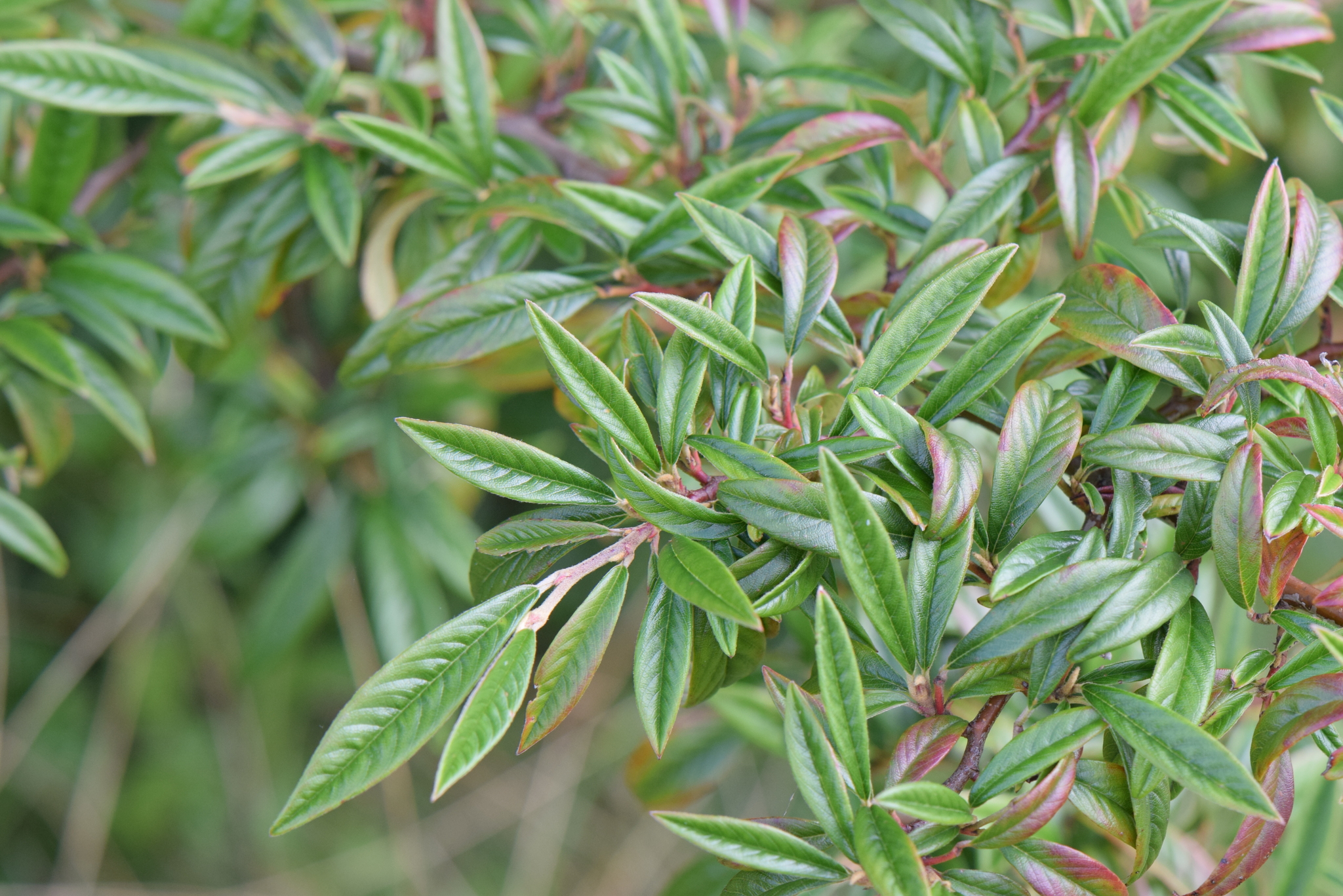
Cotoneaster salicifolius

Willow-leaved Cotoneaster

Background

Cotoneaster salicifolius forms a few-stemmed, tree-like shrub to a maximum of 6-8 metres. Named for its willow-like leaves, it is native to South and central China where it inhabits mountainous areas and mixed forests but has been widely introduced across the globe as an ornamental plant on account of its attractive foliage and fruits. The type specimen was collected in 1869 by A. David and first published in 1888.

The status of Cotoneaster salicifolius in cultivation remains somewhat unclear. Some sources state that the species is popular in cultivation (1) while others claim that true C. salicifolius is in fact rare in horticulture and perhaps confused with the very similar Cotoneaster flocossus (2). However, Fryer and Hylmo (2009) suggest that the name C. flocossus is often erroneously applied to specimens of C. salicifolius, meaning that the plants grown in gardens and as components of amenity planting schemes are indeed the true species (3).

Cotoneaster salicifolius is widely naturalised outside of its native range, largely as a bird-sown alien. This includes much of Western and central Europe, parts of Scandinavia and areas of North America. In Britain, it is one of our more widespread naturalised cotoneasters.

Cotoneaster salicifolius Habitat

In my experience of C. salicifolius, it is almost always found in dry, stony and sunny habitats, usually atop calcareous substrates. Typically, this includes walls, pavement cracks, post-industrial areas, rail sidings and riverside masonry. It is also known from woodland, scrub, dunes and hedgerows.

Identifying Cotoneaster salicifolius

Cotoneaster salicifolius and indeed, other cotoneasters within the Salicifolii Series differ from other species in having elongate, lanceolate leaves with veins which are often deeply impressed. In some cases, the leaf undersides are also hairy. They tend to form mid-sized shrubs to small trees and typically, possess erect branches with branchlets that are mostly villous-strigose. Glabrous petals and nutlets ranging in number from 2-4 are also a good indicator (3).

C. salicifolius itself typically forms a large shrub or small tree. It sports evergreen, coriaceous leaves which are distinctly lanceolate, and measure 4o-90 x 13-23mm. The upper leaf surface is noticeably rugose, dark green and shiny, and initially at least, tends to be sparsely pilose. The number of veins (covered below) may also be useful. The lower leaf surface tends to be greyish-green and densely villous at first; though these hairs wear off in time.

This species sports large and attractive flower clusters, sporting 10-50 individual flowers. Individual flowers measure 5-6mm and possess white, glabrous petals. The fruits of C. salicifolius are globose, measure 5-7mm and are bright red and sparsely pilose. Inside, the number of nutlets is typically 2 but may number 4-5 on occasion. For more detailed notes, please see Fryer & Hylmö (2009).

Cotoneaster salicifolius © Stephen James McWilliam

Similar species

While C. salicifolius is distinguished from most other naturalised cotoneasters on account of its lanceolate, willow-like leaves, it does resemble several other closely related species. The shiny upper-leaf surface is a good separating factor here but to be sure, other features should be examined. Included below are comparisons between this species and several others known to occur in the UK.

Willow-leaved Cotoneaser may also closely resemble the cultivated hybrid, Cotoneaster x watereri. A cross between C. salicifolius and the Tree Cotoneaster (Cotoneaster frigidus), this one readily escapes and is equally as likely to turn up in a naturalised state. A handy comparison of the two can be found here thus there is little point duplicating this here but it may be useful to note that C x watereri is the one more likely to be found in shade.

C. salicifoliusC. flocossusC. hylmoeiC. henryanus
Fruit5-7mm, bright red, sparsely pilose, calyx lobes flat, nutlets 2 (rarely 4-5)5-7mm, bright red, sparsely villous, calyx lobes depressed, nutlets 3 (rarely 4)5mm, red, sparsely pilose, calyx lobes depressed and villous, nutlets 2-35-6mm, rich red, villose-strigose, calyx lobes depressed, nutlets 2 (rarely 2-3)
Flowers5-6mm, white, glabrous; filaments white, anthers purple.5-6mm, white, glabrous; filaments white anthers purple7-9mm, pale pink, glabrous; filaments white/pink, anthers reddish black6-7mm, white, glabrous; filaments white, anthers purple
Leaf size40-90mm x 13-23mm60-77mm x13-19mm45-70mm x 18-30mm70-114mm x 22-44mm
Leaf aboveRugose, dark green, shiny, initially sparsely pilose, margin recurved, veins 7-12Slightly rugose, dark green, dull, initially sparsely brownish pilose, veins 7-10Rugose, dark green, shiny, glabrous, margin slightly recurved, veins 9-14Slightly rugose, dark green, dull, initially sparsely brownish pillose, veins 7-10
Leaf belowGray-green, initially densely villousWhite tomentose-floccose. Becoming subglabrous and glaucoussilvery-white tomentoseDensely brownish villous-strigose
UK Status1301 records; widespread1 record; Central Scotland11 records, widely distributed24 records; scant but widespread
A comparison of Cotoneaster salicifolius and select similar species recorded in the UK (3)
Cotoneaster salicifolius © Phil Collier

Status in the UK

C. salicifolius is one of the more widespread naturalised cotoneasters in the UK; particularly so in England where it can be found nationwide with noticeable clusters around urban centres. It is scarcer in Scotland but again, is plentiful in urban areas of the central belt. It was first recorded in the wild in 1966 from North Hampshire (4). For more information, see here.

References

  1. Dickoré, W.B. & Kasperek, G. (2010). Species of Cotoneaster (Rosaceae, Maloideae) indigenous to, naturalising or commonly cultivated in Central Europe. Willdenowia 40: 13-45
  2. Verloove, Filip. (2014). Het genus Cotoneaster in België. Dumortiera. 103. 3-29.
  3. Fryer, J.; Hylmö, B. (2009). Cotoneasters: a comprehensive guide to shrubs for flowers, fruit, and foliage. Timber Press, Portland.
  4. Cotoneaster salicifolius Franch. in BSBI Online Plant Atlas 2020, eds P.A. Stroh, T. A. Humphrey, R.J. Burkmar, O.L. Pescott, D.B. Roy, & K.J. Walker. https://plantatlas2020.org/atlas/2cd4p9h.pw4 [Accessed 29/10/2023]

10 Coastal Plants Colonising the City

Take a closer look at the coastal plants or halophytes spreading along roadsides to colonise the city.

The term ‘halophyte’ refers to a plant tolerant of higher than usual salt levels. Typically, this means coastal plants that are regularly exposed to sea spray, submersion by saline water or soils saturated with salt.

As you might imagine, the distribution of these hardy plants would once have been limited to salt marsh, cliffs and other habitats by the sea though now, this is changing. Owing to the large quantities of salt spread to ward off ice along our roads, several of these typically coastal plants have now made the jump inland to occupy inhospitable margins of roads in our towns and cities.

While recording for ‘The Plants of Newcastle‘ it has become increasingly clear that our urban halophytes are not restricted to the few familiar species so many of us encounter on a daily basis. In this blog, I thought we’d take a closer look at some of the most frequent.

Buck’s-horn Plantain (Plantago coronopus)

A perennial of short-cropped often trambled habitats, Buck’s-horn Plantain has historically been associated with two distinct habitats. It occurs widely around Britain’s coastline where it inhabits sea walls, dunes and shingle but is also known from heathland and other inland habitats in the South. In Northern England, it is very much a coastal plant but now, is occurring more widely as a colonist of urban habitats close to roads.

Across Newcastle, I am now seeing this plant pop up on roadside verges close to major transport links, typically where grassy areas are subject to regular mowing. It is most often encountered on the margins of such places where dominant grasses have been killed off by regular salting.

Buck’s-horn Plantain is best identified by its distinctive rosettes of lanceolate, lobed leaves.

Buck’s-horn Plantain (Plantago coronopus) © Chris Barlow

Sea Plantain (Plantago maritima)

The aptly named Sea Plantain is another typically coastal species. Here, you’ll most often spot it on the upper reaches of salt marsh, atop sea walls or strewn across shingle beaches. It also occurs in upland areas of Scotland and Northern England where it inhabits species-rich pasture and streambanks. Traditionally, it was absent from much of the lowlands but this again is changing.

Like Buck’s-horn Plantain, this one does well on short-cropped grassy verges regularly exposed to salt kicked up by passing vehicles. Locally, it remains scarcer than the former species but in Newcastle at least, is showing signs of colonisation in several areas including Gosforth and Heaton, typically a stone’s throw from major roads.

Sea Plantain can be separated from other plantago species by its long, smooth strap-like leaves.

Sea Plantain (Plantago maritima) © Chris Barlow

Sea Fern-grass (Catapodium marinum)

An annual grass of dry, bare places by the sea, Sea Fern-grass is a pretty scarce plant in North East England, even on the coast. Like the other plants on this list, however, across the UK it appears to be colonising inland sites along salt-treated roads, particularly in Southern England.

In Newcastle, a sizeable population of this coastal grass can be found on the concrete sidings of the aptly named Coast Road in Heaton, as well is in nearby pavements and the bare margins of grass verges. Due to the similarities between this and Catapodium rigidum, it may well be under-recorded and is one worth searching for while botanising the city.

Sea Fern-grass can be separated from the far commoner Fern-grass (Catapodium rigidum) by its larger spikelets.

Sea Fern-grass (Catapodium marinum) © Ed Stikvoort

Reflexed Saltmarsh-grass (Puccinellia distans)

Another coastal grass and one which is rapidly colonising our urban spaces. As its name suggests, Reflexed Saltmarsh-grass is most commonly encountered in muddy habitats on the coast, typically on the upper edges of saltmarsh. Inland, it favours stonework, pavements and areas of heavy soil close to salt-treated roads.

In Newcastle, at least, this is one of the more abundant halophytes and can be found right across the city, typically along major roads which are subject to the most intensive treatment in winter.

Interestingly, a close relative, Common Saltmarsh-grass (Puccinellia maritima), remains largely restricted to coastal habitats, both here and further afield across the UK. I wonder why?

Reflexed Saltmarsh-grass (Puccinellia distans) © Rutger Barendse

Sea Aster (Tripolium pannonicum)

A rather beautiful member of the daisy family, Sea-aster is most commonly associated with grazed salt marshes and coastal creeks. It is known to be reluctant to spread inland via salt-treated roads but has been observed to do so in isolated parts of the country.

Locally, I have observed this plant growing in gutters and roadside depressions close to busy main roads, presumably where water saturated with salt gathers for extended periods of time. It is far from the commonest halophyte in the city but does pop up from time to time, though seldom in large quantities.

Sea Aster (Aster tripolium) © James Common

Lesser Sea-spurrey (Spergularia marina)

Vying with Danish Scurvygrass for the title of our commonest urban halophyte, Lesser Sea-spurrey is an incredibly common sight in urban pavements, roadsides and verges. A sprawling plant with attractive pink and white flowers, it would once have been associated solely with muddy shingles and grassland by the sea.

In Newcastle, this one can occur almost anywhere. The greatest concentrations are likely to be spotted along roads but I have also observed in alleys, side streets, garden walls and occasionally, on driveways – presumably where residents apply salt.

Of all the coastal plants on the march in our towns and cities, this one has undergone perhaps the most remarkable expansion over recent years.

Lesser Sea-spurrey (Spergularia marina) © Philip Shorrock

Danish Scurvygrass (Cochlearia danica)

The standout urban halophyte and a plant which needs very little introduction, Danish Scurvygrass has undergone a remarkable expansion since the 1970s to colonise most towns and cities across the UK.

A member of the cabbage family with chubby, heart-shaped leaves and attractive lilac flowers, this plant flowers from February onwards adding a touch of colour to pavements and roadsides at a time when little else is in bloom.

Hinted at in its name, Danish Scurvygrass, alongside Common Scurvygrass (Cochlearia officinalis), was once used to prevent scurvy aboard ships due to its high Vitamin C content.

Danish Scurvygrass (Cochlearia danica) © Chris Barlow

Spear-leaved Orache (Atriplex prostrata)

Historically a plant of beaches, shingle and saltmarshes, Spear-leaved Orache is now a very common sight inland. For quite some time, it has occurred as a ‘weed’ of agricultural land, refuse tips and wasteground plots but in recent years has also spread along our urban roadsides.

A tad more abundant than another orache featured later in this list, this one is still very much in the process of colonising our cities. Data from the BSBI now shows it occurring in almost all 10km squares across England, with notable increases in Ireland and Wales.

In Newcastle, Spear-leaved Orache is a prominent sight in gutters and concrete sidings within the ‘spray zone’ of most major roads.

Spear-leaved Orache (Atriplex prostrata) © Ed Stikvoort

Grass-leaved Orache (Atriplex littoralis)

A second orache now and one which is rapidly colonising a plethora of urban habitats both in Newcastle and further afield.

With distinctive, slender leaves, Grass-leaved Orache is one Atriplex that shouldn’t confuse passing botanists and typically inhabits silty habitats by the sea. Like the others on this list, it is increasing inland most notably along our roads. This spread has been most pronounced since the 1980s and now, it is a fairly common sight in urban areas; though in in experience, it remains scarcer than the aforementioned Spear-leaved Orache.

Grass-leaved Orache (Atriplex littoralis) © Joe Dobinson

Annual Sea-blite (Suaeda maritima)

A rarer one now and a plant which remains very scarce indeed in urban habitats. So much so that it barely warrants inclusion on this list!

Annual Sea-blite is a succulent plant typically encountered in the upper and middle zones of salt marshes. It seldom occurs inland and unlike the other halophytes on this list, is reluctant to colonise salt-treated roadsides. That said, it does occur in the city.

While recording for the Plants of Newcastle I was genuinely surprised to encounter S. maritima in walls and stonework at several points along the River Tyne. Most notably on the Newcastle/Gateshead Quayside. Now, the Tyne remains fairly saline here so perhaps this should come as little surprise but it is included nevertheless due to its occurrence some distance from ‘typical’ habitat. Indeed, where I have observed it, it has been growing well out of reach of the Tyne’s saline waters. I do wonder if it may appear at further sites in the near future.

Annual Sea-blite (Suaeda maritima) © Ed Stikvoort

10 Urban Plants on the Rise in Newcastle

Just for fun, take a quick look at 10 urban plants currently on the increase across Newcastle-upon-Tyne.

Our urban habitats are dynamic ones and when it comes to wildlife, things are always changing. This is perhaps most obvious in our wild and naturalised plants as new species arrive, others decline and our alteration of the landscape provides new opportunities for colonisation. While recording for ‘The Plants of Newcastle‘, it is becoming increasingly clear to me that certain plants are doing far better than others, and for a variety of reasons. Many of these are non-natives (neophytes) perfectly suited to the urban environment, while others are a tad more surprising. Just for fun, I thought we would take a look at ten of the most obvious examples here.

Guernsey Fleabane (Erigeron sumatrensis)

A tall, annual herb of well-drained, disturbed soils in gardens, along roadsides and in paved areas, this conspicuous plant is doing really well at present. A native of South America, it was first recorded in the UK from Guernsey in 1961 and has since spread across much of Southern England. Currently marching North, it is now fairly widespread in areas of the midlands and along the West coast but until recently, was rather rare this far North. This now appears to be changing and, since the first Newcastle record in 2009, appears to be expanding rapidly.

So far, I have observed Guernsey Fleabane from several city centre squares, as well as multiple suburban areas. In places such as Heaton and Walker, it even appears to be overtaking Canadian Fleabane (Erigeron canadensis) as the most numerous small-flowered species present.

Like Canadian Fleabane, Guernsey Fleabane has very small seeds which as easily dispered on the wind. If trends in the South are anything to go by, I suspect it will go on to become one of our most familiar urban plants.

Guernsey Fleabane (Erigeron sumatrensis) © Mark Welfare

Narrow-leaved Ragwort (Senecio inaequidens)

First recorded in Newcastle in 2012 by Quentin Groom, Narrow-leaved Ragwort shares a similar story to Guernsey Fleabane. First recorded on our shores in 1836, for a long time, this attractive plant remained a scarce casual occurring as a contaminant of wool shoddy. Since 1999, however, it has rapidly expanded along transport links (much like the story of Oxford Ragwort) and is now a familiar sight across much of Southern England and the Midlands.

Like the former species, this plant becoming increasingly prominent in the North at present and in Newcastle, is now appearing in a range of urbanised habitats, from recently disturbed roadsides to neglected front gardens. Interestingly, Narrow-leaved Ragwort appears most abundant in squares adjacent to the River Tyne; though for how long this will last I am unsure.

Narrow-leaved Ragwort (Senecio inaequidens) © Tim Johnson

Pirri-pirri-bur (Acaena novae-zelandiae)

Now this is an interesting one. A native of Australia and New Zealand Pirri-pirri-bur has been known from the Northumberland coast for many years. Here, it’s tenacious seed heads cause havoc for people and wildlife alike and are much maligned by land managers. While it is known to inhabit inland sites locally, most notably forestry tracks in the uplands, it is seldom thought of as an urban plant. Indeed, with only two recent records from Newcastle, we seem to have escaped it thus far.

Fast forward to the present day and this appears to be changing. I have now recorded Pirri-pirri from several habitats vastly different to the dunes in which I am accustomed to seeing it. Among these, relic heathland, wooded tracks, a church lawn in Gosforth and even on gravel driveways in High Heaton. While it is far from abundant, yet, I suspect this one may continue to increase in the future.

I do wonder if these initial colonies have their roots in populations on the coast, perhaps brought in by a passing dog or unsuspecting hiker? Either way, Pirri-pirri may go on to become one of our most unwelcome urban plants.

Pirri-pirri-bur (Acaena novae-zelandiae) © Chris Barlow

Italian Alder (Alnus cordata)

An attractive tree from Corsica and Southern Italy, Italian Alder was first introduced to the UK in 1820. To this day, this species remains a popular plant in landscaping and municipal planting schemes, a factor very much evident in Newcastle with rows of planted trees present on high streets and roadsides in various corners of the city.

Italian Alder is known to set prolific quantities of seed. This, coupled with a tolerance of dry, low-nutrient soils, means it is able to colonise a range of disturbed habitats in the city. Presently, it is particularly numerous along rail links and across areas of brownfield land in the city but increasingly, is also appearing as a weed in residential areas. In Heaton alone, I have noted this tenacious tree growing in pavements, gutters and even garden lawns, and the same appears to be true in Walker, Shieldfield and other districts.

Italian Alder (Alnus cordata) © Joe Dobinson

Hjelmqvist’s Cotoneaster (Cotoneaster hjelmqvistii)

As one of my favourite groups of plants, I had to include a cotoneaster on this list somewhere. Now, several species of alien cotoneaster are already rather widespread in Newcastle but until recently, Hjelmqvist’s Cotoneaser was not one of them. With just a single 2012 record from Ouseburn, it appears that it was historically quite scarce. This is certainly not the case now and this year alone, I have recorded this attractive species from eleven separate city monads, in a whole host of habitats. Like most cotoneasters, this one does well in stonework, walls and structures but also occurs in urban hedges, rail sidings, woodland and derelict land.

Like many cotoneasters, this species is popular cultivation and owing to the copious fruits it produces in autumn, is a draw to passing birds. It is for this reason that it has been able to spread so widely in Newcastle and is why it is usually observed as isolated plants. As I write this, a fine example of Hjelmqvist’s Cotoneaser is also growing under my garden bird feeders. Not planted, it surely must have arrived with a visiting thrush or pigeon.

Hjelmqvist’s Cotoneaster (Cotoneaster hjelmqvistii) © Rutger Barendse

Ragweed (Ambrosia artemisiifolia)

The first birdseed alien on this list and one which represents perfectly a group of plants on the increase as a result of bird feeding.

A native of North America, Ragweed has been recorded as a casual in the UK since 1829 and is known to occur predominately as a contaminant of arable produce including animal feed, grain and oil seed. Nationwide, it occurs in a whole manner of habitats where its spread is limited only by harsh frosts.

With just a single record in Newcastle prior to the current survey at Walker Riverside in 2006, it seems this species has always been somewhat scarce locally. Is this changing? Well, in 2023 alone I have recorded it from four separate locations, three of which were urban parks where it finds a home in lakeside stonework close to where locals feed waterfowl. I have also observed it growing within pavements in Heaton, albeit close to bird feeders.

Interestingly, I first observed Ragweed in Leazes Park, one of the three sites mentioned above, in 2021. It has occurred there every year since but whether this is the result of continued introductions or evidence of a self-sustaining population, I am uncertain. Either way, it seems to be on the rise.

Ragweed (Ambrosia artemisiifolia) © James Common

Greater Quaking-grass (Briza maxima)

The first alien grass on our list now with Greater Quaking-grass, a striking species native to the Mediterranean.. This annual grass is a fairly common sight in gardens and, seeding prolifically, is now common in Southern parts of the UK where it inhabits a variety of dry, bare habitats from pavements to arable margins. The naturalised range of this species does not extend into Northern England and, in my limited experience, populations here tend to be isolated and located close to gardens.

Prior to 2020, there were just three records of Greater Quaking-grass in Newcastle, notably coming from Jesmond and Heaton. In the latter of these, this grass is now a common component of our urban flora occurring on wall-tops, within gardens and across areas of pavement. Furthermore, it is now showing signs of spread with records from roadsides in High Heaton, Walker and St. Peter’s Basin. Given the trend elsewhere in the UK, I suspect we’ll be seeing much more of it in the future.

Greater Quaking-grass (Briza maxima) © Willem van Kruijsbergen

Water Bent (Polypogon viridis)

If the story of Briza maxima is a successful one, that of Water Bent is one of rampant success. Known as one of the ‘fastest spreading’ plants in the UK, this native of Southern Europe first arrived on our shores, or at least Guernsey’s, in 1860. For quite some time, it failed to move beyond the Channel Islands but in recent years, has undertaken a rapid advance North through Britain. It first reached Newcastle in 1981 but was not recorded again until 2022. In the time since (a mere two years), it has gone on to colonise several parts of the city and is now a familiar site along roads, wall bases and paved areas in Heaton, Jesmond, Manors and even in the heart of the city centre.

With isolated records now from Scotland, this plant is still very much on the move; though it still has some consolidating to do in Newcastle. Still, if the last two years are anything to go by, numbers can only go up.

Water Bent (Polypogon viridis) © Rutger Barendse

Small Scabious (Scabiosa columbaria)

Now, given that neophytes have dominated this list so far, you would be forgiven for thinking that alien species were the only ones doing well in our urban species. This is definitely not the case and several native species are also on the increase, including those introduced for their aesthetic value. Foremost among these in Newcastle seems to be Small Scabious, a species associated with hills, slopes and banks on calcareous soils elsewhere in the country. In South Northumberland, it is a rather rare plant, so much so that it warrants a place on the county’s Rare Plant Register; though in Newcastle at least, this is changing.

Small Scabious appears to be a regular component of seed mixes used by councils on derelict ground and poor soils. It has been introduced to several sites locally including Walker, Scotswood and Gosforth in this exact fashion. All of this means that its natural distribution, if indeed it was present locally, has been greatly masked. In total, I have now recorded this species from around a dozen squares where it seems to persist and spread quite readily on former industrial soils.

Small Scabious (Scabiosa columbaria) © Chris Barlow

Bee Orchid (Ophrys apifera)

A nice one to finish on and an example of a native species exhibiting a welcome spread into Newcastle’s urban habitats. Formerly a very rare plant, Bee Orchid is becoming increasingly abundant in a whole host of habitats across the city, from urban lawns and roadside verges to brownfield. It has now spread to such an extent that it is the orchid most likely to be encountered in built-up habitats.

Formerly a species of Southern counties, Bee Orchid was first recorded within the city in 2002. Since then, records have grown in frequency, reaching a peak in 2023 wherein it was encountered city-wide, including on a city centre lawn. This spread is thought to be a result of favourable climatic conditions and if this year is anything to go by, Bee Orchids will be brightening up our city’s greenspaces for many years to come.

Bee Orchid (Ophrys apifera) © Chris Barlow

An Encounter with Lady Clermont’s Spleenwort (Asplenium x clermontiae)

A quick account of an overdue run-in with a Northumbrian speciality – Asplenium x clermontiae

Now, I am rather dreadful at ferns and for a while now have been trying to improve by tracking down our region’s scarcer species. Top of that list for quite a while has been Lady Clermont’s Spleenwort (Asplenium x clermontiae), a hybrid between Wall-rue (Asplenium ruta-muraria) and Maidenhair Spleenwort (Asplenium trichomanes).

Now, this is a rather special fern. Despite its parents being rather widespread and growing together on walls and structures across the UK, it is only known from three sites nationally and only as individual plants. This means that population of this unassuming little plant stands at three individuals nationally, just maybe with a few more out there to be discovered.

Of the sites where Asplenium x clermontiae is known, it is a site in North Northumberland (VC68) that is perhaps the most studied. Indeed, after it was first identified in 2000 by George Swan, it was recorded 20 or so times until 2012 and visited by many more botanists keen to see it. Interestingly, local records held by the BSBI stopped post-2012 though it was reported by Stewart Sexton in this blog post. All of this means that this single little fern hasn’t been reported in almost a decade. Had it gone or was it simply being kept quiet? Today, I went north once again to try and find out, and this time, it appears I was successful!

This was my third attempt at looking for this plant in truth, but I won’t begrudge myself too much – finding a single rare fern among a sea of commoner species is actually quite a challenge. Still, I am glad to finally lay eyes on what is perhaps the scarcest plant I have encountered anywhere in Britain to date. Never a dull day, eh?

Identifying Crocuses

Get started identifying the naturalised crocuses you’re most likely encounter in a new, simplified crib.

Thank you all so much for continuing to read and download recent entries in this series of beginner’s plant cribs. They are evolving overtime and it is great to hear your feedback.

After tackling snowdrops, now seemed like a good time to produce another simplified crib on an equally appealing group of spring plants: our Crocuses.

Members of the Iris family, crocuses are extremely popular in cultivation owing to their early flowering and vibrant colours. This popularity means that they are a familiar sight in churchyards, parks and amenity areas across the UK. From time to time, several may also turn up in more natural settings as a result of garden discards or dumped horticultural waste.

Key factors to focus on when identifying crocuses include flower colour, colour of the petal tube, leaf width, and length of the reproductive parts. In some, you’ll also need to scrutinise the corm – often a challenging task!

Identifying Crocuses

Owing to a long history of hybridisation, our crocuses are a diverse bunch and can come in a daunting array of colours and forms. This makes identifying some, particularly garden cultivars, somewhat challenging. Still, data from botanists across the UK shows that certain species (and hybrids) are more likely to be encountered than others. This crib addresses the following species:

  • White Crocus (Crocus vernus)
  • Spring Crocus (Crocus neapolitanus)
  • Early Crocus (Crocus tommasinianus)
  • Sieber’s Crocus (Crocus sieberi)
  • Snow Crocus (Crocus nivalis)
  • Hybrid Crocus (Crocus x hybridus)
  • Yellow Crocus (Crocus x luteus)
  • Golden Crocus (Crocus chrysanthus)
  • Silvery Crocus (Crocus biflorus)

Enjoying this series? Please consider sharing this page with friends or, better still, providing a backlink so that more people can find it. If you have any suggestions for further groups to cover, I’d love to hear from you.

Identifying Cotoneasters

Get started identifying the naturalised cotoneasters likely to be recorded in Northumberland and several others that may occur here soon.

Over the past year, I’ve been down a rabbit hole with cotoneasters. With around 80 species now recorded in a wild and naturalised state across the UK, these alien shrubs are quickly becoming a familiar part of our flora. This is especially true in urban areas where with a little help from our feathered friends, they can turn up just about anywhere.

The problem with cotoneasters is that many species look awfully alike and while there are several more abundant and easily recognisable species, identifying them is still somewhat of a pain. Adding to this, accessible information to aid in identifying cotoneasters is rather scattered. Cotoneasters: A Comprehensive Guide to Shrubs for Flowers, Fruit, and Foliage by Fryer and Hylmo (2009) is by far the best resource available but I find, is much more suitable for checking specimens at home than in the field. Likewise with Stace! Websites such as The Flora of East Anglia and Alien Plants of Belgium are useful too but cover only small groups of species, albeit with lots of useful insight.

To help with identifying cotoneasters in the field, recently I set about creating a resource that was a little more portable. Having stumbled across this fabulous crib for cotoneasters in Hampshire by John Norton and Phil Pullen (2016), whose basic format I have unashamedly borrowed here, I have since created an account for all the cotoneaster species currently known in Northumberland, and further species known from elsewhere in the UK which may turn up soon.

The accounts here are summarised from Fryer and Hylmo (2009) with some additions from other resources. In many cases, features have been checked against plants in the wild or those currently growing in our yard here in Newcastle. Rather than stick to known sections and series within the genus, I have also tried to group species by shared features noticeable in the field e.g. bullate leaves or tomentose undersides. Whether this is helpful remains to be seen.

Version one of the resource can be downloaded below but remember, this is a work in progress and I am no expert. Still, I hope a few botanists out there may find it useful.