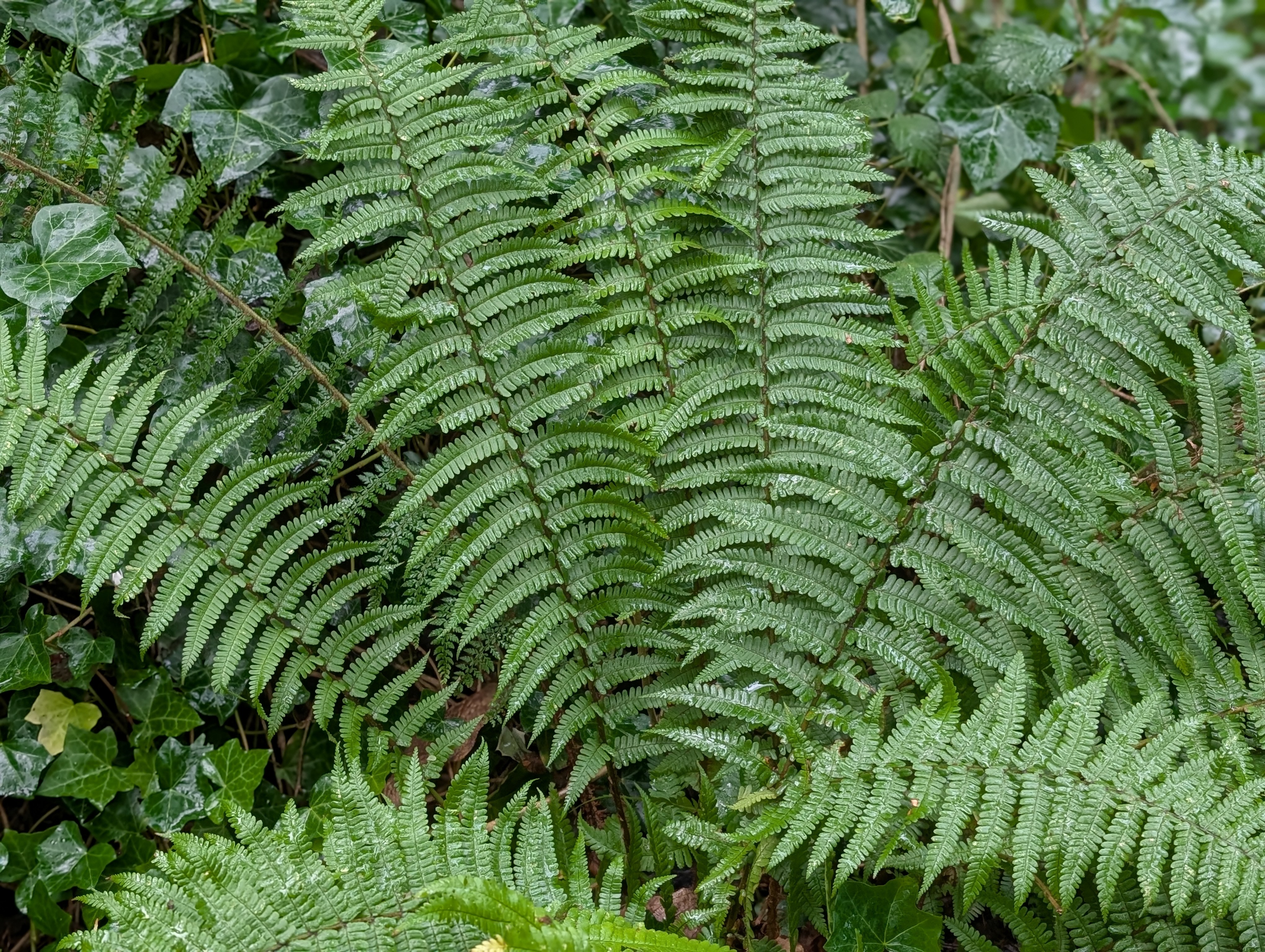
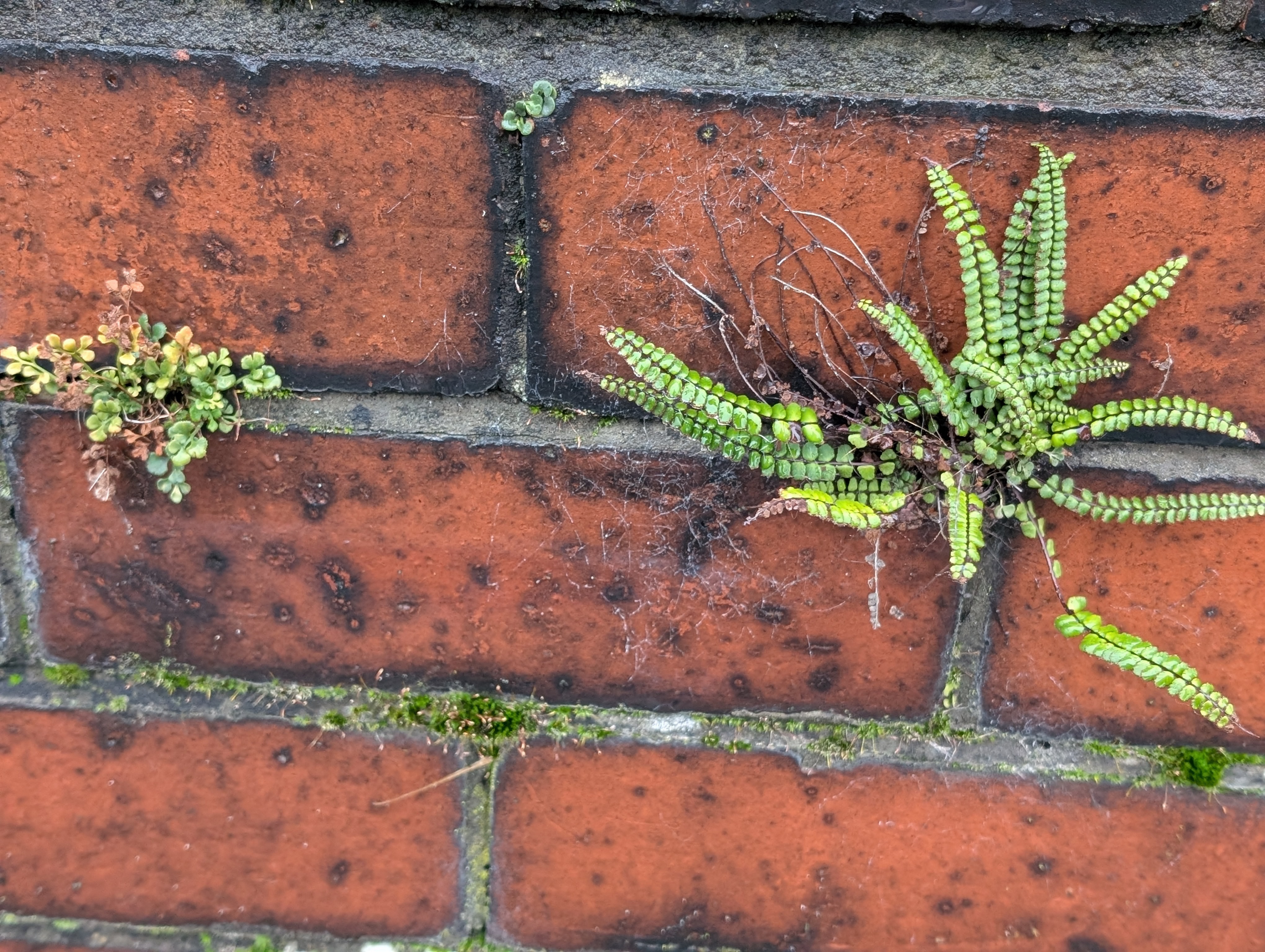
After several busy years exploring the remote corners of the North East, I seem to have developed a particular love of the North East’s ferns. These fascinating, if sometimes rather tricky, plants now take up a large share of my time spent botanising. With that in mind, I thought I’d put together a short pictorial guide to some of the species I’ve encountered so far – aiming eventually to feature all species growing wild in North East England.
This admittedly incomplete account ultimately aims to include all of the ferns, clubmosses and horsetails [Pteridophytes] I have come across during my travels in the region. It is not intended as a detailed identification aid; for that, I would recommend visiting Roger Golding’s brilliant website or the British Pteridological Society. Instead, its purpose is simply to encourage local interest in this interesting group, provide a quick comparison of species likely to be encountered locally, and, of course, to keep the various photos taken during my travels in one place. Other species, I hope, will be added in time.
I should also add that I am not an expert on ferns, far from it in fact, merely an interested amateur. To this end, discerning readers may spot errors…

Asplenium (Spleenworts)
Black Spleenwort Asplenium adiantum-nigrum
A locally distributed but often abundant fern, typically found on mortared walls and lime-rich rocks. It is distinguished by its glossy, triangular fronds and stipes (stems) with a purple-black base.


Rustyback Asplenium ceterach
A small and rather uncommon fern in the North East, most often found on mortared walls, though it also occurs in quarries and on natural limestone outcrops. Its fronds are dark green above and densely pale-scaly beneath, later taking on a distinctive rusty hue as the season progresses.


Sea Spleenwort Asplenium marinum
A very uncommon fern in the North East, restricted to rocky coastal habitats such as sea caves and cliffs, often within the salt-spray zone. Glossy and distinctive, it is the only fern likely to be found thriving in such exposed and inhospitable conditions.


Wall-rue Asplenium ruta-muraria
A common and widespread fern of mortared walls and lime-rich rocks, found throughout the region. It is unmistakable, with fronds divided into distinctive, diamond-shaped segments.


Lady Claremont’s Spleenwort Asplenium x clermontiae
An exceptionally rare hybrid between Wall-rue Asplenium ruta-muraria and Maidenhair Spleenwort Asplenium trichomanes subsp. quadrivalens. At one time, only a single plant was known from the British Isles, though it is uncertain whether this remains the case. Morphologically, it is almost perfectly intermediate between its parents.


Hart’s-tongue Asplenium scolopendrium
An unmistakable fern with simple, undivided fronds and broad, linear sori. It grows abundantly in woodlands and other shaded habitats on base-rich soils, and is also quite frequent on mortared walls.


Forked Spleenwort Asplenium septentrionale
A unique and extremely rare fern in North East England, confined to a handful of closely guarded sites on acidic, metal-rich rocks. It is distinctive, with tapering, tongue-like fronds.


Maidenhair Spleenwort A. trichomanes subsp. quadrivalens
A very common fern of mortared walls and lime-rich rocks. It can be distinguished from the superficially similar Green Spleenwort Asplenium viride by its dark rachis (green in A. viride), and from other subspecies of Maidenhair Spleenwort by its symmetrical pinnae, which attach to the rachis at a corner.


Lobed Maidenhair Spleenwort A. trichomanes subsp. pachyrachis
The rarest of the three Maidenhair Spleenworts, found only at a handful of sites on limestone rocks. It can be distinguished from the other subspecies by its strongly lobed pinnae with pale green margins and typically grows almost completely flat against the substrate.


Green Spleenwort Asplenium viride
A rather attractive small fern, superficially similar to Maidenhair Spleenwort but with a green rather than dark rachis. It is occasionally found on walls in upland areas but is more commonly encountered on limestone rocks or on acidic rocks kept moist by a steady supply of base-rich water. It is rather localised.


Botrychium (Moonworts)
Moonwort Botrychium lunaria
A small, distinctive, and rare fern, often found in species-rich limestone grasslands. It produces one sterile frond resembling a typical fern leaf, and a separate fertile frond bearing sporangia on slender stalks. This is very much a plant of specialised, well-managed habitats.


Blechnum (Hard-ferns)
Hard-fern Blechnum spicant
A fairly common evergreen fern of damp peaty or loamy soils, often found on banks. It is most frequently encountered in woodland or heathland and is easily recognised by its once-pinnate fronds, which occur in two distinctive forms: the outer, sterile leaves arch outward, while the inner, narrower leaves are fertile.


Cryptogramma (Parsley Ferns)
Parsley Fern Cryptogramma crispa
A unique and distinctive upland fern, C. crispa is strongly calcifuge and typically found on well-drained, stable scree slopes. It has pale, lime-green fronds that form characteristic clustered tufts, and produces two types of fronds: fertile fronds with narrow, oval leaf segments, and sterile fronds that resemble parsley.


Cystopteris (Bladder-ferns)
Brittle Bladder-fern Cystopteris fragilis
A small, delicate fern of damp, shaded rock crevices, cliffs, and caves, always growing on mineral-enriched substrates, most frequently over limestone. It can be relatively common in suitable habitats and is easily recognised by its fine, lacy fronds and distinctly grooved rachis. The common subspecies lacks glandular hairs.


Dryopteris (Male-ferns)
Male-fern Dryopteris filix-mas
The most abundant of the twice-pinnate, shuttlecock-forming woodland ferns, found in a wide variety of habitats. It is common almost everywhere, from ancient woodlands and hedgebanks to garden walls. Unlike the scaly male-ferns, it lacks black scales, and its pinnules are pointed, toothed, and slightly tapered toward the tip.


Mountain Male-fern Dryopteris oreades
compact, deciduous, clump-forming male-fern that grows in colonies on well-drained rocky ledges, steep slopes, and scree. The rachis bears pale scales, and the pinnules often have slightly wavy margins. It lacks the dark spot characteristic of the scaly male-ferns and can be distinguished from Dryopteris filix-mas by its sparse sori, which are usually confined to the lower portion of the pinnule underside.


Western Scaly Male-fern Dryopteris affinis subsp. affinis
In the North East, Dryopteris affinis subsp. affinis is typically found in older, well-managed woodlands and is generally less abundant than the similar D. borreri. The rachis bears golden-brown scales, and the frond tapers along its length, in contrast to the more truncated shape of related species. Basal pinnules are roughly the same size as the adjacent pinnules, lightly toothed along the margins, without a distinct basal lobe, and often have rounded tips. When held against the light, the veins are clearly visible against a uniform green background.


Greater Scaly Male-fern D. affinis subsp. paleaceolobata
A rather large and striking scaly male-fern, differing from D. affinis subsp. affinis in its crimped or twisted pinnules, a truncate frond base, and dense reddish scales. This thinly distributed fern is usually found in low numbers at wooded sites near water and is said to be more frequent on limestone.


Borrer’s Male-fern Dryopteris borreri
The most abundant scaly male-fern in the North East, though often confusing due to the presence of several named forms. It is most commonly found in woodland but can also occur in hedgerows, recent plantations, and occasionally upland sites. The frond tapers slightly toward the base but is typically truncate, and the rachis bears pale straw-colored scales. The basal pinnule on each pinna is usually a little longer than its neighbour, toothed along the margin, and has a distinct basal lobe.


Dryopteris borreri morph. ‘Foliosum’
One of a handful of distinct forms, or ‘morphotypes,’ of Dryopteris borreri, though perhaps the most distinctive when a good specimen is found. This fern grows in woodland and has broad pinnae that appear uneven, with pinnules that are crisped and curled, giving the entire plant a somewhat messy appearance. The pinnules are prominently toothed, and the basal pinnae are large and well-developed. As with other forms of D. borreri, it is probably under-recorded.


Dryopteris borreri morph. ‘Robusta’
Another form of D. borreri, which I find rather variable. The morphotype ‘Robusta’ is a large woodland fern with broad, overlapping pinnules that are usually prominently toothed. The stipe scales are pale brown with a black base, and the frond base is tapering-truncate, unlike the more neatly squared base seen in other forms of D. borreri. Further familiarisation with this form is still needed.


Alpine Male-fern Dryopteris lacunosa
A seemingly contentious split from the scaly male-fern group, most similar to D. borreri and little known outside dedicated fern circles. Specimens I have seen, often first recorded by others, are typically found near woodland streams. Key features include a prominently extended dark spot at the junction of the costa and rachis, double-teeth along the pinnule margins, and long pinna stalks that give the frond an open, non-overlapping appearance. The pinnule teeth also create characteristic funnel-shaped gaps.


Narrow Scaly Male-fern Dryopteris cambrensis
A somewhat messy, bedraggled-looking fern of upland hillsides, boulder fields, acidic grasslands, and woodland, occasionally extending into lowland areas. The pinnae are upswept on their stalks, rotated like a Venetian blind, and appear ‘V’-shaped or keeled when viewed end-on. The fronds are somewhat shiny, and the scales are reddish-brown and usually twisted. Individual pinnules are long and lobed, with the innermost bearing a prominent basal lobe, or “thumb,” that often overlaps the rachis.


Broad Buckler-fern Dryopteris dilatata
Vying with Dryopteris filix-mas as one of the commonest woodland ferns, this species occurs in a wide range of habitats, including new and mature woodlands, scrub, hedgerows, and upland areas. It is a large and distinctive fern with a shuttlecock habit and arching fronds. The pinnules end in sharply pointed teeth with incurved tips, and the scales at the base of the leaf are pale with a prominent dark central stripe, helping to distinguish it from D. carthusiana.


Narrow Buckler-fern Dryopteris carthusiana
A fern of wet woodland, fens, and flushed grasslands, not always easily distinguished from D. dilatata. It is an erect, deciduous species with a creeping rhizome and pale brown rachis scales. The pinnules tend to lie flat in a single plane, unlike the downturned pinnules of D. dilatata, and the plant has an overall pale-green appearance.


Rigid Buckler-fern Dryopteris submontanna
A rather rare fern in our region, known from only one site in the North East but much more abundant across the border in Cumbria. It has narrowly triangular fronds and a distinct glaucous colour due to the copious glands coating the frond surface.


Gymnocarpium (Oak-ferns)
Oak Fern Gymnocarpium dryopteris
A gregarious, rather pretty and strongly deciduous fern of rocky woodland, stream banks, and sheltered screes in upland areas.


Limestone Fern Gymnocarpium robertianum
Okay, so I am cheating here, as I have yet to see Limestone Fern in a wild state. Still, it does occur, so included below are a few photographs of a specimen in our garden. It looks superficially like Oak-fern but has taller, more erect fronds that are distinctively glandular.


Ophioglossum (Adder’s-tongues)
Small Adder’s-tongue Ophioglossum azoricum
One of our region’s rarest ferns; this species occurs at just a single site. It resembles a tiny version of O. vulgatum, but is much smaller in height and has fewer pairs of sporangia.


Common Adder’s-tongue Ophioglossum vulgatum
The largest and most abundant of the North East’s Adder’s-tongues, often serving as a useful indicator of high-quality, unimproved grassland. It is considerably larger than the other regional species.


Oreopteris (Lemon-scented Ferns)
Lemon-scented Fern Oreopteris limbosperma
One of my favourite ferns, O. limbosperma is a distinctive species largely, though not always, found in upland environments, where it inhabits damp woodland, acid grassland, gullies, and sheltered scree slopes. The fronds are clearly yellow-green and taper distinctively toward the base, while the pinnules have curled margins that partially conceal the sori. The whole plant has a faint lemony scent, and the undersides of the pinnae are covered in yellowish glands.


Phegopteris (Beech-ferns)
Beech Fern Phegopteris connectilis
A rather lovely fern, and one unlikely to be confused with any other. Beech Fern is an upland species inhabiting humid woodland, slopes, and, less often, gullies and stream beds in mountainous areas -typically in places out of reach of sheep. Its main identifying feature is the pair of opposite, backwardly-directed leaflets, often called ‘rabbit’s ears.’


Polystichum (Shield-ferns)
Hard Shield-fern Polystichum aculeatum
One of two common shield-ferns in our area, typically found on woodland slopes but also occurring in the uplands. It differs from P. setiferum in its leathery, prickly texture, tapering, narrow frond base, and distinctive pinnule shape.


Holly Fern Polystichum lonchitis
The rarest of the shield-ferns, confined to only a few closely guarded upland sites. It shares the ‘mitten-shaped’ pinnules of other Polystichum species, but these are broad and overlapping. Its habitat also helps distinguish it from both similar species.


Soft Shield-fern Polystichum setiferum
Once a rare species in the North East, this fern is becoming much more abundant due to natural expansion and garden escape. Favouring woodland, it has soft, flimsy fronds in contrast to the tough, leathery texture of P. aculeatum, and the frond base terminates abruptly and rather broadly. Several cultivars exist and regularly escape into the wild.


Lycophytes (Clubmosses)
Alpine Clubmoss Diphasiastrum alpinum
A low-lying, blue-green clubmoss typically found in short turf on mountainsides. It is rather uncommon in the North East but can be found throughout most mountainous areas. It grows from a creeping rhizome and has shoots that are round in cross-section. The leaves, or scales, are pressed tightly to the stem rather than spreading. I still need more photographs of this one…

Fir Clubmoss Huperzia selago
A rather lovely little clubmoss, perhaps the most distinctive of its kind. Found on mountainsides and other rocky upland sites, it forms dark-green tufts that resemble miniature conifers. Groups of shoots arise vertically from the base and often terminate in leaf-like gemmae, which break away to form new plants nearby, aiding propagation.


Lesser Clubmoss Selaginella selaginoides
A small and unassuming clubmoss found in calcareous flushes, dune slacks, and limestone grassland, often in upland areas but also in undisturbed lowland sites. It grows in tufts from a creeping rhizome, with shoots initially horizontal before curving upwards at the tips. The tiny leaves have elongated green tips.


Latest posts on Ferns

Year of Ferns: A Rare Little Spleenwort
Entry three in my personal challenge to see as many of Britain’s ferns as possible in a single year, this week featuring a rather rare Spleenwort.

Year of Ferns: Woodland in Winter
Entry two in my personal challenge to see as many of Britain’s ferns as possible in a single year, this week featuring common woodland ferns.

Year of Ferns: Slim Pickings
Entry one in my personal challenge to see as many of Britain’s ferns as possible in a single year, featuring some our most abundant species.

Growing Ferns from Spores – Part 1
Part one of a new series on this blog documenting the process of growing Ferns from Spores – I promise, it is easier than it sounds.

Botany along the Bizzle Burn
A short account of a day spent botanising along the steep-sided Bizzle Burn in the Cheviots

Fern of the Week: Beech Fern
Our next ‘Fern of the Week’ is the delicate Beech Fern Phegopteris connectilis, an uncommon species of old woodlands and mountain sides.