Allen Banks & Briarwood Banks

It had been a few years since I last visited my favourite ancient woodland sites at Allen Banks and Briarwood Banks — my most recent visit taking place during a student field trip in 2022. I’m not entirely sure why it’s taken me so long to return, but regardless, this week I was thrilled to get back into the swing of things leading a group of keen botanists from my ‘Botanist’s Year’ course on a walk along the River Allen, taking in the sights and sounds of these remarkable reserves.

Ancient woodland is a rare thing in Northumberland, especially in a truly diverse and undisturbed state. The River Allen catchment is one of the few places where it’s still possible not only to observe many of the characteristic plants of this special habitat, but to see them in abundance — a sight sorely lacking in my local patch around Newcastle. As we set out from the National Trust car park, it was immediately clear we were in for a treat: just about everything one hopes to find in such sites was flowering merrily.

Within moments of starting our walk, ancient woodland indicators began revealing themselves at a rapid pace. The first leg of the trip took us along the drier, upper slopes of the gorge, where we were treated to glorious patches of Wood Crane’s-bill Geranium sylvaticum alongside Goldilocks Buttercup Ranunculus auricomus — two species I encounter far too infrequently for my liking. Lower down, although the bluebells and wood anemones had finished flowering, Sanicle Sanicula europaea was in full bloom, and members of the group were quick to point out some lovely patches of Yellow Pimpernel Lysimachia nemorum.

One of the other curiosities during this leg of the trip was a mature variegated Sycamore Acer pseudoplatanus which may or may not be the cultivar Simon-Louis Freres. Presumably this was planted here by the Victorian custodians of the site but either way, it made for an impressive sight.

Continuing along the riverside path, our attention briefly turned to ferns, with sightings of most of the common species one might expect in a woodland like this: Hard Fern Blechnum spicant, Hard Shield-fern Polystichum aculeatum, Lady-fern Athyrium filix-femina, and others. Great Horsetail Equisetum telmateia was also noted, and several attractive woodland grasses gave us reason to pause. The most abundant was the delicate Wood Melick Melica uniflora, but we also recorded Hairy-brome Bromopsis ramosa, Giant Fescue Schedonorus giganteus, and perhaps most exciting of all, Wood Fescue Drymochloa sylvatica — a completely new plant for me, despite having unknowingly wandered past it for years. The Tyne catchment is one of the key strongholds for this rare woodland grass.

It wasn’t long, however, before our focus returned to flowers, with plenty of Bugle Ajuga reptans in bloom and Hybrid Avens Geum x intermedium growing alongside both of its parent species in a damp depression. Bitter-vetch Lathyrus linifolius and Wood Vetch Ervilia sylvatica were also observed, and a brief pause to key out specimens rewarded us with Intermediate Lady’s-mantle Alchemilla xanthochlora.

Another curiosity spotted on this leg of the trip was the attractive shrub shown below. Clearly a honeysuckle but which one? My money is on Fly Honeysuckle Lonicera xylosteum – likely an old introduction here.

Reaching the end of Allen Banks, we soon crossed the invisible boundary into the Northumberland Wildlife Trust’s reserve at Briarwood Banks. This is a fantastic site, carefully managed for a wide range of wildlife, including Hazel Dormice which are said to lurk in the undergrowth. Before venturing further, we stopped for lunch on a stunning patch of Calaminarian grassland, brimming with Mountain Pansies Viola lutea. As you can see, these little beauties come in a delightful range of colours, and personally, I’m especially fond of the less common yellow ones! This same area also held Common Bistort Bistorta officinalis on the riverbanks.

After lunch, it was time to begin our ascent up the banks, with Mel Rockett taking the lead, drawing on his extensive volunteering experience at the site. Our main target was Bird’s-nest Orchid which we had missed on the way in, but along the way we encountered a fine selection of species not seen earlier in the day, including Early-purple Orchid Orchis mascula and Common Cow-wheat Melampyrum pratense. Only when we reached the summit (and I’m not being melodramatic — the walk is genuinely steep at this point) did we finally find our quarry…

Thanks to Mel’s expert guidance, we finally caught up with Bird’s-nest Orchid Neottia nidus-avis. Two, to be exact, growing beneath a mature Beech Fagus sylvatica in a rocky patch of earth, far removed from the ‘rich humus’ they’re said to prefer in the textbooks. A quirky little plant, it may not be as striking as some of its orchid relatives, but it’s certainly fascinating: parasitic on the roots of its host tree and lacking the chlorophyll that gives most plants their green colour. These specimens weren’t fully open yet, but a few flowers had begun to reveal themselves.

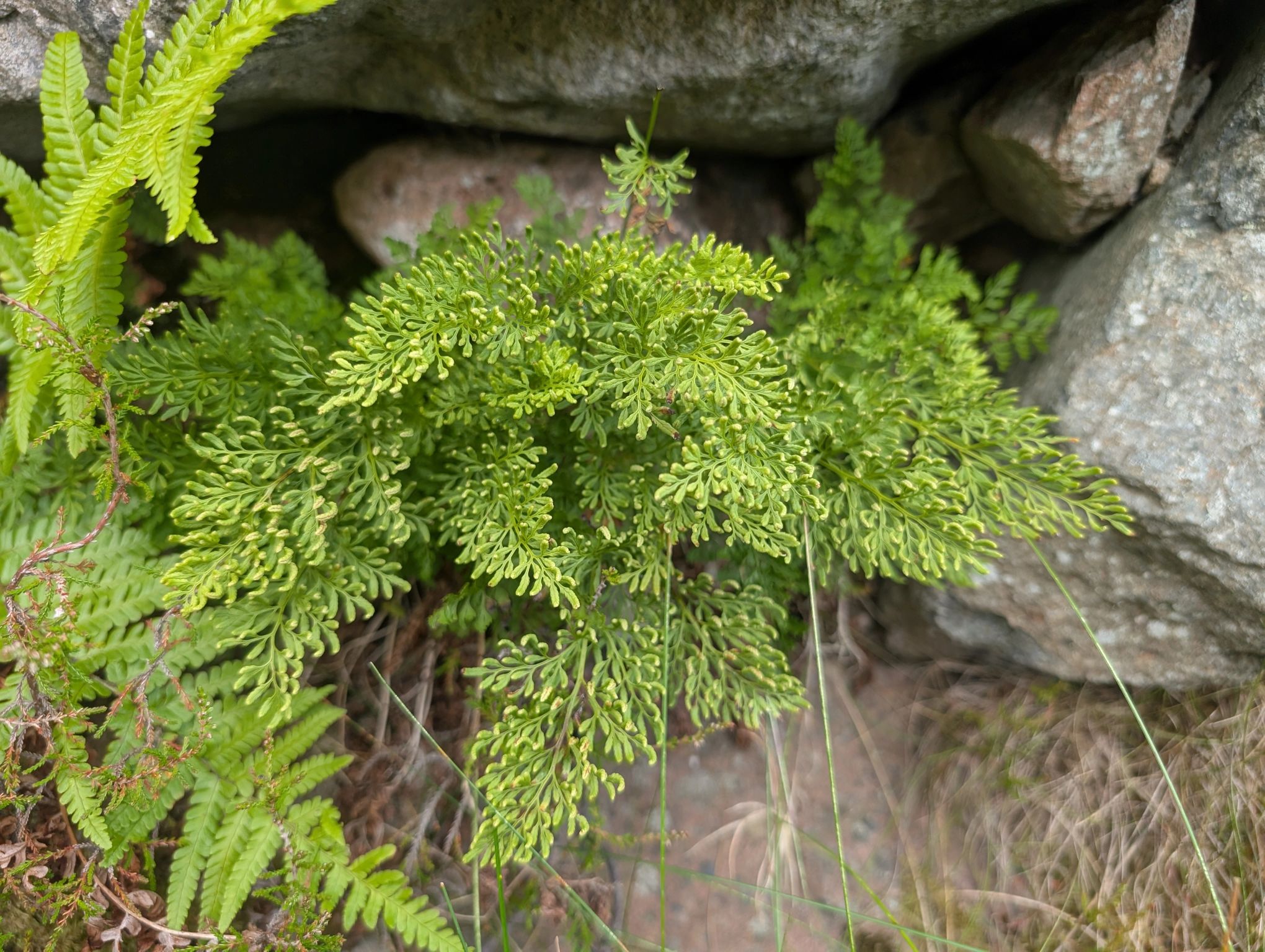
While at Briarwood, we were also lucky enough to catch up with the rather delicate fern shown below. This is Oak Fern (Gymnocarpium dryopteris), a pretty uncommon species in our region, typically found in rocky, ancient woodlands. It was such a treat to see a thriving patch of it as we made our descent down the bank.

And that, folks, is a wrap. It’s always such a pleasure to get out and about with a group of keen botanists, especially when their local insight leads to unexpected encounters. A big thank you to Mel for taking the reins at Briarwood Banks.

The Best Plant App for Beginner Botanists: Comprehensive Edition

With so many plant ID apps available, it can be hard to know where to turn when trying to identify that pesky plant. Here, we set out to discover which plant app truly stands out as the best choice for beginner botanists

Though it may beggar belief, a post I shared here on Common By Nature comparing the best plant ID apps for beginner botanists, has become my most-viewed article to date, racking up over 25,000 views since 2022. Clearly, this is a popular topic, and more and more people are turning to plant identification apps to help identify their botanical finds. With that in mind, I thought it was time to revisit the topic three years on.

As I said back then, plant ID apps are a contentious subject among many botanists. Some dismiss them outright, claiming they’re unreliable and detract from what purists might call “proper” botany. Others take a more open-minded approach and, even among relative experts, treat plant ID apps as just another tool in their botanical toolkit, much like a hand lens or a wildflower guide.

Wherever you stand on the issue, it is clear that plant apps are here to stay. Thanks to advances in image recognition and Artificial Intelligence (AI), these apps are becoming more accurate, more sophisticated, and increasingly useful for enthusiastic amateurs and budding botanists alike. Not only to help identify unfamiliar plants but also as a means by which to deepen their interest and engagement with the natural world.

Of the many plant ID apps available, a few names crop up again and again. Most people will have heard of PlantNet, Seek, or Google Lens. Others, like Flora Incognita, are a little less well known, but all aim to do the same thing. The question is: are any of them truly a cut above the rest when it comes to plant identification?

Inspired by the ongoing interest in my original post, I decided to return to the subject three years later to find out what the best plant app is today.

Once again, some ground rules

Just like last time, and to standardise our little plant app experiment, I’ve introduced a few rules to keep things fair:

  • One image only. While some apps allow for multiple images, we wouldn’t want to give any one of them an unfair advantage, would we?
  • Quality images. We’ll only use clear photos showing enough of the plant to reach an accurate identification.
  • British plants. I’ve chosen species that are commonly found in Britain, making the test more relevant to British botanists. That said, the odd non-native or garden escapee might sneak in too, just to keep things interesting.

A small change

This time, I thought I’d make things a bit more challenging for our candidate plant apps by including several trickier groups of plants. Whereas last time we focused mainly on flowering species, this round will feature grasses, ferns, and even a sedge. That should really test their mettle…

On reflection, I’ve also decided to drop the “leaves only” rule. Realistically, most people are going to be using plant apps to identify flowers, so it makes sense to reflect that in the test. We’ll also be testing three more identification apps not covered in my last post.

Meet the subjects

I’ve selected the ten plants below based on their varying levels of difficulty. Some, like Herb-paris and Caper Spurge, should be relatively straightforward for the apps to identify. Others — Sea Spleenwort, for instance — may prove more of a challenge. The inclusion of Mountain Melic is admittedly a bit mean, given the lack of clear identification features, but hey, this is my blog, and we’re here to really put these plant apps to the test, aren’t we?

Plant app comparison

For comparison’s sake, we’ll stick with a similar scoring system to the one used in the previous post. Any plant app that correctly identifies the plant as their first choice will receive 1 point. If the correct plant appears lower down the list, points will be deducted based on its position. For example, if Oxford Ragwort comes as the fourth suggestion, it would earn 0.6 points. I may also award bonus points in certain cases if an app manages to genuinely impress me.

Garden Privet
Ligustrum ovalifolium
Beech Fern
Phegopteris connectilis
Oxford Ragwort
Senecio squalidus
Mountain Melic
Melica nutans
Sea Spleenwort
Asplenium marinum
Herb-paris
Paris quadrifolia
Remote Sedge
Carex remota
Dog-violet
Viola riviniana
Caper Spurge
Euphorbia lathyris
Chickweed- wintergreen
Lysimachia europaea
Score
(0-10)
PlantNet 1 1 1 1 1 1 1 0.7 1 19.7/10
PlantSnap✖ 0.1 (it did get Melica)N/AN/AN/AN/AN/A0.1/10
(Stopped counting)
Picture This 1 1 1 1 1 1 1 1 19/10
LeafSnap 1 1 1 1 0.9 1 1 1 1 19.9/10
Seek 1 1 1✖0.1 (Spleenwort, at least) 1✖0.1 (It did get sedge) 1 16.2/10
GoogleLens✖ 0.5 (Points for privet) 1 1 1 1✖0.1 (for violet 1 16.7/10
FloraIncognita 0.9 1 1 1 1 1 1 1 18.9/10
Obsidentify 1 1 1 1 1 1 0.9 1 1 19.9/10

And there we have it, gang — a winner! Well, two actually, and only just by the skin of their teeth. In our little test, ObsIdentify and Leafsnap came out on top, closely followed by PlantNet, with PictureThis a smidgen behind. We’ll take a closer look at those top performers shortly, but first, let’s talk about the plant apps you might want to avoid…

The Losers

If you’re looking for an accurate plant app, best give these ones a miss. Particularly the first…

PlantSnap (0.1/10)

So bad I gave up…

PlantSnap struggled at nearly every turn, misidentifying four out of five plants and earning only a fractional bonus point for narrowing down Mountain Melic to the correct genus. Even more frustrating is its restrictive usage model — users are granted only a handful of free identifications before being hit with a 12-hour delay, clearly designed to push non-subscribers toward paying. Based on what I’ve seen, paying for this app would be, frankly, a waste of money.

PlantSnap performed poorly in our first test back in 2022, and despite the time that’s passed, it’s obvious little has improved. My advice? Avoid this one at all costs.

Seek (6.2/10)

iNaturalist is improving, but not enough

The last time we tested Seek, it performed abysmally and earned a rather negative review. I’m pleased to report that the app has shown some improvement. By correctly identifying six species — including both a grass and a fern — it managed to impress me to some degree.

That said, it’s still not quite strong enough for me to recommend it as a go-to plant ID tool. There are certainly better options available. Seek failed outright on Oxford Ragwort and Dog-violet, two fairly common species, and struggled with the sedge and one of the trickier ferns.

Given iNaturalist’s popularity among biological recorders, you’d hope Seek would perform better. For now, it still falls short of the mark.

Google Lens (6.7/10)

Meh, should do better with all that funding…

Google Lens is an immensely popular app, built into many smartphones by default. It has a wide range of uses — and performs well in many of them — but when it comes to plant identification, it falls slightly short of the mark.

Once again, it struggled with sedges and ferns, performed poorly on Dog-violet, and, somewhat surprisingly, failed to correctly identify Privet. Given the vast resources behind it, I expected better. While it’s certainly not the worst option out there, I still wouldn’t recommend it if you’re looking to accurately identify botanical finds.

In short, it’s far from the best plant ID app available.

Better Choices

Flora Incognita (8.9/10)

The worst of the good apps, but only just…

I had never used Flora Incognita before and didn’t include it in the last test, so I was genuinely excited to give it a try this time around. Truth be told, it performed quite well — just fractionally behind the top-performing apps — and deserves credit for correctly identifying both Sea Spleenwort and Remote Sedge, two species that tripped up several of the less accurate contenders. The only plant it really struggled with was, once again, the Dog-violet.

One particularly nice feature of Flora Incognita is that it allows users to make an initial classification (e.g. herb, shrub, grass, or fern) to help narrow down the search. It also supports multiple photo uploads, which I didn’t take advantage of this time but suspect could have improved the results. Another welcome touch is the inclusion of a confidence level with each ID suggestion — a small detail that adds transparency to the process.

All in all, this is a relatively strong choice for plant identification, and one I’d be happy to use again.

PictureThis (9/10)

Getting better all the time, and very nearly perfect…

PictureThis impressed me this time around, I must say. With the exception of Remote Sedge, it correctly identified all the plants down to species level with relative ease. The app is sleek, user-friendly, and offers a generally smooth experience. Its plant health assessment feature might not be of much interest to botanists, but it could be a welcome bonus for gardeners.

For those who enjoy background detail, PictureThis provides a wealth of information covering everything from characteristics and symbolism to pests, diseases, and garden uses. As I noted back in 2022, it remains a comprehensive and reliable option, and overall, a good, safe bet for botanists.

The Winners

If you are looking for an accurate, reliable plant app to help you on your botanical excursions, I’d choose from these…

PlantNet (9.7/10)

An old favourite performs well yet again…

When I last reviewed PlantNet, I admitted to being a fan, both for its plant identification capabilities and for its useful option to search by regional floras. This feature allows users to narrow their search to a specific geographical area, helping rule out, for example, North American species when the record is actually from the UK or Greece. It performed well in the previous test, but did even better this time, correctly identifying all but one plant to species level. The only slight miss was with the Dog-violet, which it listed as the third option, behind a couple of admittedly similar species.

Once again, this app comes highly recommended. Like all plant ID apps, it shouldn’t be relied on with absolute certainty, but it remains a valuable tool in any botanist’s arsenal.

LeafSnap (9.9/10)

One of the best botanical apps out there…

LeafSnap does it again, finishing ahead of the competition in joint first place! This result echoes what we found in 2022, when the app narrowly beat out contenders like PlantNet and Seek with a respectable 5 out of 6. This time, it performed even better by correctly identifying all the plants to species level, with the exception of Sea Spleenwort, which it listed as a very respectable second option.

If I have one minor complaint, it’s that the in-app prompts and ads seem to have become more frequent since my last test. That said, they’re easy enough to navigate and, in the grand scheme of things, a small price to pay for this level of accuracy.

LeafSnap remains a strong recommendation from me. It boasts all the features you’d want in a reliable plant app.

Obsidentify (9.9/10)

I didn’t include ObsIdentify back in 2022, but I really wish I had. This is a downright impressive app that matched LeafSnap on the scorecard, receiving only a minor deduction for Remote Sedge which it listed as a second choice. It might well have nailed it with a better photo — but let’s be honest, shoddy images are part and parcel of real-world use. In truth, I can’t fault this app on design, ease of use, or accuracy.

What sets ObsIdentify apart from the competition is that, while it’s a reliable choice for plant identification, it also covers all taxa. That means it works just as well for moths, hoverflies and other wildlife groups. The only area where it still struggles is fungi, but to be fair, most fungi can’t be confidently identified from a photo alone.

If you’re looking to streamline the number of apps on your phone, this is the one I’d recommend. Not only will it help with those pesky plants, but you might also find yourself getting hooked on identifying other species too. For beginners especially, it could become a trusty companion.

Bravo, ObsIdentify, bravo!

William Turner’s Herb-paris

Herb-Paris Paris quadrifolia is a perennial plant of damp, moderately calcareous woodlands. Blooming in late spring, it is a striking and distinctive species featuring a whorl of four ovate leaves. In May, a single flower emerges on an upright stem – a star-shaped bloom composed of four yellow-green petals and four green sepals, topped by a dark ‘berry’ and a crown of eight golden stamens.

Known as oneberrie in historic accounts, Herb-paris was first properly described in England by the father of English botany, William Turner (1508-1568), who wrote of his discovery:

The herb that hath bene taken for lyberdes bayne, groweth plentuousely besyde morpeth in Northumberland in a wod called cottyngwod’.

Never one to pass up an encounter with a special plant, this week, a chance visit to Morpeth as part of a course I’m leading provided the perfect opportunity to visit Cottingwood for myself.

Cottingwood is a small woodland nestled in the heart of Morpeth, Northumberland. That it has survived in a relatively unaltered state is something of a miracle – the deep, steep-sided valley offering protection from the spread of the affluent housing developments that have sprung up around it in the years since Turner visited. Today, it remains in relatively good condition and is home to many plants typically associated with ancient woodland: Bluebell, Wood Sedge, Great Horsetail, and others. Some areas of the wood appear well-trodden, but elsewhere, dense vegetation gives the impression that few people venture into this special and historically significant patch of greenery.

After navigating a few banks and narrow trails, we came upon a damp flush where, to our delight, the distinctive flowers of paris appeared in surprising abundance – growing in precisely the same spot where Turner described the plant centuries ago.

If the survival of Cottingwood itself is surprising, then the continued presence of Herb-paris at this little site borders on the miraculous. Now a rare species, it is often confined to particularly special habitats — its spread hindered by its own unique biology (it does, after all, produce only one seed annually). Even so, what a privilege it was to sit in the very same spot as one of our most eminent botanical forebears, admiring this weird, wonderful, and undeniably beautiful plant.

Spring flowers don’t come much better than this…

The Urban Ferns of Newcastle and North Tyneside

While recording for the Urban Flora, I’ve now encountered a total of 23 fern species growing in a wild or naturalised state within the conurbation. An additional three species have been submitted by fellow recorders, bringing the total to a healthy 26. This is quite an impressive number given the area covered, though it still represents a relatively small 2.3% of the total plant species recorded from the area.

Nonetheless, urban ferns are an interesting bunch. In the style of my previous posts [here] and [here], I thought I’d explore them properly on this blog — partly for reference, and partly in the hope that someone, somewhere, finds these rambles either useful or at least somewhat interesting.

Before I go any further, however, a very big thank you to Chris Barlow and David Jarema for making their photography available for projects such as this. It is most appreciated.

Common Ferns

The Big Five

The “big five” urban ferns represent the most common and widespread species within the conurbation. All are fairly familiar and either thrive in a wide variety of habitats or are associated with environments so ubiquitous that they’ve become an almost daily sight.

Chief among them is the Male Fern Dryopteris filix-mas, which has so far been recorded in 135 squares—an impressive 71% of those surveyed. It’s truly a fern that gets everywhere: from woodlands and hedgerows to urban walls, gutters, gardens, and even pavements close to overflowing drainpipes. While I doubt it will turn out to be truly ubiquitous across every square, it’s about as close as a fern can reasonably get.

Not far behind in the numbers game is Hart’s-tongue Asplenium scolopendrium, an evergreen fern of moist, shaded woodlands that is also frequently encountered on mortared walls and masonry. Recorded from 102 squares (53%), it’s certainly abundant.

Two other “wall ferns” are also doing well: Wall-rue Asplenium ruta-muraria, noted in 84 squares (44%), and Maidenhair Spleenwort Asplenium trichomanes, in 70 squares (36%). While marginally less widespread, both can be prolific where they occur – typically in older, more unkempt terraced neighbourhoods, where less rigorous weeding allows them to thrive. In contrast, they can be surprisingly scarce in modern developments or more affluent areas where tidiness tends to take priority.

The final fern worthy of inclusion in this section is Broad Buckler-fern Dryopteris dilatata. Typically a species of somewhat acidic, damp soils, it’s most often encountered in woodland settings. However, it has proven far more catholic in its habitat preferences than many other woodland ferns, turning up readily in newer woodlands, plantations, hedgerows, rail embankments, and even grassy habitats on occasion. So far, it has been recorded in 48 (25%) survey squares.

Localised Ferns

The next group of ferns are altogether more particular in their habitat preferences and occur much more sparingly across the conurbation — though not quite so sparsely as to be considered rare. With the exception of one notable species, all are best described as woodland ferns within Newcastle and North Tyneside. We’ll look at these first.

Hard Shield-fern Polystichum aculeatum and Soft Shield-fern Polystichum setiferum make for an interesting duo. The former is native to the area, typically inhabiting damp, shaded stream-sides and rocky ledges within woodland. The latter, meanwhile, is a more recent arrival, introduced occasionally but now subject to natural colonisation as well. Intriguingly, the two species are neck-and-neck in terms of occurrence, each recorded from 10 survey squares (5%). Both remain closely tied to the relic semi-natural woodland of Newcastle’s denes, though Soft Shield-fern has begun to spread a little more widely.

Another interesting pair are the Scaly Male-ferns. Within the conurbation, we seem to host two fairly frequent species and one rarer one (which I’ll cover later). Among the more commonly encountered are Borrer’s Male-fern Dryopteris borreri and Golden-scaly Male-fern Dryopteris affinis.

Of the two, D. borreri is notably more abundant, recorded in 26 survey squares 13.7%. While it tends to favour older woodland habitats, it also turns up elsewhere including newer plantations. D. affinis, on the other hand, is much more selective, preferring damp locations in older woodlands, and has been recorded in just 7 squares 3.7%. In fact, the only places I’ve found it in any real abundance are Jesmond and Wallbottle Denes, now that I think about it.

The conurbation’s wooded denes are also just about the only places where you’re likely to encounter Hard Fern Blechnum spicant these days. Recorded in 8 survey squares 4.2%, it is largely restricted to Sugley, Walbottle, Jesmond, and Denton Denes – with the only notable outlier being a small population at Gosforth Nature Reserve where the acid soils suit it well.

Two more uncommon species associated with the conurbation’s woodlands – albeit with a bit more flexibility – are Lady-fern Athyrium filix-femina and Bracken Pteridium aquilinum.

Lady-fern, recorded from 21 squares (11.1%), remains fairly localised, with the best populations once again found within the area’s wooded denes. However, it will readily colonise other damp, shaded spots such as ditches, hedgebanks, and more recent plantations.

Bracken, by contrast, is quite the opposite. It favours somewhat acidic soils in the drier, upper reaches of older woodlands, where it can be particularly abundant. Still, it’s far from confined to such settings and occurs more broadly across the conurbation as a colonist of all sorts of habitats, especially rail sidings and grassy banks. In total, Bracken has been observed in 29 squares (24%), though it is by no means “common”.

The final species worthy of mention at this stage is, rather refreshingly, not a fern of woodlands but instead a calcicole, favouring mortared walls in urban areas. Black Spleenwort Asplenium adiantum-nigrum has been recorded from 28 squares (14.7%) so far. While one of the less common wall ferns overall, it can be surprisingly plentiful in certain neighbourhoods, particularly around Walker, Heaton, and Wallsend. It also occurs sporadically in squares around Newcastle City Centre, including in spots where even more typical ferns like Wall-rue are absent.

Rare and Scarce Ferns

And so we come to the conurbation’s rare ferns – the ones that truly generate excitement when you stumble across them. There’s a surprising number of these, though they all tend to fall into two distinct categories: rare natives or exotic introductions. We’ll start by looking at the native species first…

Scarce Native Species

Kicking off our collection of rare woodland ferns is a duo found exclusively at Gosforth Nature Reserve —suggesting a preference for mildly acidic conditions.

Narrow Buckler-fern Dryopteris carthusiana has long been a rarity in the conurbation, with no local records since George Swan encountered it in the Gosforth Park back in the 1970s. That changed recently when local botanist, John Durkin, rediscovered it in wet woodland and relic acid grassland at the reserve. Found in just 1 square (0.5%), it is by all accounts a true local rarity. The same goes for its hybrid with Broad Buckler-fern, Dryopteris x deweveri, also noted from a single square (0.5%) during surveys by the same recorder.

Speaking of hybrids, Polystichum × bicknellii — the cross between Hard Shield-fern and Soft Shield-fern —has so far only been recorded from Jesmond Dene, where both parent species occur. Meanwhile, Gosforth Nature Reserve has produced two further exciting finds: Narrow Male-fern Dryopteris cambrensis and Lemon-scented Fern Oreopteris limbosperma, each recorded from just one square (0.5%). Both are, for now, exceptionally scarce within the conurbation.

Rustyback Asplenium ceterach has long been a rare fern on Tyneside. For years, it was known only from an exterior garden wall in North Shields where happily, it still persists today. Encouragingly, it was also recorded last year on an exterior wall in Brunswick, where it was growing in mortar alongside a mix of more familiar species. So far, Rustyback has been observed in just 2 squares (1.1%).

And since we’re on the subject of walls, now seems a fitting moment to turn our attention to the urban Polypodium species. Both Polypody Polypodium vulgare and Intermediate Polypody Polypodium interjectum are rare within the conurbation — though they may well be under-recorded.

P. vulgare has proven the more widespread of the two, typically occurring as a thinly distributed epiphyte of older woodlands, with records from Jesmond, Sugley, and Denton Denes. It also occasionally turns up on old walls, though here it remains quite scarce. To date, it has been recorded from 9 squares (4.7%). In contrast, P. interjectum is more characteristic of mortared walls and has been noted as a scattered colonist in 3 squares (1.6%).

A final rare native worthy of mention is the unusual Adder’s-tongue Ophioglossum vulgatum, a species typically found in higher-quality, neutral to acidic grasslands. Within the conurbation, it appears to be in decline – likely as aa consequence of poor grassland management in many areas. So far, it has been observed from just two well-known sites: a verge along Salter’s Lane and, in greater numbers, from grassland near Havannah Nature Reserve. It remains restricted to 2 squares (1.1%).

Some Exotic Ferns

As I’ve touched on in previous posts, Jesmond Dene is home to its fair share of weird and wonderful exotic plants, including several ferns. Most of these have been encountered near the remnants of a derelict Victorian fernery, and it’s hard to say whether they’ve persisted here for decades or are the result of more recent introductions. Either way, three exotic species now appear to be growing wild in the Dene: Japanese Shield-fern Polystichum polyblepharum, Japanese Buckler-fern Dryopteris erythrosora, and Western Sword-fern Polystichum munitum, each recorded from a single square (0.5%).

A fourth species, House Holly-fern Cyrtomium falcatum is not found in the dene but instead, has been noted from the base of a sunny garden wall in Gosforth – clearly having spread from planted stock nearby.

And really, who doesn’t enjoy a touch of the exotic while botanising the big city?

And there we have it, a not-so-concise tour of the urban ferns recorded as part of the project so far. There’s a surprising number out there waiting to be discovered. With the conurbation’s woodlands now fairly thoroughly surveyed, I suspect the distributions of many woodland species will remain relatively stable by the time the project wraps up. That said, we may well see an uptick in species colonising walls and masonry, particularly as urban habitats are surveyed in more depth.

I can’t imagine there are too many more species left to uncover but given the exotics mentioned above, you never really know what might be lurking just around the corner, do you? Good job there are some handy resources out there…

Snowdrop Identification Simplified

Get started identifying cultivated and wild Snowdrops with a new snowdrop identification crib for gardeners and budding galanthophiles

It’s no secret that I love Snowdrops – growing them, finding them in the wild, and visiting collections have all proven rather addictive. Like many enthusiasts, I often struggle with identification – something I suspect is common, except among the most knowledgeable Galanthophiles. This challenge is partly due to the scattered nature of Snowdrop resources.

Having created a simplified key for widespread Snowdrop species found in the UK, I wanted to take it a step further by extending it to cultivated species and hybrids. Here is the result. Perhaps it will be useful to fellow gardeners who, like me, frequently misplace their labels!

Identifying Snowdrops

Well-naturalised in woodlands, hedgerows, large gardens, and other shady areas, snowdrops bring joy to many in late winter. Looking past the obvious similarities, they can be an interesting bunch to explore, and even with a tentative glance, it is possible to find several species with relative ease.

On top of this, the popularity of Snowdrops with collectors means that a great many species, most of which hail from Eastern Europe, have been brought into cultivation. Many of these are rather rare but several do crop up from time to time, as do hybrids. Cultivars are plentiful too but are not covered here (with a few exceptions). A good list can be found here.

References

ZUBOV, D.A. and DAVIS, A.P. (2012). Galanthus panjutinii sp. nov.: a new name for an invalidly published species of Galanthus (Amaryllidaceae) from the northern Colchis area of Western Transcaucasia. Phytotaxa, [online] 50(1), p.55. doi:https://doi.org/10.11646/phytotaxa.50.1.5.

Myspecies.info. (2025). Galanthus alpinus [Sosn. ]. [online] Available at: https://citesbulbs.myspecies.info/category/galanthus-wild-species/galanthus-alpinus [Accessed 13 Mar. 2025].

Snowdropwiki.nl. (2016). Galanthus genus – Snowdrop Wiki. [online] Available at: https://www.snowdropwiki.nl/Snowdrop_Wiki/galanthus-genus/ [Accessed 13 Mar. 2025].

Galanthus.co.uk. (2025). Galanthus: Home. [online] Available at: https://www.galanthus.co.uk/ [Accessed 13 Mar. 2025].

Lord Armstrong and the Exotic Plants of Jesmond Dene

Jesmond Dene, nestled just two miles northeast of Newcastle city centre, is a true gem. With the River Ouse Burn at its heart, this picturesque area has witnessed remarkable transformations over the centuries. What began as a stretch of natural woodland evolved into an industrial hub, dotted with mills, before transitioning into a Victorian pleasure ground. Today, it stands as a cherished public park. While the dene’s history is rich and multifaceted—a story explored in depth elsewhere—it is its stint as a private estate that intrigues this curious botanist most of all.

Strolling through the overgrown dene today, one can’t help but marvel at the sheer diversity of plant life thriving here. Native woodland species, exotic ornamentals, garden escapes, and beloved Victorian classics all grow in abundance and truth be told, it is quite the puzzle to unravel how and when many of these fascinating botanicals arrived. In this post, we’ll attempt to do just that—exploring some of Jesmond Dene’s hidden botanical treasures and, at times speculatively, attempting to trace their origins. Let’s dive in…

Lord Armstrong’s Private Garden

While best known for his renowned residence at Cragside, Sir William George Armstrong (1810–1900) also left an indelible mark on Newcastle through his landscaping and development of Jesmond Dene. Born in Shieldfield, Newcastle, and originally trained as a solicitor, Armstrong married Margaret Ramshaw (1807–1893) of Bishop Auckland, County Durham, in 1835. That same year, the couple built their home, Jesmond Dean, on a small portion of land that would later become part of the larger dene.

Over the following decades, particularly in the 1850s, Armstrong and his wife purchased large tracts of neighbouring land, gradually transforming the dene into a meticulously landscaped parkland. Armstrong’s alterations were ambitious and wide-ranging. Fascinated by water, he reshaped the River Ouse Burn by adding waterfalls, islands, and bridges, many of which remain iconic features of the area today. He also introduced a network of footpaths, still enjoyed by modern day walkers.

Equally significant, though perhaps less obvious, was his transformation of the dene’s flora. Armstrong imported plants from across the globe, enriching the landscape with exotic species and curious varieties, in doing so, greatly altering the park’s character.

A view of Jesmond Dene c1890 courtesy of Newcastle City Libraries

Armstrong’s passion for plants was well-documented, and, in keeping with the times, many of the species he introduced to his ‘woodland garden’ reflected the trends of Victorian landscaping. Rhododendrons (Rhododendron ponticum) were a particularly popular choice, as was Aucuba (Aucuba japonica), along with an array of exotic trees. Some of these, including impressive specimens of Wellingtonia (Sequoiadendron giganteum) and Japanese Red Cedar (Cryptomeria japonica), still stand tall today. Look closer, and you’ll also find several unusual oaks, such as the Red Oak (Quercus rubra) and Lebanon Oak (Quercus libani). However, while these relics are striking, they are not the focus of this post.

In 1883, Lord Armstrong gifted the main area of Jesmond Dene to the Corporation of Newcastle upon Tyne for the benefit of its citizens. The following year, in 1884, the park was officially opened by the Prince and Princess of Wales. Since then, little has changed. Jesmond Dene remains well-used by locals but, aside from essential maintenance and a few successive introductions of equally unusual plants, it has been largely untended for over a century, allowing nature to reclaim much of the space – the very reason it is so difficult to tell new introductions from older ones!

Today, while still officially recognisd as a park, Jesmond Dene resembles more of a semi-natural urban woodland. It supports many species typical of ancient semi-natural woodlands, such as Wood Anemone (Anemone nemorosa) and Ramsons (Allium ursinum) and its canopy is dominated by native trees, including English Oak (Quercus robur), Wych Elm (Ulmus glabra) and Ash (Fraxinus excelsior). This façade of naturalness is so extensive that parts of the dene appear entirely wild. Yet, while many of the landscaped features remain— complete with their exotic introductions —much of Lord Armstrong’s original planting seems to have been lost to time. Or has it?

A view of Jesmond Dene c1910 courtesy of Newcastle City Libraries
A view of the bridge, Jesmond Dene, c1910 courtesy of Newcastle City Libraries

Over recent years, while exploring Jesmond Dene, I have stumbled across several remnants of its past life as a naturalistic garden — often in the most unexpected places. While some species have undoubtedly been lost, much still remains for those who know where to look. Though not strictly “wild” (although one could argue that any species persisting or spreading for over a century has earned that distinction), these exotic plants add an intriguing layer of interest to what is already the crown jewel of Newcastle’s green spaces.

In what will likely become a rather lengthy blog, I wanted to highlight some of these botanical relics…

The Exotic Plants of Jesmond Dene

Before going any further, please do take a look at this superb account published account on the History of Jesmond Dene. With mention of many of the plants introduced during Victorian times, this will form the basis for several of today’s assumptions.

Shrubs in Jesmond Dene

Perhaps the most obvious aspect of Armstrong’s legacy is the assortment of exotic trees scattered throughout Jesmond Dene and the neighbouring Armstrong Park. While undeniably fascinating, these trees are rather conspicuous and not the focus of this blog (though I have written about some of them previously here).

Far less prominent are the shrubs introduced as understory plants and hedging. Several exotic species, such as Rhododendron (Rhododendron ponticum), Snowberry (Symphoricarpos albus), and Himalayan Honeysuckle (Leycesteria formosa), are widespread — so much so that it’s nearly impossible to miss them. Others, like Aucuba (Aucuba japonica), which forms large stands around Pet’s Corner and in Armstrong Park, and both Wilson’s Honeysuckle (Lonicera nitida) and Box-leaved Honeysuckle (Lonicera pileata), are easier to spot if you know where to look.

Even more intriguing are those shrubs that have blended seamlessly with the naturally occurring vegetation. Take the Berberis family for example — a spiny set of shrubs typically originating from Asia or South America. In a summary of plants recorded in Jesmond Dene in 1894, only two species are mentioned: Oregon-grape (Berberis aquifolium) and Darwin’s Barberry (Berberis darwinii), the latter, of course, named in honour of Charles Darwin.

While the original plantings of Oregon-grape appear to have disappeared, the species is still very much present in the Dene today and seedlings can readily be found in several parts. Whether these stem from Armstrong’s introductions, or more recent plantings in the 1980’s and 90’s remains to be seen. Darwin’s Barberry persists in several locations too, most notably near Castle Farm Road. Beyond these, other Berberis species seem to have quietly flown under the radar. For instance, several stands of the attractive Chinese Barberry (Berberis julianae) can be found, especially near the entrance to Armstrong Park, while Common Barberry (Berberis vulgaris) has been noted in the upper reaches of the dene. The origins of both are hazy at best.

More recently, specimens of Gagnepain’s Barberry (Berberis gagnepainii) were observed near the quarry (rail.hired.silks) where one can also find some nice examples of Warty Barberry (Berberis verruculosa), both plants absent from early records. Both of these seem to be later introductions by park custodians. The same can also be said for the fragrant Christmas Box (Sarcococca confusa) growing nearby – not a Berberis but a nice plant nonetheless.

Other groups of plants mentioned in early accounts of Jesmond Dene include Hawthorns and Cotoneasters. Starting with the Hawthorns, the 1894 plant list references Crataegus oxycantha — a now obsolete name that broadly encompassed both Common Hawthorn (Crataegus monogyna) and Midland Hawthorn (Crataegus laevigata). While plenty of native Common Hawthorn thrives throughout the dene, visitors can still find examples of Midland Hawthorn hidden in plain sight, particularly in the grotto and along Red Walk. Though they appear quite similar to the untrained eye, these Midland Hawthorns were surely part of Armstrong’s original introductions.

Midland Hawthorn (Crataegus laevigata) © Pru Hamed

But what about the Cotoneasters? Given their ability to spread independently, several species found in Jesmond Dene may have colonised the area more recently. Among these are Willow-leaved Cotoneaster (Cotoneaster salicifolius) and Himalayan Cotoneaster (Cotoneaster simonsii). Far more intriguing, however, is the presence of Purple-flowered Cotoneaster (Cotoneaster atropurpureus), observed growing within the riverside masonry along Red Walk. This species has not been recorded elsewhere in the region, and given its apparent age, it may well originate from original plantings in the dene.

Jesmond Dene is home to many other exotic shrubs, nestled discreetly within the landscape. Among the more striking species are Yellow Azalea (Rhododendron luteum), hidden in the thickets west of Paddy Freeman’s Park (punchy.wins.usage), and Wrinkled Viburnum (Viburnum rhytidophyllum), found nearby at stuck.lamp.soak. The former is mentioned in early accounts, while older examples of the latter must surely stem from Armstrong’s day. Recent records also suggest the presence of the related Laurustinus (Viburnum tinus), though, alas, I have yet to locate it myself.

Three other shrubs I have observed, however, are Juneberry (Amelanchier spp.), Asian Firethorn (Pyracantha rogersiana) and Shallon (Gaultheria shallon). Interestingly, the latter has become a problematic invasive species at Armstrong’s other residence at Cragside. In Jesmond Dene, you can find Shallon uphill from solo.shack.feels. Along Red Walk, you may also spot examples of Weigela (Weigela florida), Mock Orange (Philadelphus coronarius), and Rose-of-Sharon (Hypericum calycinum), all of which have presumably stood the test of time. All three are mentioned in that historic account of the denes flora.

Whilst not strictly a shrub (though large than most) also worth a look on your next walk along the Ouse Burn are the large stands of bamboo. The most impressive sit in Armstrong Park and after much mind-changing, I think these could be Arrow Bamboo (Pseudosasa japonica). This would fit with the initial planting plan.

Three final species worth mentioning are all Rubus species, or brambles. First, across the Ouse Burn from Pet’s Corner, a spring visit may reward visitors with the striking pink blooms of Salmonberry (Rubus spectabilis), a North American species that is now happily naturalising at colleague.darker.pines, or thereabouts. This was a popular plant in Victorian times and in the North East, appears most frequently in the grounds of older stately homes.

At several points in the dene, you can also spot sprawling patches of Chinese Bramble (Rubus tricolor), a species long favored in landscaping. Given Armstrong’s fondness for oriental plants, this may date back to Victorian times. Finally, at mercy.lend.spray, you will find a long-neglected garden completely overtaken by White-stemmed Bramble (Rubus cockburnianus), a particularly attractive species endemic to China. Given the vast area it occupies, it’s clear that this bramble has been established for quite some time but for how long exactly, I am unsure.

Groundcover

Of course, when planting a whole host of trees and shrubs, you need something pretty to sit under them. The Armstrong’s planted many such things including several Gentians, Heaths and orchids now lost to time. That said, if anyone stumbles across a Lady’s-slipper Orchid, please let me know – supposedly these too were introduced on mass!

What remains today of Armstrong’s planted groundcover largely consists of tenacious, hardy species. Throughout the dene, you’ll encounter both Greater Periwinkle (Vinca major) and Lesser Periwinkle (Vinca minor) in various areas, as well as Atlantic Ivy (Hedera hibernica) and Persian Ivy (Hedera colchica) adorning the woodland floor in several spots. It’s perhaps unsurprising that these species have persisted, but look closer, and you’ll also find surprises.

One such surprise is a sprawling colony of Abraham-Isaac-Jacob (Trachystemon orientalis) at slot.puff.stale. This unusual plant, native to Bulgaria and surrounding regions, is well-established in the dene and must surely have been introduced as a botanical curiosity. It is no longer common in cultivation today and would be a very odd choice indeed for modern park keepers given its tendency to overtake neighbouring areas.

Abraham-Isaac-Jacob © Chris Barlow

Similarly, while walking along Red Walk, it’s possible to see several Asiatic plants growing amid tangles of brambles and other native weeds. Rodgersia (Rodgersia podophylla) is present here, as is Japanese Astilbe (Astilbe japonica), while in some areas, particularly on some of the higher more remote slopes, stands of Carpet-box (Pachysandra terminalis) can also be observed. The isolation of these sporadic plants, far from tended beds, suggests that they too could have been present here for quite some time. Conversations with park custodians seem to support this idea though it is difficult to know for certain given the successive plantings undertaken over the years.

The above curiosities are not the only ones worth mentioning. By the stepping stones at face.edgy.sticky, a glance at the sodden, moss-covered banks of the Ouse Burn should reveal another fascinating plant: Kidney Saxifrage (Saxifraga hirsuta). This perennial thrives in high humidity and is typically found in damp, shaded environments such as woods, ravines, and north-facing cliffs. It was likely introduced as a rockery plant and has since established itself in several areas of the dene, alongside another similar species, Londonpride (Saxifraga × urbium). Interestingly, an intermediate form of the two species also exists in the dene and may represent a hybrid—a subject worth investigating in the future.

Another species present in the dene, Fringecups (Tellima grandiflora), would also fit with this style of Victorian planting but is now so well naturalised in parts of our region that tracing its origin becomes incredibly challenging.

Last, but by no means least, Jesmond Dene’s ferns deserve mention. The dene hosts several native species, including Hard Fern (Blechnum spicant) and Lady-fern (Athyrium filix-femina), but it also features introduced varieties. At the site of an old fernery, presumably created by the Armstrong’s, nature has reclaimed much of the area, yet the wider area still holds intriguing plants like Copper Shield-fern (Dryopteris erythrosora). Whether this species is an descendant of original plantings or of something planted more recently is impossible to assess. It is a pretty one though and I’d like to think it may have stood the test of time.

Elsewhere in the dene, you’ll notice many examples of Soft Shield-fern (Polystichum setiferum). While this species is native to southern parts of the UK, in the North it generally appears as an introduced plant. Interestingly, it is one of the few ferns specifically mentioned in Armstrong’s original planting plans. Over the years, it has gone on to colonise many parts of the dene.

Spring Bulbs

Another rather charming group of plants worth mentioning are the spring bulbs, valued today just as they were in Victorian times for their colorful early-season displays. While records are sparse regarding exactly what was introduced to the dene during Armstrong’s time, early accounts do mention “squills, crocuses, and similar plants,” which were added for their visual appeal. Some of these plantings still persist today.

At cycle.erase.calm, or nearby, a stroll later in the year should reveal some attractive stands of Autumn Crocus (Colchicum autumnale), while a springtime visit will uncover patches of Green Snowdrop (Galanthus woronowii) now well at home in the woodland. In various parts of the dene, Spring Crocus (Crocus vernus) and Early Crocus (Crocus tommasinianus) can also be found. The most impressive colony of the latter grows near the entrance to Armstrong Park, where the species appears to have become well-established.

Scattered patches of Common Snowdrop (Galanthus nivalis) and Greater Snowdrop (Galanthus elwesii) too may also trace their origins to the dene’s Victorian plantings but we cannot know for sure.

Green Snowdrop (Galanthus woronowii) © James Common

The squills mentioned in those early accounts have all but disappeared, with one notable exception: a small population of Siberian Squill (Scilla siberica) in Armstrong Park. Its vivid blue flowers make for a striking and unusual sight amidst the site’s native woodland flora. Records from 2003 also note the presence of this species in the northern part of the dene.

Two more striking species are also worth highlighting. At video.stole.counts, visitors can find a small population of Dog’s-tooth Violet (Erythronium dens-canis). First recorded here in 2004 (although known about for much longer), its origins remain unclear, though it could be remnant of the park’s early tenure as a garden. Not far away, at being.many.horns, scattered examples of Blue Anemone (Anemone blanda) grow alongside our native Wood Anemone (Anemone nemorosa). The positioning of both species suggests they are not recent additions but rather remnants of historical plantings, perhaps in Armstrong’s day, perhaps more recently.

And there we have it—a tour of Jesmond Dene’s exotic plant life. In truth, aside from the rhododendrons, laurels, yews, and bamboos, it is difficult to say with certainty whether any of the fascinating exotics present in the dene can definitively be traced back to Lord Armstrong. I’d have loved to offer a more conclusive answer, but then again, who doesn’t enjoy a good mystery?

One thing is certain, however: Jesmond Dene is entirely unique on a local level. It is part woodland, showcasing countless examples of our native flora, and part garden, adorned with an array of exotic plants. This rare blend makes it an endlessly intriguing place to explore, and I sincerely hope it continues to be maintained in this spirit for generations to come.

Finally, it’s worth noting that new discoveries are still being made in the dene—or, at the very least, old treasures are being rediscovered. So don’t be surprised if, on your next walk, you stumble across something altogether unexpected, quietly tucked away in a thicket.

Wildflowers in Winter: The New Year Plant Hunt 2025

As is customary at year’s end, much of my time over the last week was spent darting about the local area plant hunting as part of the BSBI’s New Year Plant Hunt. Now in its fourteenth year, this fantastic citizen science project not only provides valuable data about how our flora is coping in the face of changing weather patterns but also provides the perfect excuse to head out botanising at time when most people simply wouldn’t.

With one solo hunt under my belt and two fantastic group events led for BSBI and Natural History Society of Northumbria members, now seemed like a good time to recap what has been an incredibly productive couple of days.

North Shields

Saving the routine NYPH routes for the upcoming group walks, on 29 December I thought I would head somewhere different, opting for a short metro journey to North Shields for a poke about the various industrial plots fringing the Tyne in its final stages. I’m glad I did with no less than 55 species recorded in flower – a high total for the chilly North East in late December.

Many of the plants seen were those you would expect in winter, among these ubiquitous species such as Daisy (Bellis perennis), Dandelion (Taraxacum agg), Ivy (Hedera helix) and Gorse (Ulex europeaus). The commonplace aliens put on a good show too with Oxford Ragwort (Senecio squalidus) blooming in pavement cracks, Canadian Fleabane (Erigeron canadensis) about neglected gardens and Water Bent (Polypogon viridis) along the margins of several main roads. There were, however, more unexpected finds to be had too. For example, a south-facing bank in the centre of town produced an unusual double act of Viper’s-bugloss (Echium vulgare) and White Campion (Silene latifolia), the former typically a plant of mid-summer, and the grassland abutting Meadow Well metro station a very early example of Cowslip (Primula veris).

The ponds in North Shield’s ‘Linear Park’ also proved worth a gander with both Marsh Marigold (Caltha palustris) and Monkeyflower (Erythranthe guttata) hanging on and later in the survey, Wild Parsnip (Pastinaca sativa subsp. sylvestris) was encountered on an area of derelict land at Royal Quays. A good start I’d say…

St. Peter’s Basin

On 30 December, the time came for the first of this year’s group hunts and meeting with NHSN members in the east of Newcastle, we set about exploring a wide range of habitats including cycleways, ballast hills, marina pavements and even the unceremonious outskirts of the local tip. All proved fruitful with 59 species noted in bloom.

The common and familiar plants once again dominated proceedings but here too there were plenty of interesting discoveries. Around the industrial units, Narrow-leaved Ragwort (Senecio inaequidens) and Guernsey Fleabane (Erigeron sumatrensis) proved plentiful and a stretch of verge outside the tip held blooming Field Madder (Sherardia arvensis), Medium-flowered Winter-cress (Barbarea intermedia) and Green Field-speedwell (Veronica agrestis). Nearby, the margins of Hadrian’s Cycleway held Balkan Spurge (Euphorbia oblongata) and Atlantic Ivy (Hedera hibernica) and around nearby residences, Pale Pink-sorrel (Oxalis incarnata) and Eastern Rocket (Sisymbrium orientale) were still going strong.

Perhaps the greatest surprise of the day came in the form of a solitary example of Broad-leaved Willowherb (Epilobium montanum) blooming in a sheltered spot at the base of a garden wall. This is a species typically encountered in flower during July and August, and a very queer sight during the winter months.

Heaton

On 1 January, the time came for a re-run of a NYPH route surveyed in most of the last five years. Taking to the streets of Heaton with a wonderful group in toe (including the fab Charlotte Rankin), pickings were somewhat slimmer with 43 species observed. Here, a mosey around a nearby park provided Hazel (Corylus avellana) and some delightfully neglected gardens a suite of more unusual species in Barren Brome (Anisantha sterilis), Mind-your-own-business (Soleirolia soleirolii) and Snapdragon (Antirrhinum majus).

In Heaton Park, both Snowdrop (Galanthus nivalis) and Early Crocus (Crocus tommasinianus) put in an appearance, the former almost a month earlier than in 2024, and Wavy Bitter-cress (Cardamine flexuosa) was a nice find from a member of the group nestled amid flowering patches of the far commoner (at least in urban settings) Hairy Bitter-cress (Cardamine hirsuta).

Exploring North East Nature in 2024

It has become a bit of a tradition on this blog to share a round-up of the previous year’s highlights, discoveries and memorable moments. Indeed, it is always nice to look back and reflect, and nicer still to revisit similar posts from 2015 onwards (even if I do cringe a bit at my writing back then). As 2024 draws to a close, lets go again with some highlights of the past 12 months, both here on Common by Nature and across the wider North East.

As ever, a massive thank you to the friends, colleagues, naturalists and likeminded locals who have helped make 2024 another enjoyable and productive year. The natural history community is a thing of beauty and I am so very grateful for the advice, support and nuggets of wisdom offered once again!

Recording the Urban Flora

This one won’t surprise you – I’ve harped on about urban plants several times on this blog in 2024 [try here and here]. As many of you know, the vast majority of my time outside of work this year has been spend recording and writing an Urban Flora for Newcastle and North Tyneside – something I hope to finally bring to fruition in 2025.

This year alone, I have visited over 100 monads in the city, logged some 17,000 plant records and noted no less than 800 species growing in a wild and naturalised state among the terraces, alleyways and brownfield plots of Tyneside. Still, after several years of recording, it never ceases to amaze me just how diverse our cities actually are. From relic native plants such as Lesser Water-parsnip thriving in an urban burn and Autumn Gentian colonising a former spoil heap to hardy invaders, there is ever so much to see. Indeed, the total count for the survey area now stands at 1,020 species – that’s a fair chunk of the British flora!

A project like this would not be possible without the support of others so a huge thank you to everyone who has shared a record on iRecord this year. Particularly to Chris Barlow and James Bowyer for their helpful surveys.

Special Places

The same places crop up time and time again in these roundups; though that is not necessarily a bad thing. We all have our favourites and for me, 2024 provided opportunities to gain a deeper understanding of the the two that matter most to me: Lindisfarne and Upper Teesdale.

I have visited Lindisfarne on no less than seven occasions this year, alone, with friends, with groups, you name it. Still, there has been an awful lot of of new spectacles to enjoy. Inspired by the Metherell’s superb book, Small Adder’s-tongue (Ophioglossum azoricum) finally revealed itself and at last, I made time to seek out the vice-county’s only example of Common Sea-lavender (Limonium vulgare). Add to that my first encounter with the island’s Coralroot Orchids (Corallorhiza trifida) and record counts of Frog Orchid (Dactylorhiza viridis) and you have the makings of a very happy botanist.

Teesdale too has been a enjoy, with careful scouring finally revealing Moonwort (Botrychium lunaria) and Shady Horsetail (Equisetum pratense). Of course, fantastic displays of Spring Gentians (Gentiana verna) were not to be scoffed at too.

Away from these places, there have been exciting excursions to Hadrian’s Wall in search of Waxcaps, Hareshaw Linn for ferns, and many, many more wonderful outings. I have been spoiled.

Fantastic people and Events

If there is one part of my ‘day job’ I love best, it is the opportunity to get out and about sharing natural history with others. This year, I have had the pleasure of leading some 80 sessions across the North East, visiting some wonderful places with many inspiring people.

The highlight this year has definitely been the education courses, including my new ‘Botanist’s Year’ programme delivered for NHSN which saw almost 20 visits to botanical hotspots across the region and covered everything from snowdrops and cotoneasters to willowherbs and pesky yellow composites. I am not sure about the attendees, but I had a blast. Add to this our 200 Plants and Counting Course, returning Urban Botany course and standalone sessions on grasses, trees and even a few insects, and 2024 has been a pretty productive year. I definitely feel more confident in this regard – had you known me a few years past, you would know this hasn’t always been the case.

Closer to home, NHSN’s super Gosforth’s Wild Web project has meant plenty of walks, talks and ID sessions in urban parts of Newcastle. I’ve particularly enjoyed spending time with the Friends of Hebburn Riverside Park and several bioblitzes held in Newcastle’s city parks. Truly, there is no such thing as a dull day at the office…

interesting Plants

As you might expect, most of this year’s interesting discoveries have taken place in and around the city. Still, there have been several and some of them at least were rather notable. Rummaging this year has revealed a good few ‘county firsts’ in the form of Egyptian Clover (Trifolium alexandrinum), Japanese Honeysuckle (Lonicera japonica), Chia (Salvia hispanica), Lawn Lobelia (Pratia angulata), False Buck’s-beard (Astilbe japonica) and several more.

Away from the dodgy aliens, it was exciting to note Lesser Water-parsnip (Berula erecta) at Seaton Burn, a plant once thought extinct in VC67, and new populations of Rare Plant Register and local scarcities such as Autumn Gentian (Gentianella amarella), Common Wintergreen (Pyrola minor), and Rustyback (Asplenium ceterach).

All of this goes without mentioning the botanical ‘twitches’ that have taken place in 2024. Especially memorable are encounters with Lady Claremont’s Spleenwort (Asplenium x clermontiae) and Lobed Maidenhair Spleenwort (Asplenium trichomanes subsp. pachyrachis) but there have been many.

Rediscovering this Blog

This blog has changed much since it launched in 2011. Where once it was a journal of sorts it has now become a repository for any random thought that pops into my head – identification sheets, project updates, trip reports, exciting finds, you name it. My writing here had waned somewhat over recent years but this year, it seems to have made somewhat of a resurgence. Mainly because a good few people keep reading it!

Though it beggars belief, this year, Common By Nature has been visited some 42,000 times (a 200% increase on last year) by around 34,000 individual visitors. While it is true that I have put a little more effort in, I am not entirely sure what has caused this. I still giggle that a post I published in 2022 on ‘The Best Plant ID Apps‘ continues to draw in around 100 readers per day.

I guess what I am trying to say is thank you for reading!

Down the Rabbit Hole

As someone with ASD, I confess that I am prone to heading down rabbit holes from time to time. Usually, these forays last for a few weeks before dissipating, never to emerge again. Recently however, a few of these deep dives appear to be sticking and may even become a key focus in the future.

On a light note, one of these ‘fads’ seems to have become snowdrops! Besides an obligatory glance each spring, these plants seldom got a look in before but now, seem to have become somewhat of a seasonal obsession. So much so that our tiny yarden in Heaton is now home over a dozen species and several more cultivars won in hard fought eBay auctions. This has since resulted in a great many hours spent combing the wider countryside in search of new or unrecorded species and in some cases, unique varieties. Just look at the wonderful yellow one below…

On a more serious [and far more stressful] note, I seem to have also stuck with Cotoneasters. Why, I am not sure, likely my husband would prefer it if I hadn’t given how many weekends this year have been spent searching for and identifying them – sometimes successfully. Regardless, I do love them and recently shared a concise atlas for the species found growing wild on Tyneside.

Rumour has it I’ll also be talking about them to BSBI members in a few months time…

Looking Ahead

It is always nice to set a few resolutions for the New Year, and to publish them here so i can be held accountable when inevitably, some of them fail to come to fruition. That said, in 2025 I do have a few aspirations…

  • Finish the urban flora! With around 50 ‘top up’ surveys still to complete, much of next year will be spent exploring our urban plants. I do, however, hope to wrap up the project in 2025, finish writing and hopefully, find a publisher willing to print such a thing. If any readers have any ideas in this regard, I’d love to hear from you…
  • More, more, more! I’ve already mentioned how much I love getting out there [in good company] to explore our region’s wildlife. In 2025, I am excited to launch several new courses as part of my role with NHSN. So far, new additions included standalone sessions on willowherbs and trees, a new grasses courses taking place over four instalments, and even a programme dedicated to wetland plants. That should keep me busy. I’m also excited to lead a wee holiday for the fabulous Greenwings.
  • Possibly a FISC. For the last few years, I’ve been interested in putting my botanical skills to the test and taking a FISC exam with the BSBI. Next year I might just do this, we’ll see.
  • Rediscovering insects. Aside from ladybirds, my interest in insects has waned a little in recent years, thanks largely to a core focus on botany. Next year, however, I am keen to do both and have resolved to dust off the moth trap and sweep net and start recording invertebrates once again. So far, contenders for this insect moths, hoverflies and bees.
  • Write more! Given this blogs slight resurgence this year, next year I want to dedicate much more time to sharing content on Common by Nature. What format that will take, I am unsure, but should time allow, you can expect much more in 2025. I’ll also be focusing attention on my new BlueSky account if anyone would like to join me on there…

A Guide to Cotoneasters in Newcastle and North Tyneside

I have a special fondness for cotoneasters, though I’m not entirely sure why. Perhaps it’s because they offer something of interest in every season, or simply because they don’t receive as much attention as other plant groups. Either way, I seem to spend a fair amount of time writing about them on this blog, and longer still roaming the city, taking samples and vexing myself over their identification.

Cotoneasters are often considered one of the “trickier” plant groups to identify, and, as a result, are under-recorded across much of the UK, including here in Tyneside. Yet, they are fast becoming a notable part of our urban flora, and their diversity makes them deserving of more focused attention. Particularly given the fact that some species – including C. horizontalis and C. microphyllus – show a tendency to become invasive under specific circumstances.

This brief “cotoneaster guide” aims to highlight the distribution and diversity of the cotoneaster species found in Newcastle and North Tyneside. It is not an exhaustive list —there are undoubtedly more species out there waiting to be discovered— but it aims to provide information on localised distributions for interested botanists, whether local or farther afield.

Within this PDF, you’ll find maps, identification tips, and general habitat observations. However, this should not be considered a full “guide.” For that, I recommend Cotoneasters: A Comprehensive Guide to Shrubs for Flowers, Fruit, and Foliage by Fryer and Hylmö (2009), which remains the best resource on this group. Other fantastic resources, likely to be of help to botanists, include The Alien Plants of Belgium and of course, Stace’s New Flora of the British Isles.

If you’d like to share a Cotoneaster record, feel free to email me at jamesmcommon@gmail.com or add your sighting to iRecord, where it will be picked up by a local vice-county recorder.

Identifying Oxalis

Get started identifying the widespread Wood-sorrels (Oxalis) you’re most likely encounter in a new, simplified crib

Thank you all so much for continuing to read and download recent entries in this series of accessible plant cribs. It has been a while since I shared one (they are very much a project for the darker months) so I thought I would get back into the swing of things by sharing another challenging plant family.

After tackling common grasses the last time around, now seemed like a good time to focus on something a little more colourful – introducing our pesky urban Wood-sorrels (Oxalis)

The wood-sorrels are an interesting group of low-growing, largely perennial plants with five-petaled flowers in shades of pink, red, white and yellow. While our native Wood-sorrel (Oxalis acetosella) is very much a plant of woodlands, most are plants of human-influenced habitats – think pavements, gutters, flowerbeds and driveways. In my native Newcastle, around 8 species are infrequently encountered about these habitats, though several others are likely to occur too. The simplified key below covers those most likely to be encountered in the North East but please note, there are several rarer ones out there.

Key factors to focus on when identifying oxalis are flower colour (which can help separate them nicely into groups), flower detail, leaflet number and leaf detail.

Identifying Oxalis

Oxalis are a moderately diverse bunch. Here, we’ll aim to cover the species botanists are most likely to encounter while out and about in urban areas across the North East; though the information shared should apply equally well elsewhere in the UK. This crib focuses the following species:

  • Upright Yellow-sorrel
  • Procumbent Yellow-sorrel
  • Least Yellow-sorrel
  • Wood-sorrel
  • Pale Pink-sorrel
  • Common Pink-sorrel
  • Large-flowered Pink-sorrel
  • Broad-leaved Pink-sorrel
  • Four-leaved Pink-sorrel
  • Annual Pink-sorrel

Enjoying this series? Please consider sharing this page with friends or better still, providing a back-link so that more people can find it. If you have any suggestions for further groups to cover, I’d love to hear from you.

Bullate Leaved Cotoneasters with Red/Orange Fruits

In this new series of blogs, I hope to condense the available information associated with different groupings of cotoneasters. This will include wild and naturalised species but also some available in horticulture and thus, likely to occur in the future. References are provided.

Medium shrubs to small trees with subcoriaceous leaves boasting a strongly bullate [blistered] upper surface and often, deeply impressed veins. Most fall into series Bullati (Flinck & B. Hylmö) but several other superficially similar species known to occur are also included.

Of these cotoneasters, only Hollyberry Cotoeaster (Cotoneaster bullatus) and Bullate Cotoneaster (Cotoneaster rehderi) are known to occur widely in the UK and are often confused. Several other species, most notably Bois’s Cotoneaster (Cotoneaster boisianus) and Firebird Cotoneaster (Cotoneaster ignescens) are known to occur more scantly but may have been overlooked. More species still are available in horticulture and grown in botanical gardens and arboretums and as such, as liable to occur in the future.

Fruits Red

C. bullatusC. rehderiC. obscurus
FruitGlobose or obovoid, 7-8mm, rich red, shiny, glabrescent, calyx lobes depressed; nutlets 5 (rarely 4).Globose or depressed globose, 8-11mm, bright red, shiny, calyx lobes flat; nutlets 4-5.Obovoid, 7-9mm, red to maroon, shiny, glabrous, calyx lobes flat; nutlets 3-4.
Flowers12-30 flowered. Corolla closed or with small opening, petals red and pale pink with a greenish pink border; filaments pale pink, anthers white.10-30 flowered. Corolla closed, petals red or maroon with pink border; filaments pink, anthers white.7-12 flowered. Corolla closed, petals pink and greenish white with some red; filaments red and pink, anthers white.
Leaf size55-90mm x 26-46mm70-210mm x 45-90mm25-45mm x 12-28mm
Leaf aboveBullate, initially reddish brown, shiny, initially pilose; veins 6-9 impressed.Strongly bullate, mid-green, shiny, slightly pilose, veins 8-11 impressed. Bullate, dark green, slightly shiny, initially strigose; veins 3-5 impressed.
Leaf belowVillous, especially on midrib.Lightly green, initially yellowish strigose.Somewhat reticulate, yellowish tomentose-villous.
BranchletsMaroon, initially yellowish piloseMaroon and lenticellate, initially pilose.Maroon, initially yellowish pilose
UK Status2388 records (Sept 2024)3612 records (Sept 2024)10 records (Sept 2024)
CommentCommon in some partsPerhaps the most likely species to be found in all habitats across the UK.Rather unlikely
A comparison of Cotoneaster bullatus and select similar species recorded in the UK

Similar Species in Cultivation

Cotoneaster emeiensis has large leaves reminiscent of C. rehderi (120-160mm x 55-60mm) and could be easily confused. It has slightly smaller fruits (8-9mm) and it’s flowers differ with petals that are red with a brownish-red base and a pink border. It is now available for sale in the UK, and has been planted at select botanical gardens.

Cotoneaster ataensis has smaller leaves than the species above (35-50mm x 25-33mm) but shares the rich red fruits. It differs in having 3-9 flowers, each with an open corolla and petals which are red with a blackish-purple base and a pink border. Fryer & Hylmö (2009) state that this species is widespread in cultivation but often mislabelled as C. bullatus.

Cotoneaster atuntzensis could be mistaken for either C. bullatus or C. rehderi. It has shortly obovoid fruits (8-9mm) with 3-4 nutlets and petals which are pale pink and greenish with an off white border.

Fruits Orange-red to Orange

C. ignescensC. boisianusC. sikangensis
FruitObovoid or depressed globose, 9-10mm, orange-red, shiny, sparsely pilose, calyx lobes flat; nutlets 3-4. Obovoid, 9-11mm, orange-red, base pilose, calyx lobes flat; nutlets 4-5.Obovoid, 9-11mm, orange-red, subglabrous, calyx lobes flat; nutlets 3-5 (mostly 5).
Flowers3-13 flowered. Corolla with small opening, petals reddish brown with a pink or off-white border; filaments red and pink, anthers white.9-18 flowered. Corolla closed, petals red with a dark red base and pale pink border; filaments red and pink, anthers white. 3-15 flowered. Corolla closed or with small opening, petals pink with greenish brown or white stripe, border off-white; filaments pale pink, anthers white.
Leaf size38-50mm x 23-28mm (subcoriaceous)46-60mm x 22-32mm (chartaceous)26-40mm x 13-24mm (subcoriaceous)
Leaf aboveBullate, dark green, shiny, strigose; veins 5-7 impressed.Slightly bullate, dark green, dull, pilose-strigose; veins 6-8 impressed.Bullate, dark green, shiny, pilose-strigose; veins 4-6 impressed.
Leaf belowDensely whitish pilose-villousReticulate, yellowish pilose.Densely villous-pilose
BranchletsMaroon, initially pilose-strigose.Maroon, strigose-pilose.Maroon, initially yellowish pilose
UK Status9 records (Sept 2024)36 records (Sept 2024)Not yet recorded
CommentHighly unlikelyGrows easily from seed in my experience so perhaps one to hunt for!Apparently available in horticulture
A comparison of Cotoneaster ignescens and select similar species recorded in the UK

References

  1. Dickoré, W.B. & Kasperek, G. (2010). Species of Cotoneaster (Rosaceae, Maloideae) indigenous to, naturalising or commonly cultivated in Central Europe. Willdenowia 40: 13-45
  2. Verloove, Filip. (2014). Het genus Cotoneaster in België. Dumortiera. 103. 3-29.
  3. Fryer, J.; Hylmö, B. (2009). Cotoneasters: a comprehensive guide to shrubs for flowers, fruit, and foliage. Timber Press, Portland.
  4. Verloove F. (2024). Manual of the Alien Plants of Belgium. Botanic Garden Meise, Belgium.

Walks Through the Flora of Newcastle – Lower Ouse burn

Inspired by ongoing efforts to record the urban flora of Newcastle and North Tyneside, I wanted to make some of what has been discovered so far accessible to those interested in exploring the city for themselves.

These blogs will explore some of the best botanical walks the conurbation has to offer – perfect for planning your next outing in the urban jungle. Here, we’ll explore the up and coming Lower Ouse Burn Valley with its industrial relics and eclectic urban flora.

The Lower Ouseburn Valley lies on the edge of Newcastle City Centre. Once one of the city’s first industrial suburbs, this area was shaped by the coal, glass, and pottery industries that once dominated the banks of the Ouse Burn. Its role as an industrial hub persisted until the mid-19th century, when many buildings began to fall into dereliction. Today, it features an intriguing mix of planted amenity woodland, urban shrubberies, brownfield sites, residential areas, ruderal land, and grassland.

Your walk begins at the Cycle Hub at global.takes.blocks. From here, head west along Cycle Route 72, pausing to enjoy the uncommon pavement plants along the route. Eastern Rocket (Sisymbrium orientale) is frequent in this area, along with Water Bent (Polypogon viridis), Wild Parsnip (Pastinaca sativa subsp. sylvestris), and halophytes such as Danish Scurvygrass (Cochlearia danica). After crossing the bridge at ducks.eaten.boxing, you’ll find a large area of derelict land on the northern bank of the Tyne, home to many species characteristic of Newcastle’s urban spaces. Look out for Weld (Reseda luteola), Hen-bit Dead-nettle (Lamium amplexicaule), Common Poppy (Papaver rhoeas), Guernsey Fleabane (Erigeron sumatrensis), and Hop Trefoil (Trifolium campestre). Corn Marigold (Glebionis segetum) has also been recorded here, likely introduced by well-meaning locals, and the thin soils here often support stunning displays of Sun Spurge (Euphorbia helioscopia).

Once you’ve explored this area, retrace your steps back across Cycle Route 72 and take the path along the western bank of the Ouse Burn. Although this area is dominated by office blocks, it’s surprisingly rich in plant life. Check the stonework fringing the burn for Himalayan Honeysuckle (Leycesteria formosa) growing in the cracks, and look down at the gabions for natives like Wild Celery (Apium graveolens), Common Scurvygrass (Cochlearia officinalis), Hemlock Water-Dropwort (Oenanthe crocata), and Spear-leaved Orache (Atriplex prostrata), all tolerant of the brackish conditions typical of the lower river. If you spot orange flowers along the stonework, this may be Kamchatka Stonecrop (Phedimus kamtschaticus), first recorded at this site in 2024.

Before continuing your walk, take a close look at the crumbling wall at flats.vivid.paint, home to a large colony of Yellow-wort (Blackstonia perfoliata). Also, check the ornamental planters in the office forecourts, which, depending on local gardeners’ activity, may contain interesting arable plants. In the past, these have included Wild Radish (Raphanus raphanistrum subsp. raphanistrum), Small Nettle (Urtica urens), Fool’s-parsley (Aethusa cynapium), Cut-leaved Dead-nettle (Lamium hybridum), and even Common Fiddleneck (Amsinckia micrantha). Now, head back to the cycle route, cross the bridge, and follow the path along the eastern bank of the Ouse Burn at Maling Street, where your walk truly begins.

The industrialised riverbanks between the Tyne Bar and Panhaggarty Bridge are eclectic and fascinating, with the stonework hosting a unique mix of native plants and successful urban neophytes. As you walk, look for species like Polypody (Polypodium vulgare), Small-flowered Crane’s-bill (Geranium pusillum), Squirreltail Fescue (Vulpia bromoides), Prickly Lettuce (Lactuca serriola), Tall Melilot (Melilotus altissimus), Sticky Groundsel (Senecio viscosus), and Narrow-leaved Ragwort (Senecio inaequidens). Less common are Meadow Fescue (Schedonorus pratensis) and Green Field-speedwell (Veronica agrestis), the latter being an unusual addition to the flora here. Keep an eye out too for bird seed aliens such as Bread Wheat (Triticum aestivum) and Six-row Barley (Hordeum vulgare), which may have sprouted thanks to locals feeding waterfowl.

Exploring the naturalised shrubs in this area is also rewarding, with expanding colonies of Hjelmqvist’s Cotoneaster (Cotoneaster hjelmqvistii) and Swedish Cotoneaster (Cotoneaster x suecicus), as well as Wall Cotoneaster (Cotoneaster horizontalis) and Willow-leaved Cotoneaster (Cotoneaster salicifolius).

When you reach Panhaggarty Bridge, cross the Ouse Burn again and follow the burn-side path that fringes Ouse Burn Farm to the east. The frequent transfer of goods and produce here has led to the colonisation of several interesting species, such as Balm (Melissa officinalis), Cockspur (Echinochloa crus-galli), and Chives (Allium schoenoprasum). The Ouse Burn itself is particularly noteworthy for its floating conservation islands, which host riparian plants like Purple-loosestrife (Lythrum salicaria), Hemlock (Conium maculatum), Marsh Marigold (Caltha palustris), Water Figwort (Scrophularia auriculata), and Gypsywort (Lycopus europaeus). Interestingly, Gypsywort may have colonised naturally, supported by records from N.J. Winch in the 1800s. These islands also harbour two invasive species: Himalayan Balsam (Impatiens glandulifera) and Giant Hogweed (Heracleum mantegazzianum). Under Byker Bridge, observe the well-established colony of Pot Marigold (Calendula officinalis), which grows alongside Trailing Bellflower (Campanula poscharskyana).

Continue along the burn to the small meadow at heap.grin.hails. If you see a cow, don’t be alarmed—Willow is friendly! This managed grassland is a hidden gem, home to Agrimony (Agrimonia eupatoria), Square-stalked St. John’s-wort (Hypericum tetrapterum), and more common plants such as Teasel (Dipsacus fullonum), Common Figwort (Scrophularia nodosa), and Ragged-robin (Silene flos-cuculi). The pond at adopt.lively.turkey is still maturing but already holds Common Stonewort (Chara vulgaris) and several Carex species.

To finish your walk, cross the small stone bridge leading back to the eastern bank of the Ouse Burn and follow the path towards the wooded area south of Newcastle’s City Stadium. Along the way, you may spot Black Horehound (Ballota nigra) and Chicory (Cichorium intybus) growing beside the path. In the wood, and along the edges of the metro line running east towards Heaton, you’ll encounter self-sown cotoneasters, including Tree Cotoneaster (Cotoneaster frigidus), Stern’s Cotoneaster (Cotoneaster sternianus), and Spreading Cotoneaster (Cotoneaster divaricatus), the latter colonising the stonework of an old railway bridge further east. The wood itself hosts several interesting alien species, such as Fatsia (Fatsia japonica), Red-osier Dogwood (Cornus sericea), and carpets of Atlantic Ivy (Hedera hibernica), which, though not strictly alien, was surely introduced here. In winter, the wood delights with displays of Common Snowdrop (Galanthus nivalis), while later in the year, you might spot Broad-leaved Helleborine (Epipactis helleborine).

A few other interesting plants to spot along the way…

Other interesting plants to look for along the way include Viper’s-bugloss (Echium vulgare), Mexican Fleabane (Erigeron karvinskianus), Black Spleenwort (Asplenium adiantum-nigrum), Beaked Hawk’s-beard (Crepis vesicaria), Bullate Cotoneaster (Cotoneaster rehderi), Common Stork’s-bill (Erodium cicutarium), Shining Crane’s-bill (Geranium lucidum), Hedgerow Crane’s-bill (Geranium pyrenaicum), Hoary Ragwort (Jacobaea erucifolia), and Oregon-grape (Mahonia aquifolium).

Walks Through the Flora of Newcastle – Big Waters & Brenkley

Inspired by ongoing efforts to record the urban flora of Newcastle and North Tyneside, I wanted to make some of what has been discovered so far accessible to those interested in exploring the city for themselves. Cue a new series!

These blogs will explore some of the best botanical walks the conurbation has to offer – perfect for planning your next outing in the urban jungle. Here, we’ll explore the former mining sites of Big Waters and Brenkley Colliery, with a brief detour to Seaton Burn, but first a huge thanks to Chris Barlow for the photography needed to illustrate this post – I must learn to take better photos!

A Special Site of Scientific Interest (SSSI) managed jointly by Northumberland Wildlife Trust (NWT) and Urban Green Newcastle, Big Waters is home to the largest subsistence pond in region, formed over collapsed mine workings from the 1920s. With plenty of open water, reedbed, neutral grassland and wet woodland, it is a most interesting place to visit. That said, it is the Eastern side managed by Urban Green Newcastle that is most interesting. You’ll start there, though the NWT side is of note for its rich sedge community which among other things includes White Sedge (Carex canescens), Common Yellow-sedge (Carex demissa) and Oval Sedge (Carex leporina). You will avoid hopping fences, won’t you?

Your walk will begin in the carpark at seeing.helpfully.meanders. From here, take the less-trodden path into the wood for a brief pitstop at the boardwalk at instincts.honestly.offices. Here, the small pond to either side holds Rigid Hornwort (Ceratophyllum demersum) and White Water-lily (Nymphaea alba) alongside more common wetland fare in Purple-loosestrife (Lythrum salicaria) and Broad-leaved Pondweed (Potamogeton natans). Better yet, this area is one of the few places in the conurbation where you can enjoy Greater Duckweed (Spirodela polyrhiza) – a rather rare plant in North East England, if the maps are to be believed.

Next, head up a small flight of rickety stems and follow the trail through the small wood until you emerge at starters.concerned.lift. At this point, follow the lakeshore taking care to look out any unusual aquatic plants washed closer to shore. Fennel Pondweed (Stuckenia pectinata) is particularly common, as is Canadian Waterweed (Elodea canadensis) but you may also encounter Horned Pondweed (Zannichellia palustris) and Curled Pondweed (Potamogeton crispus). The banks here can be interesting too with plentiful Marsh Woundwort (Stachys palustris), Teasel (Dipsacus fullonum), Perforate St. John’s-wort (Hypericum perforatum) and other common plants. If you look closer at the Hypericum, you may well encounter Des Etang’s St. John’s-wort (Hypericum x desetangsii) also, though it’s other parent, Imperforate St. John’s-wort (Hypericum maculatum) is strangely lacking if my experience is anything to go by.

Continuing on this route, before long, you’ll enter a new monad and should continue, over a small bridge, into an area of grassland beginning at products.most.flick. By the burn, be sure to check the stepping stones for more Greater Duckweed, often forming mixed-species mats with its common cousin, Common Duckweed (Lemna minor), and some infrequent marginals in Amphibious Bistort (Persicaria amphibia), Water-plantain (Alisma plantago-aquatica) and Clustered Dock (Rumex conglomeratus). These species are common across Big Waters but this is as good a place as any to spot them.

The grasslands at Big Waters are rather diverse and home to a rich suite of species including Yellow Oat-grass (Trisetum flavescens), Lesser Stitchwort (Stellaria graminea), Zigzag Clover (Trifolium medium), Agrimony (Agrimonia eupatoria), Northern Marsh-orchid (Dactylorhiza purpurella) and Common Spotted-orchid (Dactylorhiza fuchsii). Explore these, but be sure to return to the burnside path for an eclectic mix of naturalised garden escapes.

How many of these species came to exist here is a bit of a mystery but depending on the timing of your visit, around butlers.equity.professes you can observe a queer mix of Purple Cranes-bill (Geranium x magnificum), Druce’s Crane’s-bill (Geranium x oxonianum), Dotted Loosestrife (Lysimachia punctata) and Hybrid Barrenwort (Epimedium x versicolor). If you should notice a rather imposing tussock of grass, this is likely to be Golden Oats (Celtica gigantea) which was first recorded from the site in 2024 by local naturalist, Chris Barlow. Chris has since gone on to find Yellow Oxeye (Buphthalmum speciosum) in the same area so what exactly is happening here is anyone’s guess! Big Waters gardening club?

Continue beside the Hartley Burn until you reach the motorway, noting the impressive Traveller’s-joy (Clematis vitalba) at rust.informer.slab. From this point, you’ll loop back, walking the opposite site of the burn as you head back towards the lake. Along the way, lookout for Grey Alder (Alnus incana), Italian Alder (Alnus cordata) and other commonplace additions to former coalfields. When you reach the lake, it is worth investigating the eroded bank at struts.factory.grips where visitors commonly feed the resident waterfowl. Sightings here have included commonplace plants such as Bread Wheat (Triticum aestivum) but also relative scarcities such as Cockspur (Echinochloa crus-galli). From here, you’ll want to follow the path North, through a small wood, to fists.rifled.wrist, where you will reach a bridleway from which you will travel West to the site of the former Brenkley Colliery. A rather inaccessible but diverse site that can be accessed, somewhat naughtily, via some arable fields at sideboard.explored.revealing.

From this point, head North along the margins of the sprawling wheat field, ensuring you hug the margins so not to trample the farmers crops. Doing so, you will have the opportunity to observe many crop weeds including commonplace plants like Scarlet Pimpernel (Lysimachia arvensis) and Scentless Mayweed (Tripleurospermum inodorum) but several scarcities too. In this field, and in the broader area, a little work can reveal Great Brome (Anisantha diandra), Black-grass (Alopecurus myosuroides) and Marsh Cudweed (Gnaphalium uliginosum), all of which are rather rare in Greater Newcastle. When you reach powerful.trudges.tedious, you have reached the colliery and short of a hurdle through the hedge, the next leg of your botanical voyage can begin.

Brenkley Colliery is an interesting if somewhat neglected site. In parts, the meadows here are acidic in nature dominated by Betony (Betonica officinalis), Tormentil (Potentilla erecta), Sneezewort (Achillea ptarmica), Common Sedge (Carex nigra) and Devil’s-bit Scabious (Succisa pratensis). In other parts, you will find copious Fairy Flax (Linum catharticum) alongside Common Spotted Orchid, Lady’s-bedstraw (Galium verum) and tracts of Yellow Oat-grass; all of which, together, hint at more calcareous conditions. Uncommon plants here include Great Burnet (Sanguisorba officinalis), Des Etangs’ St. John’s-wort and best of all, Newcastle’s only known example of Autumn Gentian (Gentianella amarella) – a surprising find during recent surveys.

Brenkley is degrading fast it would seem, largely on account of encroaching scrub. Inaction means that this locally unique site may be lost in due course so perhaps it is best to enjoy it while you can. Or perhaps it will be protected. Who knows?

At this stage, you may wish to curtail your journey, heading back the way you came to Big Waters and onwards to home. However, if you’re not yet finished, you could opt for a walk East along the old colliery road towards Seaton Burn and Little Waters. Doing so will reward you with copious amounts of Blue Water-Speedwell (Veronica anagallis-aquatica) in a path side ditch at detective.suitably.canyons, while continuing to the bridge in Seaton Burn itself will yield what may well be Newcastle/North Tynside’s most diverse aquatic plant community. At waltzed.mailboxes.stream look out for the county’s only known population of Lesser Water-Parsnip (Berula erecta), a Rare Plant Register species, and other uncommon plants such as Curled Pondweed and Horned Pondweed. A rather chunky water-starwort here may well turn out to be Blunt-fruited Water-starwort (Callitriche obtusangula) but needs further investigation. Water-violet (Hottonia palustris) also grows in this square but alas, I can’t reveal everything in posts such as this can I?

Walks Through the Flora of Newcastle – The Streets of Heaton

Inspired by ongoing efforts to record the urban flora of Newcastle and North Tyneside, I wanted to make some of what has been discovered so far accessible to those interested in exploring the city for themselves. Cue a new series!

These blogs will explore some of the best botanical walks the conurbation has to offer – perfect for planning your next outing in the urban jungle. Here, we’ll explore the streets of Heaton (I promise you, there is more to those terraces than meets the eye!)

The streets of Heaton, a suburb of Newcastle, are both significant for their botanical diversityand broadly representative of the messy, terraced neighbourhoods found across Tyneside. My daily walk during lockdown, the area has been very well botanised, but you could easily encounter many of these plants in parts of Wallsend, Walker, Jesmond or Elswick. You’ll begin your walk on at the base of Simonside Terrace (burns.thick.bonds).

Setting out, you will walk up Simonside Terrace towards Chillingham Road, paying attention to the weedy front gardens tended (or not) by Heaton’s burgeoning population of students. Here, you will experience what can only be described as the true ‘urban flora’ of Newcastle. Among commoner plants, in summer, expect to see Guernsey Fleabane (Erigeron sumatrensis) and Canadian Fleabane (Erigeron canadensis) growing within cracks in the pavement, Oxford Ragwort (Senecio squalidus) adorning walls in the company of Red Valerian (Centranthus ruber) and Water Bent (Polypogon viridis) growing in an assortment of nooks and crannies.

On the North-facing side of the terrace, look out for carpets of Mind-your-own-business (Soleirolia soleirolii) spreading between shaded gardens and Pale Pink-sorrel (Oxalis incarnata) colonising flowerbeds. You can also expect ample Welsh Poppy (Papaver cambricum), Sun Spurge (Euphorbia helioscopia), Purple Toadflax (Linaria purpurea), Trailing Bellflower (Campanula poscharskyana) and Pink Purslane (Claytonia sibirica), which has colonised gravelled gardens here in recent years.

At caked.towns.glee, turn right and head back in the same direction via the first back alley you encounter. Seldom sprayed, these alleyways can be a veritable gold mine of interesting plants, of all persuasions. In walls, expect to see Fern-grass (Catapodium rigidum), Snapdragon (Antirrhinum majus) and Ivy-leaved Toadflax (Cymbalaria muralis), as well as self-sown Rosemary (Rosmarinus officinalis) and perhaps even Annual Beard-grass (Polypogon monspeliensis) – a bird seed alien which has been growing ever more frequent of late. Continue across Whitefield Terrace to another alley directly abutting the nearby Iris Brickfield allotments where you will enjoy, depending on the antics of local allotmenteers, a wide range of waifs and strays cast out from local vegetable plots. In Spring, the margins here hold Garden Grape-hyacinth (Muscari armeniacum), Star-of-Bethlehem (Ornithogalum umbellatum) and Three-cornered Garlic (Allium triquetrum) presumably hurled over the fence as bulbs. Common weeds include Fat-hen (Chenopodium album), Common Orache (Atriplex patula) and Pellitory-of-the-wall (Parietaria judaica); while Black Nightshade (Solanum nigrum) is recurrent in bare areas. You might even spot the impressive Grape-vine (Vitis vinifera) that, having been turfed out of an allotment plot, has flourished in the hedge here for several years.

From this point, it is worth going off piste and exploring more of the nearby terraces. Each comes with its own unique set of plants and more than a few highlights. At gold.slimy.vine you will find an impressive variety of ferns on Rokeyby Terrace including Maidenhair Spleenwort (Asplenium trichomanes subsp. quadrivalens), Hart’s-tongue (Asplenium scolopendrium), Wall-rue (Asplenium ruta-muraria) and better yet, Black Spleenwort (Asplenium adiantum-nigrum) and Polypody (Polypodium vulgare). On Tosson Terrace, Greater Quaking-grass (Briza maxima) is expending rapidly and has colonised the grounds of a nearby school and all about, pavement cracks hold treasures such as Squirreltail Fescue (Vulpia bromoides), White Melilot (Melilotus albus) and the self-sown offspring of garden plants. Two of the most frequent being Argentine Vervain (Verbena bonariensis) and Great Mullein (Verbascum thapsus).

Whichever route you take, your next port of call will be the nearby Iris Brickfield Park. Fairly unassuming, at least by the standards of Newcastle’s other amenity spaces, the park holds all the trappings you might expect with playing fields, a play area, manicured lawns and rows of ornamental trees – several of which including False-acacia (Robinia pseudoacacia), Cherry Plum (Prunus cerasifera) and Mougeot’s Whitebeam (Sorbus mougeotii) are known to spread themselves about somewhat. Notably, the park also holds several ‘wild’ areas with the grassland here gradually developing into a rather nice meadow. Expect Lesser Stitchwort (Stellaria graminea), Yellow-rattle (Rhinanthus minor), Zigzag Clover (Trifolium medium), Northern Marsh-orchid (Dactylorhiza purpurella), Goat’s-beard (Tragopogon pratensis) and obvious patches of Stinking Iris (Iris foetidissima). Much more intriguing, however, is the small pond at item.humid.firms.

Subject to little upkeep, this pond has developed a fascinating aquatic community over the years, born of natural colonisation and perhaps, a helping hand from nearby residents. By large, it is dominated by stands of Common Reed (Phragmites australis) and Reed Sweet-grass (Glyceria maxima) but in parts, you will also find Branched Burr-reed (Sparganium erectum), Purple-loosestrife (Lythrum salicaria) and Water Mint (Mentha aquatica). The real gems here are much rarer but with careful exploration, you can find Marsh Willowherb (Epilobium palustre), Gypsywort (Lycopus europaeus), Jointed Rush (Juncus articulatus), Bogbean (Menyanthes trifoliata), Yellow Loosestrife (Lysimachia vulgaris) and much more. Indeed, this small and unassuming pond exemplifies perfectly the value of even the smallest shred of natural habitat in the urban setting. Before moving on, move a few paces to remind.baked.duke where you can enjoy the city’s only known clump of Marsh-mallow (Althaea officinalis). How it got here remains somewhat of a mystery.

Exit the park at glass.city.wisely on to Rothbury Terrace and head North towards Benfield Road. On route, be sure to peer through the fence separating the road from the nearby railway line. Over the years, this has developed a rich scrub community consisting of many natives, including Wild Privet (Ligustrum vulgare), and assorted aliens ranging from Mock-orange (Philadelphus coronarius) and Escallonia (Escallonia rubra) to Hollyberry Cotoneaster (Cotoneaster bullatus). Shasta Daisy (Leucanthemum x superbum) and Japanese Knotweed (Reynoutria japonica) can also be observed.

A major thoroughfare, the flora on Benfield Road is different to that of the area’s quieter streets. Walking North-West, you should note a wide range of species in cracks, crevices and untidy corners including Eastern Rocket (Sisymbrium orientale), Bristly Oxtongue (Helminthotheca echioides), Sticky Groundsel (Senecio viscosus) and Scarlet Pimpernel (Lysimachia arvensis). Walk until the road joins the Coast Road, one of Newcastle’s most significant transport links where, thanks to winter gritting, a rich halophyte community has developed.

Without straying far from the junction, here you will find a representative suite of salt-lovers including Danish Scurvy-grass (Cochlearia danica), Sea Plantain (Plantago maritima), Buck’s-horn Plantain (Plantago coronopus), Sea Aster (Tripolium pannonicum) and Lesser Sea-spurrey (Spergularia marina). Look closer at the roadsides you might also notice Sea Fern-grass (Catapodium marinum) at its only local outpost. Oddities occur here too, presumably due to the constant passage of traffic. In recent years, these have included Argentine Needle-grass (Nassella tenuissima) and Californian Poppy (Eschscholzia californica) but you never know what might pop up.

From this point, you have two options: curtail your journey, or follow the Coast Road West to the junction of Benton Road where you may visit Heaton Cemetery. Doing so will provide an opportunity to enjoy a range of succulent species associated with the undisturbed stonework of aged graves. White Stonecrop (Sedum album) and Biting Stonecrop (Sedum acre) are most plentiful but crisscrossing the site, you should also observe colonies of Reflexed Stonecrop (Petrosedum rupestre) and Rock Stonecrop (Petrosedum forsterianum). In keeping with many urban cemeteries, areas of disturbed ground (usually near new burial sites) can be worth investigating for species such as Green Field-speedwell (Veronica agrestis) but do be respectful.

At this point, all that remains is to head back via Chillingham Road, noting further weeds along the way. New additions will include Adria Bellflower (Campanula portenschlagiana) and Yellow Corydalis (Pseudofumaria lutea) in exterior a garden walls and a pavement-dwelling Curry-plant (Helichrysum italicum) at stuck.slimy.appear.

Other interesting plants to look for along the way…

Perennial Wall-rocket (Diplotaxis tenuifolia), Red Goosefoot (Oxybasis rubra), Fig-leaved Goosefoot (Chenopodium ficifolium), Lawson’s Cypress (Cupressus lawsoniana), Ivy-leaved Speedwell (Veronica hederifolia), Shining Crane’s-bill (Geranium lucidum), Garden Strawberry (Fragaria ananassa), Garden Privet (Ligustrum ovalifolium), Balm (Melissa officinalis) and Atlas Poppy (Papaver atlanticum).