Motivated by last year’s fern forays and spurred on by my new membership of the British Pteridological Society, I have decided to try something different this year: a personal challenge to see as many of Britain’s fern species as possible in a single year. The idea being that, by seeking out our ferns, I’ll learn more about them, their habitats, and the subtleties involved in identifying them. This blog will be part #9.
Holy Island – 29 June
In the closing days of June, I found myself in the privileged position of leading a guided orchid tour of Holy Island. Conveniently, our route on the second day took us past Northumberland’s only known population of a rather beautiful, if minuscule, little fern: Small Adder’s-tongue Ophioglossum azoricum.
A tiny, rhizomatous species of short coastal grassland and clifftops, the colony here was discovered by my colleague Chris Metherell and seemingly represents the only known site on the east coast of England. Given that we were passing, it would have been rude not to call in and pay our respects.
Thankfully, the fern wasn’t difficult to find (I have visited more than my fair share of times) and, despite the recent heatwave, the population appeared to be doing rather well. Photographing a plant this small is always something of a challenge, but I’m rather pleased with the images below.


Hareshaw Linn – 3 July
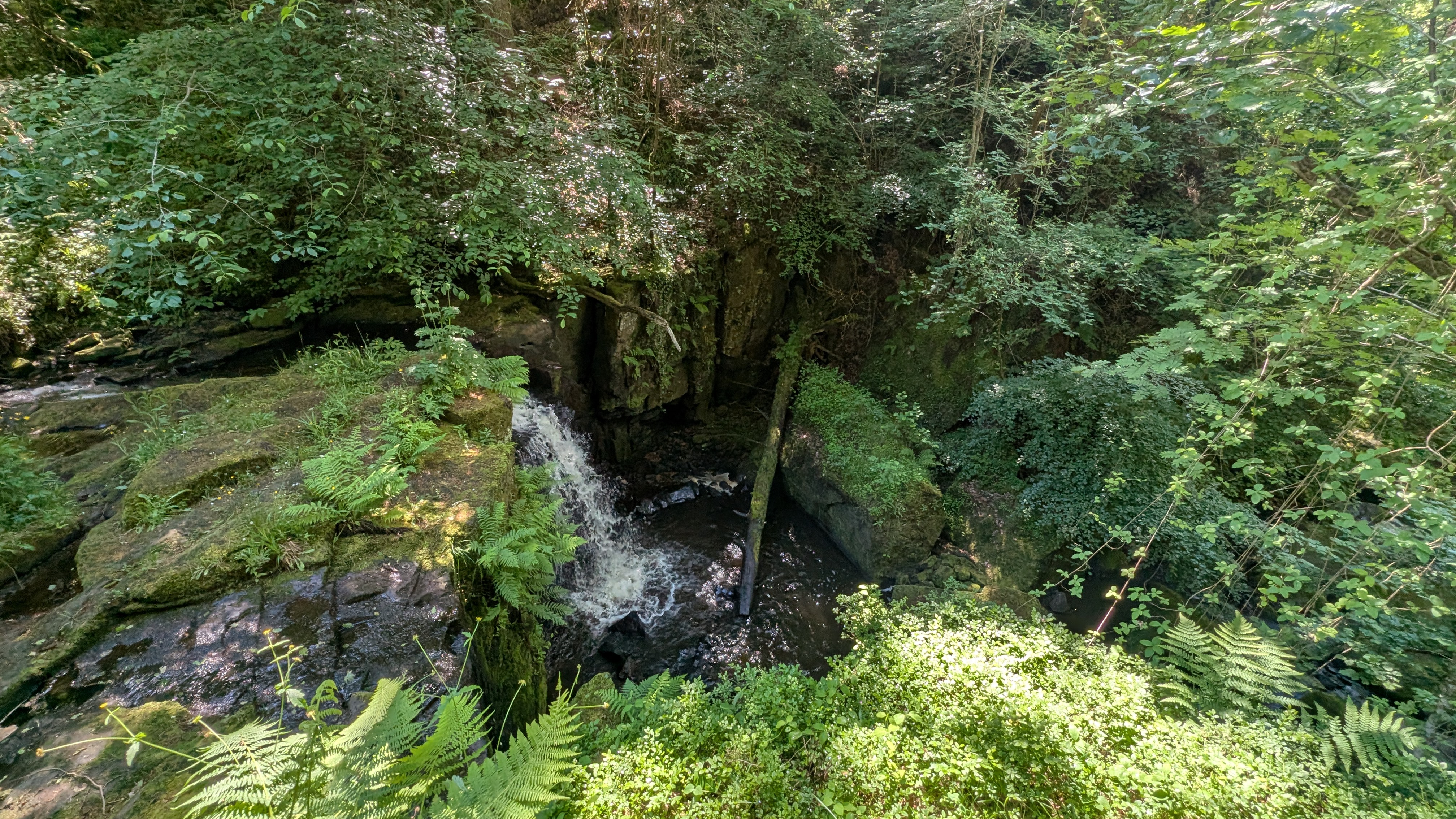
Fast forward a few days and a trip to Hareshaw Linn delivered the next of the year’s ‘new’ ferns. The purpose of the visit was actually a fern identification session I was leading for work and, in the space of just a few hours, we managed to track down a healthy 16 species.
Among the highlights were some superb displays of Beech Fern Phegopteris connectilis and Oak Fern Gymnocarpium dryopteris, both of which rank among my favourite pteridophytes.


Of course, while visiting Hareshaw Linn, it would have been rude not to pay homage to the site’s population of Lobed Maidenhair Spleenwort Asplenium trichomanes subsp. pachyrachis. The plants here are far more ornately lobed than those encountered earlier in the year and, as a result, considerably easier to identify. A bonny thing indeed!
This aside, our visit to the Linn did provide a few genuinely new additions to this year’s challenge. The first, Brittle Bladder-fern Cystopteris fragilis, was perhaps a little overdue by this point in the season. Better late than never, though, and we encountered several healthy clumps growing alongside the spleenwort on the cool, rocky banks.

Asplenium trichomanes subsp. pachyrachis

Asplenium trichomanes subsp. pachyrachis

Two other ferns proved a little harder to track down, both being rather thin on the ground at this site. Happily, we eventually encountered fine examples of Lemon-scented Fern Oreopteris limbosperma and Narrow Buckler-fern Dryopteris carthusiana, growing in a damp, flushed area alongside Wood Horsetail Equisetum sylvaticum and a host of other characteristic plants.
With those two safely accounted for, the year’s tally climbed to a healthy 40 species. I fear, however, that I may now have exhausted most of the easy options. From here on in, adding new ferns to the list is likely to require a little more effort…


Running Total
Seeing as I rarely carry a notebook, we’ll log our running total for the year here…
| #1 Wall-rue | Asplenium ruta-muraria | Tyneside |
| #2 Maidenhair Spleenwort | Asplenium trichomanes subsp. quadrivalens | Tyneside |
| #3 Hart’s-tongue | Asplenium scolopendrium | Tyneside |
| #4 Black Spleenwort | Asplenium adiantum-nigrum | Tyneside |
| #5 Broad Buckler-fern | Dryopteris dilatata | Tyneside |
| #6 Male-fern | Dryopteris filix-mas | Tyneside |
| #7 Soft Shield-fern | Polystichum setiferum | Tyneside |
| #8 Japanese Lace Fern | Polystichum polyblepharum | Tyneside |
| #9 Hard Shield-fern | Polystichum aculeatum | Tyneside |
| #10 Hard Fern | Blechnum spicant | Tyneside |
| #11 Western Scaly Male-fern | Dryopteris affinis subsp. affinis | Tyneside |
| #12 Borrer’s Scaly Male-fern | Dryopteris borreri | Tyneside |
| #13 Lady Clermont’s Spleenwort | Asplenium x clermontiae | Northumberland |
| #14 Rustyback | Asplenium ceterach | Northumberland |
| #15 N/A | Dryopteris borreri morph. robusta | County Durham |
| #16 N/A | Dryopteris borreri forma foliosum | County Durham |
| #17 Greater Scaly Male-fern | Dryopteris affinis subsp. paleaceolobata | Tyneside |
| #18 Tunbridge Filmy-fern | Hymenophyllum tunbrigense | Northumberland |
| #19 Lady-fern | Athyrium filix-femina | Tyneside |
| #20 Adder’s-tongue | Ophioglossum vulgatum | Tyneside |
| #21 Delicate Maidenhair Spleenwort | Asplenium trichomanes subsp. trichomanes | North Yorkshire |
| #22 Narrow Male-fern | Dryopteris cambrensis | North Yorkshire |
| #23 Green Spleenwort | Asplenium viride | North Yorkshire |
| #24 Parsley Fern | Cryptogramma crispa | North Yorkshire |
| #25 Moonwort | Botrychium lunaria | County Durham |
| #26 Holly Fern | Polystichum lonchitis | N/A |
| #27 Oblong Woodsia | Woodsia ilvensis | N/A |
| #28 Western Sword-fern | Polystichum munitum | Northumberland |
| #29 Oak Fern | Gymnocarpium dryopteris | Northumberland |
| #30 Beech Fern | Phegopteris connectilis | Northumberland |
| #31 Polypody | Polypodium vulgare | Northumberland |
| #32 Royal Fern | Osmunda regalis | Yorkshire |
| #33 Lobed Maidenhair Spleenwort | Asplenium trichomanes subsp. pachyrachis | Yorkshire |
| #34 Rigid Buckler-fern | Dryopteris submontana | Cumbria |
| #35 Limestone Fern | Gymnocarpium robertianum | Cumbria |
| #36 Sea Spleenwort | Asplenium marinum | Northumberland |
| #37 Small Adder’s-tongue | Ophioglossum azoricum | Northumberland |
| #38 Narrow Buckler-fern | Dryopteris carthusiana | Northumberland |
| #39 Brittle Bladder-fern | Cystopteris fragilis | Northumberland |
| #40 Lemon-scented Fern | Oreopteris limbosperma | Northumberland |



Leave a Reply