For some time now, I’ve been paying closer attention to Newcastle’s diverse and beautiful urban trees. From species gathered from across the globe to our own native trees and an array of curious cultivars, the city supports a surprisingly rich and varied urban forest. There is certainly plenty to discover.
In this new series of blogs, I’ll be sharing some of my favourite tree walks across urban Newcastle, highlighting a selection of the species that can be seen along the way. With so many trees growing throughout the city, it would be impossible to include them all, so this is very much a personal selection of favourites, curiosities and notable specimens. Corrections are very much welcome – I am still learning when it comes to exotic species!
Jesmond Vale Lane
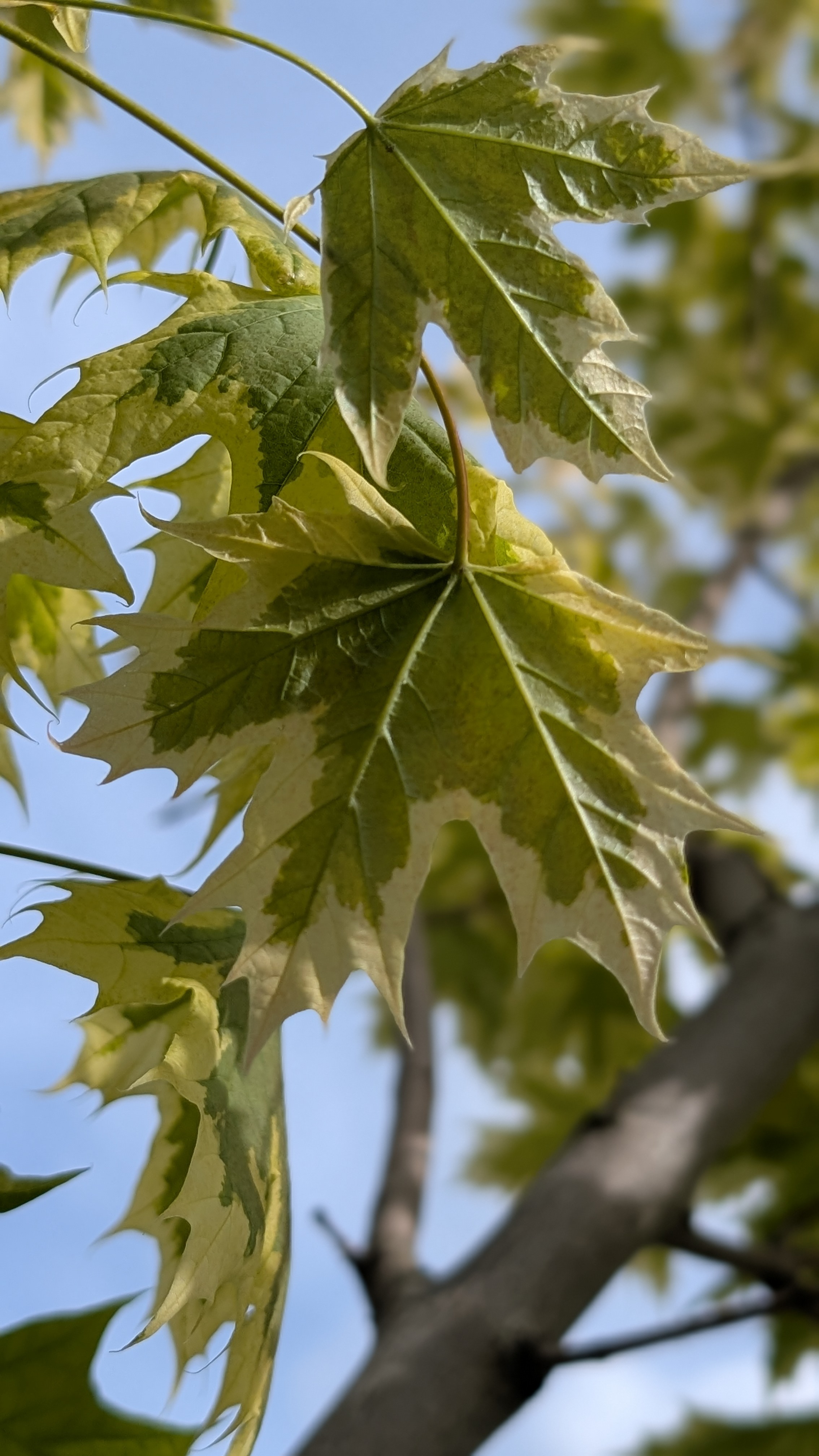
Your walk begins at exists.salt.wiping, at the junction of Jesmond Vale Lane and Jesmond Vale Road. Before heading any further, cast an eye into Armstrong Park beyond the iron fence, where you’ll spot a relatively new addition to the park, and a rather glamorous one at that. The tree with the striking white-margined, pointed leaves is Acer platanoides ‘Drummondii’, an attractive cultivar of Norway Maple that is sure to become increasingly spectacular as it matures.
Begin your walk by following the footpath as it curves down Jesmond Vale Lane, paying attention to the trees growing around the corner here. The main draw is a fine example of Leyland Cypress Cupressus x leylandii, though you’ll also find Elder, Yew and Sycamore nearby. On the south side of the lane, a small cluster of trees includes Japanese Cherry Prunus serrulata, near to which, a little further downhill, stands a rather lovely young Tulip-tree Liriodendron tulipifera with its highly distinctive leaves. Nearby, the deep purple foliage of Copper Beech Fagus sylvatica f. purpurea is easy to pick out.

Liriodendron tulipifera

Carpinus betulus

Acer platanoides ‘Drummondii’
Continuing down the lane and sticking to the path along the northern boundary of Armstrong Park, the most impressive tree here is a large Hornbeam Carpinus betulus, particularly handsome when hung with flowers in May. Around 20 metres further along stands a mature Common Whitebeam Sorbus aria and, conveniently positioned opposite the gate you’ll use to enter Heaton Park, Swedish Whitebeam Sorbus intermedia. Both sport lovely umbels of flowers in May. Cross over here and pause for a moment to admire the ruins of King John’s Palace.
Heaton Park
Following the path as it bends towards the car park, it is hard to miss the line of tall, stately trees bordering the car park. These are Hybrid Black-poplar Populus x canadensis, probably reaching 25–30 metres in height. In the lower car park, a few paces downhill, the margins hold fine examples of Wild Cherry Prunus avium and Plum Prunus domestica. It is also worth peering into the beds at bronze.taking.starts. Here, you’ll notice a small elm which appears to be English Elm Ulmus procera – the species famously lost from much of the UK due to Dutch Elm Disease. There are a few elm species in the area, but this one has a rough upper surface on the leaves and a hairy leaf stalk.
Enjoy these before moving on to jukebox.mining.stone, where your true parkland walk begins. Here, the verge supports another Hornbeam alongside a rather exotic-looking tree believed to be Honey Locust Gleditsia triacanthos – one of the more unusual species you’ll encounter in Heaton Park.

Continue downhill to the unmistakable Scots Pine Pinus sylvestris standing at the corner where the path meets the main thoroughfare. Looking across the walkway, the large, neat, conical conifers are Lawson’s Cypress Cupressus lawsoniana. From here, follow the main path as it heads south-west. You’ll soon pass into a pleasant patch of shade cast by an oak and a particularly beautiful Japanese Maple Acer palmatum, growing on opposite sides of the track. Around the maple, look out for some conifers growing on the raised ground surrounding Sambuca’s Pavilion, including Western Red-cedar Thuja plicata and Nootka Cypress Cupressus nootkatensis. There is also a small Douglas-fir Pseudotsuga menziesii subsp. glauca here. Off to the left, a young, particularly neat Acer is Scarlet Maple Acer rubra. From here, continue along the path, keeping the grassy bowling green to your right, as you make your way towards one of the park’s most famous trees.

The ancient Pear Pyrus communis in Heaton Park is one of Newcastle’s oldest living landmarks, predating the park’s 1879 donation by the industrialist William Armstrong. It is a beautiful tree and, for a pear, an especially impressive specimen, particularly when covered in blossom during spring. Take a moment to appreciate it, but don’t forget to look around the immediate area too, as several other notable trees grow nearby. Directly opposite the pear, across the path, is a dense area of planting containing another Japanese Maple, Tulip-tree, Apple and a new species for the trail, Himalayan Birch Betula utilis.
A few paces further on, you’ll come to an interpretation board containing more information about the Heaton Pear. Beside it, a short side path branches right past a beautiful Cedar-of-Lebanon Cedrus libani. Take a brief detour here as far as the two large cypresses underplanted with Holly. Turning back at this point reveals a small grassy area behind which grows a sprawling Walnut Juglans regia. It may not be the grandest specimen on the route, but Walnut remains an uncommon sight in Newcastle’s parks. Afterwards, retrace your steps to the main path.


Continue uphill as the path gently meanders through the park. Almost immediately, a glance to your left reveals a handsome variegated Holly, while a little further on stands the curious sight of another Tulip-tree supported by braces. Around it grow several lime trees, including Large-leaved Lime Tilia platyphyllos, identifiable by the densely hairy undersides of its leaves.

A short semicircular path then veers left around a grassy verge planted with a young Hornbeam. Following this detour, the borders contain Field Maple Acer campestre, Sweet Chestnut Castanea sativa and Juneberry Amelanchier × lamarckii. A tall birch nearby is our native Downy Birch Betula pubescens, here reaching around 20 metres in height and evidently of considerable age. While it isn’t a rare sight, it is a jolly big one. Even taller still is a towering example of Cider Gum Eucalyptus gunnii.

Carpinus betulus

Eucalyptus gunnii
Rejoin the main path beside the remains of a tall Sycamore monolith and continue uphill. At the base of the slope grow several fine examples of Common Lime Tilia x europaea, Alder Alnus glutinosa and a few more cherries. As you make your way uphill, a glance to the left reveals a dense tangle of deciduous trees. Where the ground becomes noticeably boggy, look carefully into the thicket to spot a graceful Weeping Willow Salix x sepulcralis and, even better, a handsome Red Horse-chestnut Aesculus carnea. Beside the path stands a solitary, rather spindly Aspen Populus tremula. From here, the route curves beneath more lime trees and an enormous Beech Fagus sylvatica; however, if you take the damp path to your left, a look up toward the canopy should provide a glimpse of a tall Lombardy Poplar Populus nigra ‘Italica’.
Following the path as far as the tiered wildflower garden, you cannot fail to notice a gnarled but rather handsome London Plane Platanus x hispanica. While a familiar sight in southern England, this species remains comparatively uncommon in the North East. Just beyond, at boot.feeds.submit, you’ll reach the junction of several paths. You’ll eventually take the right-hand path, passing a couple of bins and a rather more impressive Walnut, but first, it is worth making a short detour up the left-hand path towards the entrance on Heaton Park Road.

Platanus × hispanica

Platanus × hispanica
A few additional species can be found here, including White Poplar Populus alba and several recently planted Judas Trees Cercis siliquastrum. The main attraction, however, stands beside the gate itself – a small but fascinating Maidenhair Tree Ginkgo biloba, one of the world’s most ancient tree species.


Returning to the junction, spend a moment admiring the Walnut before taking the path across the large grassy field. Continuing onwards, you’ll soon notice another tangle of trees to your right. Among them are Rowan Sorbus aucuparia, various fruit trees and a fine Turkish Hazel Corylus colurna. In the next cluster, around 15 metres further on, the trees are more familiar, though opposite stand several recently planted cherries, including Sargent’s Cherry Prunus sargentii — conveniently labelled to aid identification.

More unusual species await in the final cluster before the path enters woodland. Here you’ll find the striking Père David’s Maple Acer davidii and a glorious Red Oak Quercus rubra, especially spectacular in autumn when its foliage turns deep crimson.

Quercus rubra

Approaching the end of your circular loop, continue past the play area. Around homes.sugars.will, a path branches left into the deeper woodland. To your right stands another Turkish Hazel, though arguably more interesting is a mature Italian Alder Alnus cordata. This is a particularly impressive specimen, with a spread of around 14 metres. Opposite, on the grass, a less conspicuous sapling is a recently planted Montpellier Maple Acer monspessulanum.
Take the right-hand path, which gradually narrows into a muddier woodland trail, and make your way towards the large conifer standing between the grassy field and the path. This substantial tree is Grand Fir Abies grandis.
Almost at the end now, retrace your steps uphill towards the planted border outside the pavilion. As you reach the corner of the bed, look behind you to spot a fine Turkey Oak Quercus cerris. This area also contains a young Small-leaved Lime Tilia cordata, distinguishable from the park’s other lime trees by the rusty-orange hairs beneath its leaves.
From here, continue past the flowerbeds and back to the main footpath beside the Japanese Maple where the loop began. Taking the path towards the nearest exit from Heaton Park to Jesmond Vale Lane, passing the house on your way, you’ll encounter another handsome London Plane as well as several examples of Portugal Laurel Prunus lusitanica – a favourite planting in Victorian landscaped parks. Emerging once more onto the hill where the walk began, your tree trail comes to an end.





Leave a Reply