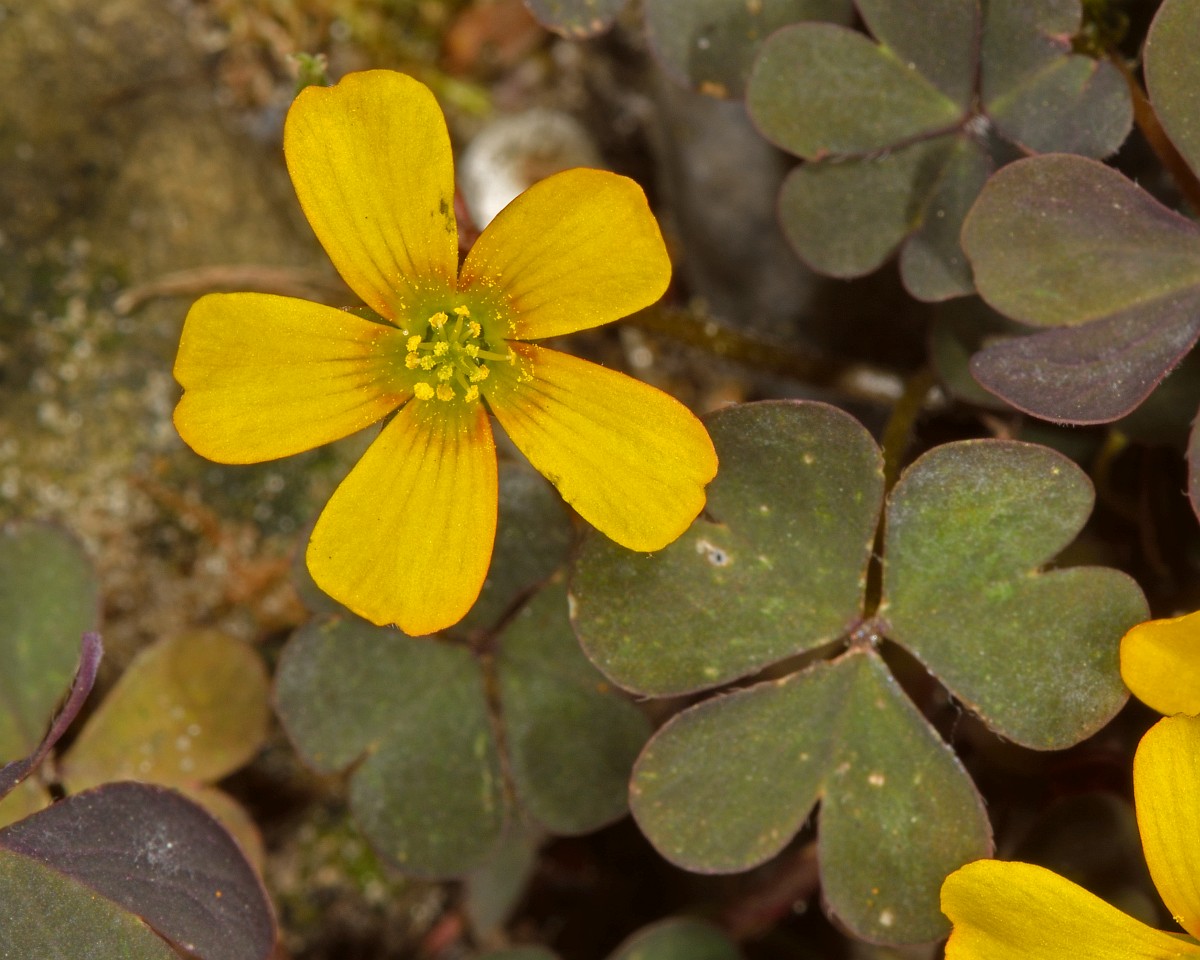
Get started identifying the widespread Wood-sorrels (Oxalis) you’re most likely encounter in a new, simplified crib
Thank you all so much for continuing to read and download recent entries in this series of accessible plant cribs. It has been a while since I shared one (they are very much a project for the darker months) so I thought I would get back into the swing of things by sharing another challenging plant family.
After tackling common grasses the last time around, now seemed like a good time to focus on something a little more colourful – introducing our pesky urban Wood-sorrels (Oxalis)
The wood-sorrels are an interesting group of low-growing, largely perennial plants with five-petaled flowers in shades of pink, red, white and yellow. While our native Wood-sorrel (Oxalis acetosella) is very much a plant of woodlands, most are plants of human-influenced habitats – think pavements, gutters, flowerbeds and driveways. In my native Newcastle, around 8 species are infrequently encountered about these habitats, though several others are likely to occur too. The simplified key below covers those most likely to be encountered in the North East but please note, there are several rarer ones out there.
Key factors to focus on when identifying oxalis are flower colour (which can help separate them nicely into groups), flower detail, leaflet number and leaf detail.
Identifying Oxalis
Oxalis are a moderately diverse bunch. Here, we’ll aim to cover the species botanists are most likely to encounter while out and about in urban areas across the North East; though the information shared should apply equally well elsewhere in the UK. This crib focuses the following species:
- Upright Yellow-sorrel
- Procumbent Yellow-sorrel
- Least Yellow-sorrel
- Wood-sorrel
- Pale Pink-sorrel
- Common Pink-sorrel
- Large-flowered Pink-sorrel
- Broad-leaved Pink-sorrel
- Four-leaved Pink-sorrel
- Annual Pink-sorrel
Enjoying this series? Please consider sharing this page with friends or better still, providing a back-link so that more people can find it. If you have any suggestions for further groups to cover, I’d love to hear from you.






Leave a Reply