Inspired by ongoing efforts to record the urban flora of Newcastle and North Tyneside, I wanted to make some of what has been discovered so far accessible to those interested in exploring the city for themselves. Cue a new series!
These blogs will explore some of the best botanical walks the conurbation has to offer – perfect for planning your next outing in the urban jungle. Here, we’ll explore Silverlink which while not strictly within the city limits, sits just without and forms part of the wider conurbation.
This is a short, circular walk taking in one of the best botanical sites in North Tyneside. At just 1.2 miles and level throughout, it is very accessible and on a good day in June or July, may result in a tally of around 170 species.
The Biodiversity Park is a small but interesting nature reserve created in the late 1990’s with funding from nearby developers. It was meticulously designed by ecologists and architects to include ponds, woodland, hedgerows, meadows and an impressive piece of landscape art that we will discuss later, while also incorporating several small areas of existing natural land. Your walk begins in the small carpark opposite the Village Hotel (landowner.plants.tint) in Cobalt Business Park.
It is often joked that botanists seldom make it out of the carpark on their outings and here, that will surely be the case with areas of ornamental planting, untouched since 1997, left to develop and spread. Only the hardiest have survived with an impressive patch of Blue Globe-thistle (Echinops bannaticus) immediately visible, alongside a glut of Druce’s Crane’s-bill (Geranium × oxonianum). You should also note Purple-loosestrife (Lythrum salicaria) and Dotted Loosestrife (Lysimachia punctata), alongside a thriving population of Wild Parsnip (Pastinaca sativa). From the carpark, take the Northernmost of the three major pathways. By doing so, you will pass a small area of grassland to your immediate right which harbours Northern Marsh-orchid (Dactylorhiza purpurella) and Water Figwort (Scrophularia auriculata) and eventually on to another portion of path surrounded on both sides with trees. Walking this path, you will pass a large but mostly inaccessible pond, with viewing only possible at romantics.mixture.supposing.
Even with only some of the pond visible, you should note an interesting array of riparian and aquatic plants, most of which are said to have colonised the site naturally. Expect Water-plantain (Alisma plantago-aquatica), Amphibious Bistort (Persicaria amphibia), Floating Sweet-grass (Glyceria fluitans), Broad-leaved Pondweed (Potamogeton natans) and Greater Spearwort (Ranunculus lingua) among more abundant species. You will then need to backtrack a few meters until you re-join the trail, continuing your way until you pass a neglected interpretation panel and eventually, exit the park. Now you’ll find yourself on a section of Waggonway which you should follow south, skirting the park, for 200m or so.


(Ranunculus lingua)
Along the Waggonway you will note several uncommon plants growing in areas of disturbance. Among these, Bladder Campion (Silene vulgaris), Great Mullein (Verbascum thapsus) and Wild Mignonette (Reseda lutea). The shelterbelts contain many seedlings of alien trees and shrubs, including Late Cotoneaster (Cotoneaster lacteus), Mougeott’s Whitebeam (Sorbus mougeotii) and Hybrid Alder (Alnus x hybrida), while the Hybrid Willow (Salix × smithiana) and White Poplar (Populus alba) are spreading via runners. At proves.barn.reinstate you will encounter a particularly bountiful patch of grassland home to Viper’s-bugloss (Echium vulgare), Blue Fleabane (Erigeron acris), Fairy Flax (Linum catharticum) and Yellow-wort (Blackstonia perfoliata). Immediately behind this area, ranker grassland holds Zigzag Clover (Trifolium medium).

(Erigeron acris)

(Echium vulgare)
From here, look behind you and you will note a path leading back into the Biodiversity Park, located almost at the foot of prominent pylon. Taking this path, you will arrive in a small area of meadow. This expanse of grassland is particularly rich with the dominant plant life comprising Rough Hawkbit (Leontodon hispidus), Cat’s-ear (Hypochaeris radicata) and Lady’s-bedstraw (Galium verum) alongside Glaucous Sedge (Carex flacca) and various grasses.
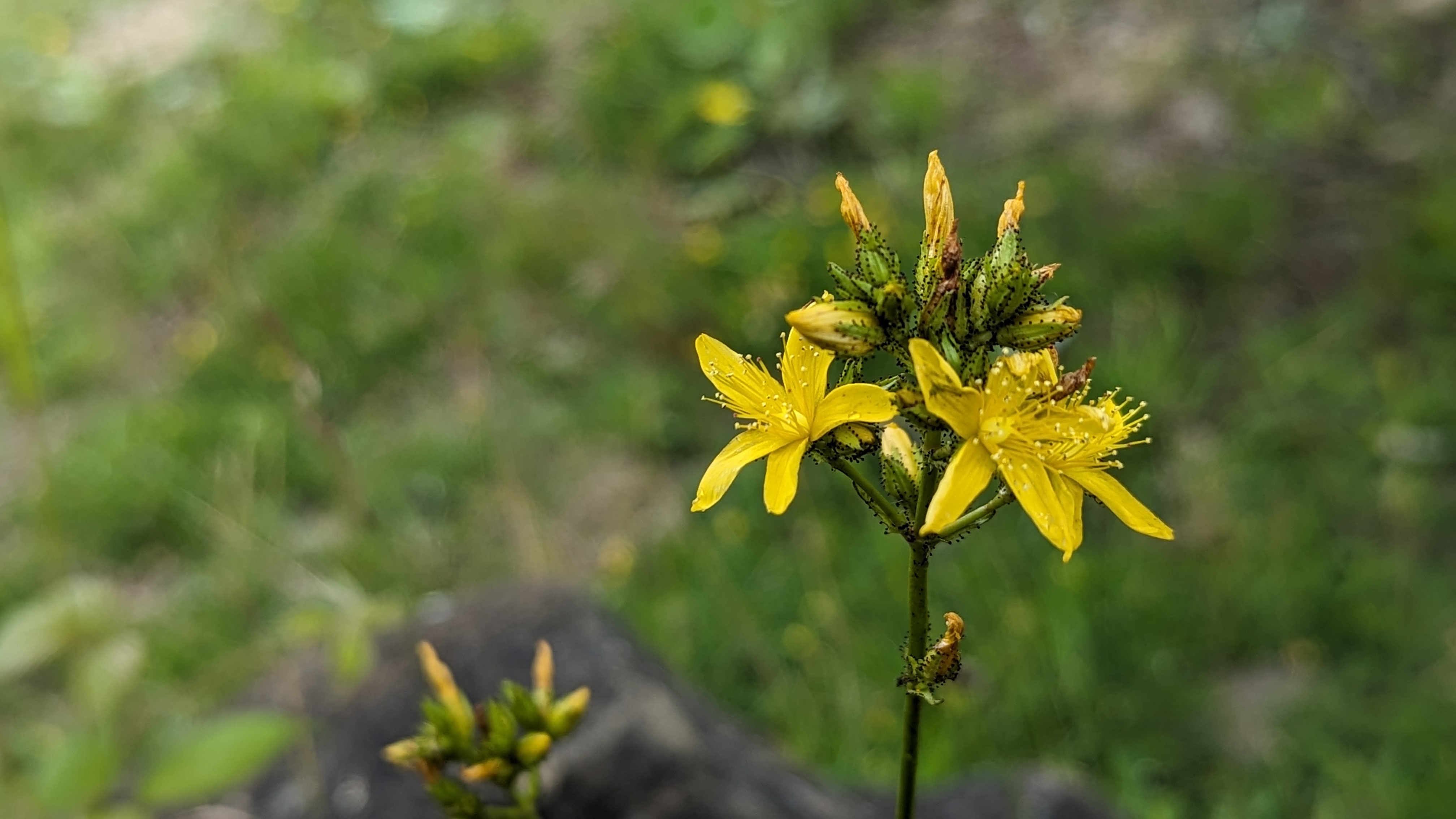
In June, this is particularly productive spot for Bee Orchid (Ophrys apifera) but keen-eyed orchid hunters should also find Common Spotted Orchid (Dactylorhiza fuchsii), Northern Marsh-orchid (Dactylorhiza purpurella) and their hybrid, Dactylorhiza x venusta. More recently, Pyramidal Orchid (Anacamptis pyramidalis) and Common Twayblade (Neottia ovata) have colonised also. Equally of interest is the abundance of hypericum here with closer inspect revealing that most of the plants here are Des Etangs’ St. John’s-wort (Hypericum × desetangsii). Once you have explored the meadow, follow the obvious track back to the main footpath and head South until you hit a junction in the path, being sure to note Common Figwort (Scrophularia nodosa), Tall Melilot (Melilotus altissimus) and Meadow Crane’s-bill (Geranium pratense) along the way.


(Neottia ovata)

(Anacamptis pyramidalis)

Turning right at the junction, you will emerge into a far larger open area marked by a sloping, grassy hill to your right and several small ponds to your left. These ponds are noteworthy in hosting Tufted Forget-me-not (Myosotis laxa), Water Forget-me-not (Myosotis scorpioides), Common Water-starwort (Callitriche stagnalis) and Ivy-leaved Duckweed (Lemna trisulca) but much more interesting is the slope immediately opposite. This represents all that remains of the impressive landscape sculpture created in 1997. Interestingly, this was constructed of one-half sandstone and one-half limestone meaning that in the years since, a sharply contrasting flora has formed across both areas of exposed rock consisting of seeded introductions and natural colonists.
Much of the sandstone area has been overtaken by scrub but look closely and you will note areas of Great Wood-rush (Luzula sylvatica), Heather (Calluna vulgaris), Wood-sage (Teucrium scorodonia) and Water Avens (Geum rivale). Beneath a solitary birch sites the conurbations only know specimen of Heath Fragrant Orchid (Gymnadenia borealis), perhaps imported as an happy accident among the substrate. Close to this area, you can also find Tyneside’s only population of the rare Pale St. John’s-wort (Hypericum montanum) growing atop parts of the former sculpture.
Atop calcareous areas, you will surely note Betony (Betonica officinalis), Small Scabious (Scabiosa columbaria), Quaking Grass (Briza media), Yellow-wort (Blackstonia perfoliata), Salad Burnet (Poterium sanguisorba subsp. sanguisorba) and Chalk Knapweed (Centaurea debauxii) while much more localised are Great Burnet (Sanguisorba officinalis) and Devil’s-bit Scabious (Succisa pratensis). Bare areas here hold too the only local population of typically coastal subspecies of Red Fescue, Festuca rubra subsp. juncea.

(Betonica officinalis)

(Scabiosa columbaria)

(Succisa pratensis)


Taking the central path up the hill and towards the sun dial, you will pass through a large area of neutral grassland dominated by Common Knapweed (Centaurea nigra), Hedge Bedstraw (Galium album) and more abundant species before reaching a flight of ramshackle steps leading to the dial itself. Look, though the flora here is less interesting save for a fantastic display of Cowslips (Primula veris) in late spring. Much more interesting is the path downhill to the sites largest pond where you may note more Bee Orchids (Ophrys apifera). The pond itself is much more accessible and scrutiny will reveal Bogbean (Menyanthes trifoliata) and Coloured Water-lily (Nymphaea x marliacea) both introduced, and colonists in Spiked Water-milfoil (Myriophyllum spicatum) and Canadian Pondweed (Elodea canadensis). From here you have two options.
Taking the path your right will lead you through woodland and a few sizeable patches of Butterbur (Petasites hybridus) back to the carpark where you began your journey. Head left, however, and you emerge from the park intro Cobalt Business Park with its industrial units and associated amenity areas. Vacant lots here are worthy of exploration and can hold many of the plants commonly associated waste ground, with species such as Bristly Oxtongue (Helminthotheca echioides), Prickly Lettuce (Lactuca serriola), Common Cudweed (Filago germanica) and Common Centaury (Centaurium erythraea) occurring among more abundant weeds.

(Menyanthes trifoliata)

(Ophrys apifera)

A final note for those with time to spare is the nearby Village Hotel Pond located just North East of your starting position. Older than the others on site, this has developed a rich riparian community consisting of Greater Spearwort (Ranunculus lingua), Gypsywort (Lycopus europaeus), Grey Club-rush (Schoenoplectus tabernaemontani), Bottle Sedge (Carex rostrata) and Bladder Sedge (Carex vesicaria), among other associated plants, and nearby ditches host Great Yellow-cress (Rorippa amphibia), Hybrid Horsetail (Equisetum × litorale), and False Fox-sedge (Carex otrubae).
Other interesting plants to look for along the way…
Thyme-leaved Sandwort (Arenaria serpyllifolia), Pignut (Conopodium majus), Slender St. John’s-wort (Hypericum pulchrum), Hoary Ragwort (Jacobaea erucifolia), Toad Rush (Juncus bufonius), Greater Bird’s-foot Trefoil (Lotus pedunculatus), Creeping-jenny (Lysimachia nummularia), Hoary Plantain (Plantago media), Common Fleabane (Pulicaria dysenterica) and American Elder (Sambucus canadensis).


Leave a Reply