
As is customary at year’s end, much of my time over the last week was spent darting about the local area plant hunting as part of the BSBI’s New Year Plant Hunt. Now in its fourteenth year, this fantastic citizen science project not only provides valuable data about how our flora is coping in the face of changing weather patterns but also provides the perfect excuse to head out botanising at time when most people simply wouldn’t.
With one solo hunt under my belt and two fantastic group events led for BSBI and Natural History Society of Northumbria members, now seemed like a good time to recap what has been an incredibly productive couple of days.
North Shields
Saving the routine NYPH routes for the upcoming group walks, on 29 December I thought I would head somewhere different, opting for a short metro journey to North Shields for a poke about the various industrial plots fringing the Tyne in its final stages. I’m glad I did with no less than 55 species recorded in flower – a high total for the chilly North East in late December.
Many of the plants seen were those you would expect in winter, among these ubiquitous species such as Daisy (Bellis perennis), Dandelion (Taraxacum agg), Ivy (Hedera helix) and Gorse (Ulex europeaus). The commonplace aliens put on a good show too with Oxford Ragwort (Senecio squalidus) blooming in pavement cracks, Canadian Fleabane (Erigeron canadensis) about neglected gardens and Water Bent (Polypogon viridis) along the margins of several main roads. There were, however, more unexpected finds to be had too. For example, a south-facing bank in the centre of town produced an unusual double act of Viper’s-bugloss (Echium vulgare) and White Campion (Silene latifolia), the former typically a plant of mid-summer, and the grassland abutting Meadow Well metro station a very early example of Cowslip (Primula veris).
The ponds in North Shield’s ‘Linear Park’ also proved worth a gander with both Marsh Marigold (Caltha palustris) and Monkeyflower (Erythranthe guttata) hanging on and later in the survey, Wild Parsnip (Pastinaca sativa subsp. sylvestris) was encountered on an area of derelict land at Royal Quays. A good start I’d say…


St. Peter’s Basin
On 30 December, the time came for the first of this year’s group hunts and meeting with NHSN members in the east of Newcastle, we set about exploring a wide range of habitats including cycleways, ballast hills, marina pavements and even the unceremonious outskirts of the local tip. All proved fruitful with 59 species noted in bloom.
The common and familiar plants once again dominated proceedings but here too there were plenty of interesting discoveries. Around the industrial units, Narrow-leaved Ragwort (Senecio inaequidens) and Guernsey Fleabane (Erigeron sumatrensis) proved plentiful and a stretch of verge outside the tip held blooming Field Madder (Sherardia arvensis), Medium-flowered Winter-cress (Barbarea intermedia) and Green Field-speedwell (Veronica agrestis). Nearby, the margins of Hadrian’s Cycleway held Balkan Spurge (Euphorbia oblongata) and Atlantic Ivy (Hedera hibernica) and around nearby residences, Pale Pink-sorrel (Oxalis incarnata) and Eastern Rocket (Sisymbrium orientale) were still going strong.
Perhaps the greatest surprise of the day came in the form of a solitary example of Broad-leaved Willowherb (Epilobium montanum) blooming in a sheltered spot at the base of a garden wall. This is a species typically encountered in flower during July and August, and a very queer sight during the winter months.


Heaton
On 1 January, the time came for a re-run of a NYPH route surveyed in most of the last five years. Taking to the streets of Heaton with a wonderful group in toe (including the fab Charlotte Rankin), pickings were somewhat slimmer with 43 species observed. Here, a mosey around a nearby park provided Hazel (Corylus avellana) and some delightfully neglected gardens a suite of more unusual species in Barren Brome (Anisantha sterilis), Mind-your-own-business (Soleirolia soleirolii) and Snapdragon (Antirrhinum majus).
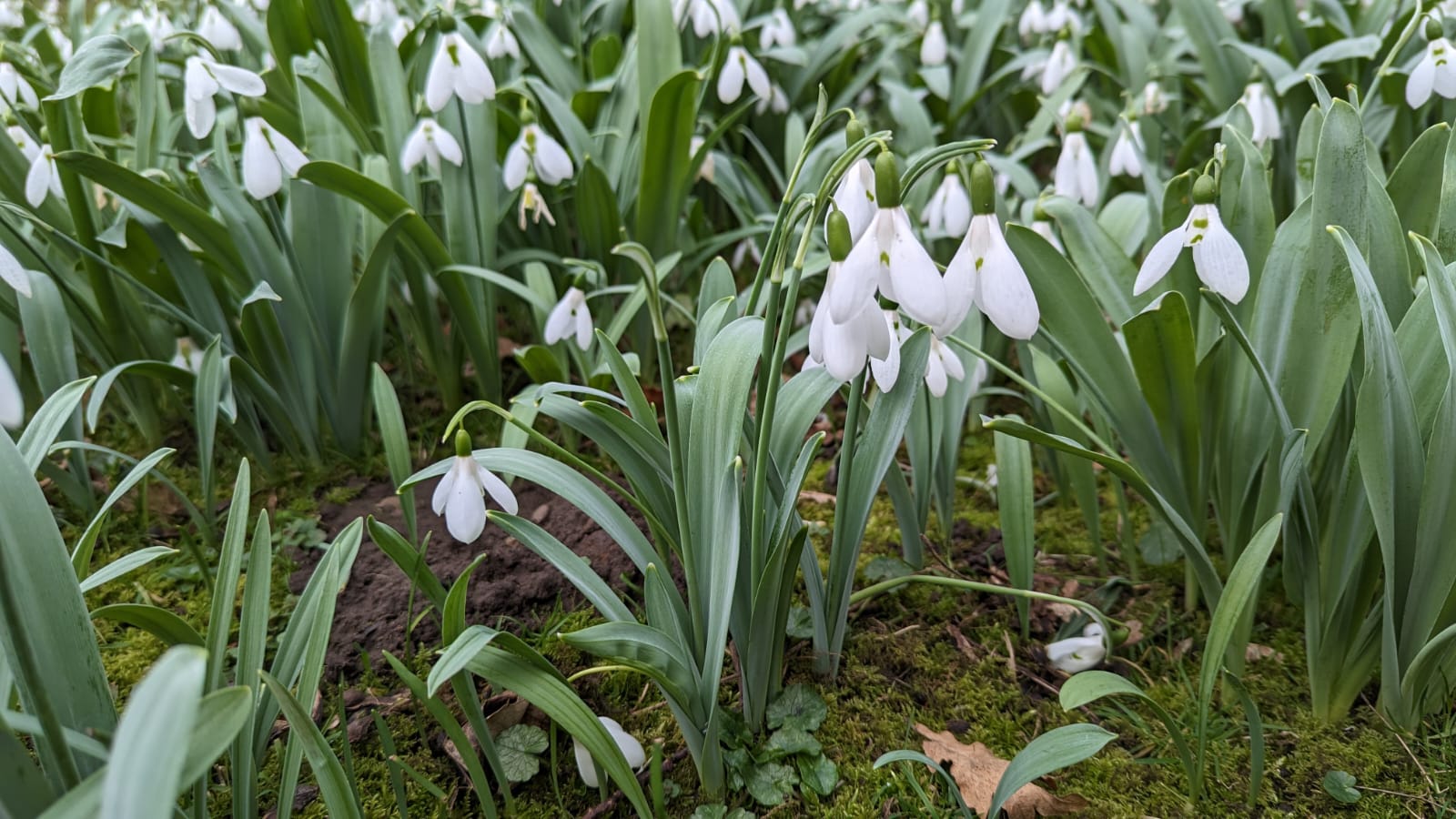
In Heaton Park, both Snowdrop (Galanthus nivalis) and Early Crocus (Crocus tommasinianus) put in an appearance, the former almost a month earlier than in 2024, and Wavy Bitter-cress (Cardamine flexuosa) was a nice find from a member of the group nestled amid flowering patches of the far commoner (at least in urban settings) Hairy Bitter-cress (Cardamine hirsuta).



Leave a Reply